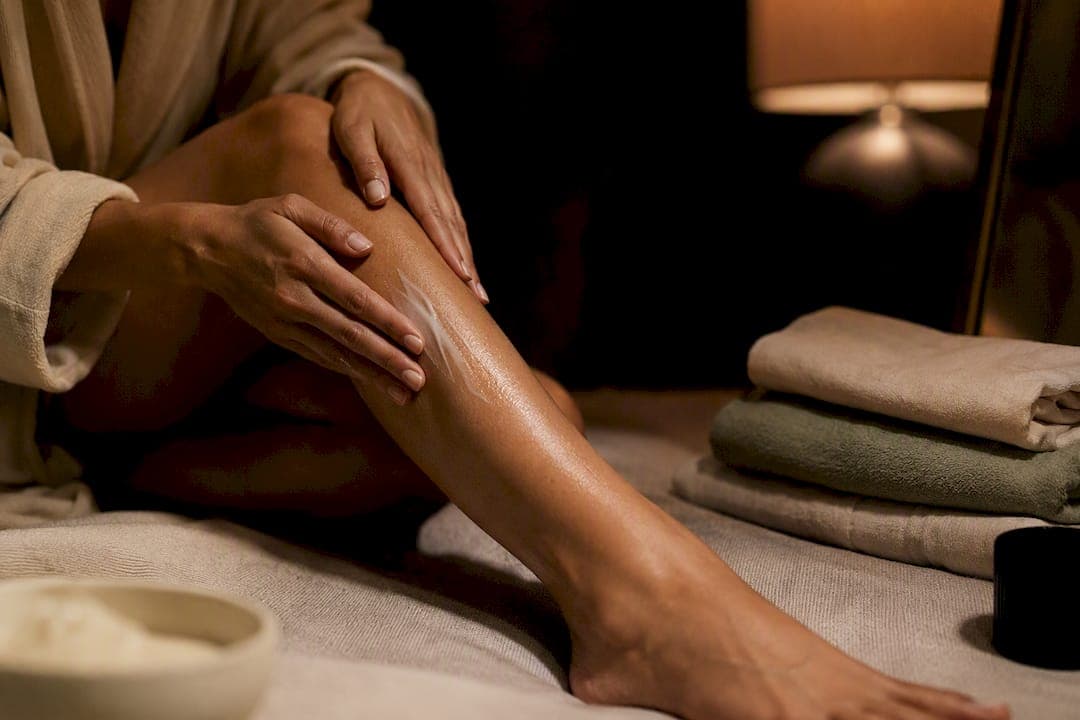
Yes, a properly formulated calming body butter can reduce irritation and improve moisture and texture when it is fragrance-free and non-comedogenic. It works alongside prescribed acne or eczema treatments, not instead of them. Patch-test first. A vegan, chemical-free option with clear application guidance is available for exactly this use case.
TL;DR:
- A fragrance-free, non-comedogenic calming body butter can improve skin barrier function and reduce irritation for dry, eczema-prone, or acne-treated skin.
- The most effective formulations combine emollients like shea butter, oils high in linoleic acid, glycerin, and low-dose urea, applied to damp skin in generous amounts.
- Avoid products with fragrances, SLS, or high concentrations of high-oleic oils, as they can worsen barrier issues or trigger irritation in sensitive skin.
- Patch testing new products on the inside of the elbow for several days is essential, and signs of worsening redness or pain indicate immediate medical consultation.
- Visible skin improvements typically occur within a few days to weeks of regular use, with barrier repair taking around three weeks.
Table of Contents
- What calming body butter is and who it helps
- Key calming ingredients and why they work
- What to avoid if your skin is sensitive or acne-prone
- How to apply a calming body butter for best results
- Safety checklist: patch testing and when to see a doctor
- How quickly should you see results?
- What After Hours Body Butter gets right about calming skincare
- Try a calming body butter from After Hours Body Butter
- Sources
- FAQ
What calming body butter is and who it helps
A calming body butter is a moisturising, nutrient-rich formulation built to soothe inflammation and support the skin's barrier. It is not a fragranced product for sleep or stress relief. That is a different category with different ingredients and a different job to do.
This type of product suits several groups. People with dry skin need the extra emollient content. People with atopic-prone or eczema-prone skin benefit from barrier support. People whose acne treatments, such as retinoids or benzoyl peroxide, leave their skin dry or flaking often need a calming layer to stay consistent with treatment.
There are limits. A body butter will not treat active infection, severe inflammation or cystic acne. If your skin is broken, weeping, or you notice spreading redness, see a GP or dermatologist rather than relying on moisturiser alone. For most everyday dryness and irritation, though, a well-formulated body butter is a reasonable first step and pairs well with a sensitive skin routine.

Key calming ingredients and why they work
Three types of ingredient do the work in a calming body butter. Emollients soften skin. Occlusives seal in moisture. Humectants draw water into the skin. A good formulation combines all three rather than relying on one.
Shea butter is the clearest example. Its unsaponifiable fraction contains triterpenes, tocopherols and phenols that show anti-inflammatory and antioxidant properties and support barrier repair, particularly in cold-pressed, unrefined form. A broader review of plant oils and vegetable butters found similar barrier-supporting compounds across several ingredients, though the ratio of linoleic to oleic acid and the extraction method both affect the result. Oils higher in linoleic acid tend to suit barrier-compromised skin better than high-oleic oils, which can feel heavier and sit less well on reactive skin.
Ingredients worth looking for on a label include:
- Shea butter: rich in barrier-supporting triterpenes and tocopherols.
- Sunflower seed oil: high linoleic content, generally gentle on compromised skin.
- Jojoba oil: closely mimics skin's own sebum, low irritation risk.
- Glycerin: a reliable humectant that pulls water into the outer skin layer.
- Low-dose urea: helps hydration and gentle exfoliation at appropriate concentrations.
A formulation with a low pH and urea combined with plant oils has been shown to improve hydration and barrier markers over several weeks in people with dry and atopic-prone skin, according to a study published in MDPI Cosmetics. That kind of combined approach, rather than a single star ingredient, tends to produce the most consistent results.
What to avoid if your skin is sensitive or acne-prone
Fragrance is the most common irritant in body care, including "masking fragrance" added to hide the smell of other ingredients without being marketed as a scent. Sodium lauryl sulfate (SLS) and certain essential oils can also provoke redness, stinging or breakouts on reactive skin. None of these need to be in a calming formulation to make it feel pleasant to use.
Single high-oleic oils, used alone and in high concentration, can sit heavily on the skin and worsen an already compromised barrier rather than repairing it. Balance matters more than any one ingredient. A preservative-free product can sound appealing but carries its own hygiene risk once opened, particularly around water content and repeated hand contact; check how preservative-free products are handled before assuming "free-from" always means safer.
When checking a label, look at ingredient order (INCI lists ingredients from highest to lowest concentration), confirm "non-comedogenic" is stated rather than implied, and check whether "unscented" or "fragrance-free" is used, since they mean different things.
Pro Tip: Read the first five ingredients on the label before anything else. That's where the formulation's real character sits.

How to apply a calming body butter for best results
Timing and technique matter as much as the product itself. Follow this sequence:
- Apply to damp skin within a few minutes of bathing or showering, while the skin still holds water from washing, as recommended in AAD guidance on moisturisers.
- Use a liberal amount rather than a thin film, and reapply on elbows, knees and shins where skin tends to be driest.
- Massage in the direction of hair growth using smooth, even strokes rather than rubbing.
- For very dry or atopic-prone patches, apply a thicker layer at night and consider an unobtrusive cotton layer over the top to boost overnight penetration, though take care with slipperiness in the bath or shower beforehand.
- If you use a prescribed acne treatment, apply that first, let it absorb, then follow with body butter on unaffected areas to manage the dryness the treatment often causes.
NHS and regional formulary guidance on eczema management consistently backs frequent, liberal emollient use as the basis of care, with daily application increased as needed rather than kept to a fixed minimum.
Safety checklist: patch testing and when to see a doctor
Patch-test every new product, even one marketed as natural or gentle. Apply a small amount to the inside of your elbow and leave it uncovered and unwashed for several days, since delayed reactions can take up to a week to appear, an approach the AAD recommends for new skincare products generally.
Watch for red flags that need medical review rather than a product change: spreading redness, swelling, blistering, pain or signs of infection. If you have a nut allergy, check the ingredient list carefully, since some butters and oils are nut-derived. Preservative-free products need extra hygiene care once opened.
If a reaction occurs, stop using the product immediately, note what you applied and when, and photograph the affected area so a clinician has something concrete to assess if you need to be seen.
How quickly should you see results?
Short-term comfort, less tightness, less flaking, usually shows within hours to a few days of consistent use. Barrier repair takes longer. Formulary evidence on emollients and studies on urea-based formulations indicate a typical improvement period of a few weeks for measurable hydration and barrier changes, with many people describing meaningful change after some consistent use, according to study in MDPI Cosmetics.
Track progress with a simple symptom diary or weekly photos rather than judging day to day. For acne-prone skin, success often looks like better tolerance of your existing acne treatment rather than fewer breakouts directly, since the body butter's job is managing dryness, not treating acne. If nothing shifts after a month, that is a reasonable point to reconsider the product or speak to a dermatologist. Read more on barrier repair timelines.
What After Hours Body Butter gets right about calming skincare
The range is built around vegan, cruelty-free, chemical-free formulations that lean on fat-soluble vitamins and nutrient-dense plant ingredients rather than fillers. That positioning lines up with what the evidence on shea butter and plant oils actually supports.
Customer testimonials point to a recurring theme: visible reductions in acne and irritation with consistent use, alongside improved skin texture over time. The brand's own application guidance reinforces the damp-skin, liberal-amount approach dermatology sources recommend.
Patch-test before full use, as with any new product, and get in touch with the brand directly if you have questions about a specific ingredient.
— Darnell
Try a calming body butter from After Hours Body Butter
Vegan, chemical-free body butters formulated with fat-soluble vitamins and nutrient-rich plant ingredients, built for sensitive, dry and acne-prone skin rather than adapted from a general moisturiser, are available. The full range can be viewed on the Body Butters page.
Patch-test any new product on the inside of your elbow before applying it more widely, and contact the supplier directly with ingredient questions before purchase.
| What to expect | Detail |
|---|---|
| Formulation | Vegan, chemical-free, cruelty-free |
| Focus | Fat-soluble vitamins and nutrient-rich plant ingredients |
| Manufacturing | Made and packaged sustainably |
| Price | Available on request via the product page |
This article is general information, not a substitute for advice from a qualified doctor. Consult a qualified healthcare professional about your own circumstances before acting on anything here.
Sources
- Phytotherapy Research — shea butter anti-inflammatory and antioxidant properties
- Phytotherapy Research review: vegetable butters and oils in skin wound healing (2017)
- American Academy of Dermatology — Moisturizer guidance for acne
- NHS North & East formulary — management of eczema: emollients
- MDPI Cosmetics — pH 4.5 formulation with 10% urea and plant oils improved barrier function
FAQ
What is body butter and how does it differ from lotion?
Body butter is a thick, emollient-rich moisturiser typically based on butters like shea combined with plant oils, offering more occlusive coverage than a lighter lotion. It suits dry or sensitive skin that needs sustained hydration rather than a quick-absorbing finish.
Can a calming body butter help acne-prone skin?
A fragrance-free, non-comedogenic body butter can ease the dryness and irritation that acne treatments often cause, which is different from treating acne itself. AAD guidance recommends oil-free or non-comedogenic moisturisers specifically for this reason.
How long does it take to see results from a calming body butter?
Comfort improves within days, while measurable barrier repair generally takes around three weeks of consistent use, with many people seeing clearer change between 2 and 4 weeks. Track progress with photos or a symptom diary rather than judging too early.
Is After Hours Body Butter suitable for sensitive skin?
After Hours Body Butter formulates its range without silicones, sulfates or harsh fillers, using vegan, chemical-free ingredients aimed at sensitive and acne-prone skin. Patch-test before full use, as with any new skincare product.
What ingredients should sensitive skin avoid in body butter?
Fragrance, including masking fragrance, sodium lauryl sulfate and certain essential oils are common irritants for sensitive or acne-prone skin. Checking the INCI list for ingredient order and confirming a genuine fragrance-free claim helps avoid products likely to cause reactions.