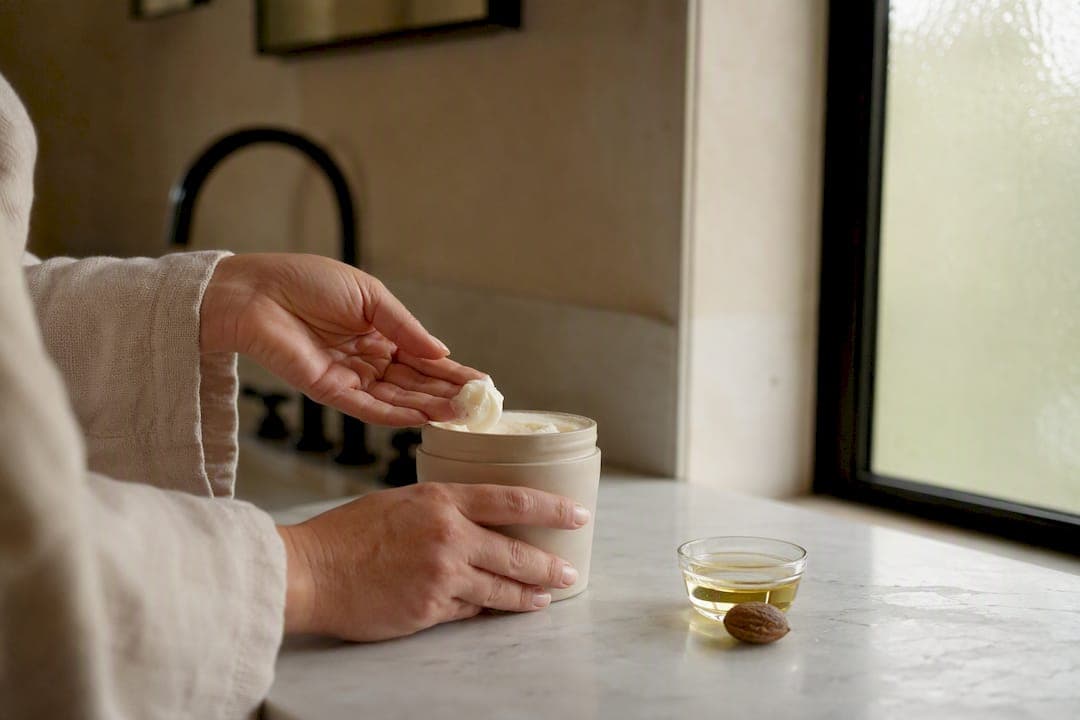
Preservative-free moisturisers suit sensitive skin well, but only when the product is genuinely anhydrous, meaning it contains no water. Body oils, whipped body butters, and balms fall into this category because microbes need water to grow, so they typically do not require a broad-spectrum preservative. Any water-containing lotion marketed as "preservative-free" deserves scrutiny, and under UK law, every cosmetic sold, including yours, still needs a Cosmetic Product Safety Report before it reaches a shelf.
TL;DR:
- Preservative-free products like body butters, oils, and balms are genuinely anhydrous, meaning they contain no water and do not require broad-spectrum preservatives.
- Water-based lotions and emulsions must have preservatives and undergo challenge testing, making label claims of preservative-free suspicious if water is added.
- UK regulations require every cosmetic to have a safety assessment, but anhydrous formulas often skip microbiological testing, focusing instead on stability and physicochemical properties.
- Proper hygiene, packaging, and storage are essential to prevent contamination and spoilage of preservative-free moisturizers.
- Always verify full ingredient lists, allergens, and responsible person declarations to ensure product safety rather than trusting marketing claims alone.
Table of Contents
- What "preservative-free" actually means: anhydrous vs water-containing formulas
- Body oils, butters and balms: what to expect from each
- UK safety rules: CPSR, when testing applies, and what the label must tell you
- How to store and use preservative-free moisturisers without contaminating them
- A checklist for choosing a safe preservative-free moisturiser
- How Afterhoursbodybutter approaches preservative-free formulation
- What sensitive skin actually needs from a "clean" label
- Shop Afterhoursbodybutter's anhydrous, preservative-free range
- Where to check the rules yourself
- Sources
What "preservative-free" actually means: anhydrous vs water-containing formulas
Anhydrous means exactly what it sounds like: no water. A body butter whipped from shea butter, cocoa butter, and plant oils has nowhere for bacteria or mould to take hold, because microbial growth depends on a water phase to move through. That's the whole reason preservative-free claims hold up on these products and fall apart on others.
Emulsions are different. Any lotion, cream, or "milk" that blends oil and water needs an emulsifier to hold that mix together, and water sitting in a jar at room temperature is an open invitation to contamination. That's where broad-spectrum preservatives earn their place, protecting the formula for months rather than days.
Common anhydrous forms include:
- Body butters: whipped blends of butters and oils, often with added plant extracts
- Facial and body oils: single oils or oil blends, sometimes with a light fragrance
- Balms: firmer, wax-thickened versions used for targeted, drier patches of skin
Vitamin E (tocopherol) often appears in these formulas as an antioxidant that slows down oil rancidity; it is not a preservative and does not stop bacterial growth in water-based products.
Body oils, butters and balms: what to expect from each
Texture and behaviour vary a lot across anhydrous formats, and that matters for anyone managing reactive skin day to day.
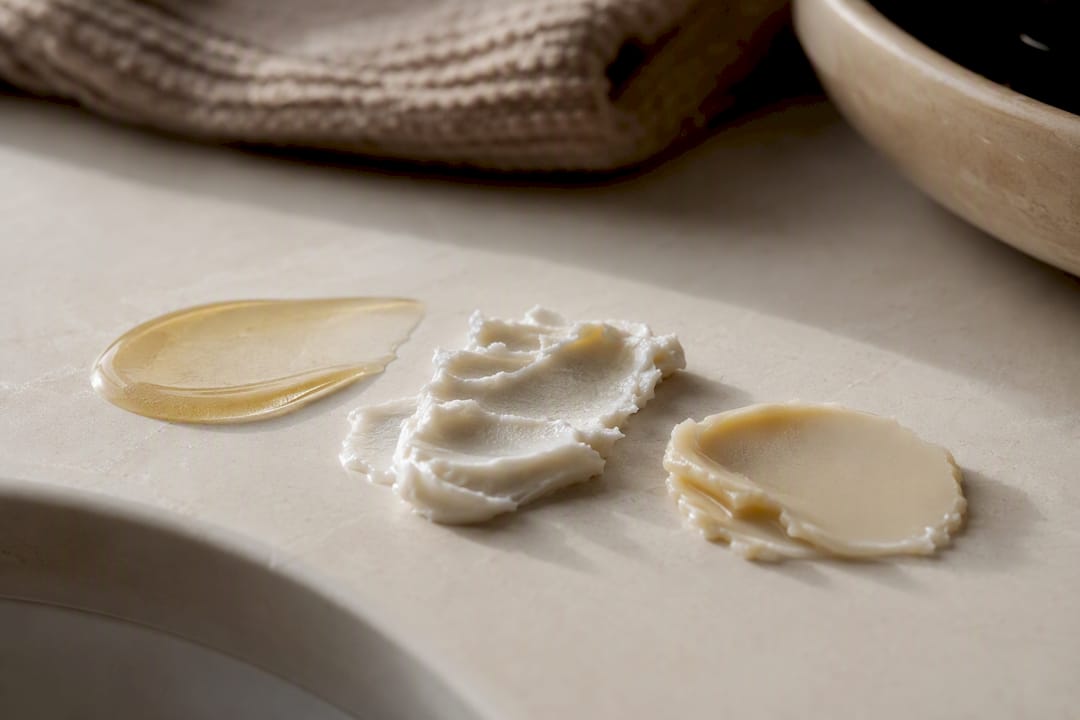
Body oils sink in fastest on damp skin and suit anyone who dislikes a heavy after-feel, though bottle packaging (rather than an open dish) keeps hands from contaminating the product.
Body butters feel richer and sit longer on the surface, which helps with genuinely dry or flaking patches. They also melt in warm weather or a hot car, something worth knowing before you order one in July.
Facial balms and concentrated oil serums work best on small, targeted areas, cuticles, eyebrows, or patches of eczema, since a little goes a long way and the thicker texture isn't built for full-face daily use.
One thing to flag: "preservative-free" doesn't always mean "additive-free." A butter can legitimately skip preservatives while still containing fragrance oils, colourants, or oil-soluble actives, so read the full ingredient list rather than assuming a clean label across the board.
Pro Tip: If you're not sure whether a butter has melted and re-set safely, check the texture rather than the smell first. Re-set butter often looks grainy or separated even when it still smells fine, and texture change is usually the earlier warning sign.
UK safety rules: CPSR, when testing applies, and what the label must tell you
Every cosmetic sold in the UK, handmade or mass-produced, preservative-free or not, needs a Cosmetic Product Safety Report signed off by a qualified assessor before it goes on sale. That report is the baseline. It doesn't mean every product goes through the same tests.
Genuinely anhydrous formulas, body butters and oils assessed as anhydrous leave-on cosmetics, usually skip microbiological challenge testing because there's no water phase to support bacterial growth. Instead, the assessment for an anhydrous body butter centres on oxidative stability, physicochemical checks that support how long a brand can claim the product stays usable.
The moment a brand adds a hydrosol, aloe juice, or any water-based ingredient to that same butter, it becomes an emulsion, and an emulsion needs a preservative system plus proper challenge testing to back it up.
What the label should show you:
- Full INCI ingredient list, in descending order of concentration
- Fragrance allergens declared above the relevant threshold, since leave-on products carry stricter exposure limits than rinse-off ones
- A period after opening (PAO) symbol or best-before date
- A named Responsible Person for the UK market
Fragrance in particular deserves attention. Leave-on products sit on skin for hours, so manufacturers must declare allergens and often use lower fragrance loads than they would in a wash-off product, a detail that matters a great deal if fragrance is your usual trigger.
How to store and use preservative-free moisturisers without contaminating them
Good hygiene habits matter more with anhydrous products than most people realise, since there's no preservative doing damage control if you introduce moisture or bacteria.
- Choose airless or pump packaging where you can. An open jar you dip into with wet fingers invites water and microbes straight into the product, undoing the whole point of going preservative-free.
- Keep the jar somewhere cool, dry, and out of direct sunlight. Heat speeds up oxidation, and sunlight does the same, so a bathroom shelf next to a radiator is the wrong spot.
- Use a small spatula for jarred products, and only ever touch it with dry hands. This one habit prevents most contamination issues on its own.
- If a butter melts, let it re-set at room temperature rather than in the fridge. Fridge-cooling too fast can cause a grainy, separated texture, though the product usually remains safe to use.
- Watch for off-odour, visible separation, or an unexpected texture change, signs of rancidity, which is the main spoilage risk for anhydrous formulas. If you spot any of these, discard the product and contact the seller rather than assuming it's still fine.
A checklist for choosing a safe preservative-free moisturiser
Before you buy, run through a short set of hard criteria rather than trusting a marketing label at face value.
Confirm the formula is actually anhydrous. A "preservative-free" claim on anything containing a water-based ingredient, hydrosols included, is a red flag, not reassurance.
Check for a full INCI list, fragrance/allergen declaration, and a named Responsible Person. These three details separate a properly assessed product from one that's simply skipped the paperwork. Our own checklist for choosing a body moisturiser walks through exactly what to look for on a label.
Questions worth asking a brand directly:
- What testing or CPSR documentation backs this product?
- What's the shelf life or PAO, and how was that figure reached?
- What patch-test procedure do you recommend before full use?
Red flags to walk away from: vague "chemical-free" claims with no ingredient list attached, no visible shelf-life information, and no Responsible Person named anywhere on the packaging or product page. Fragrance transparency is a genuine trust signal here, brands that hide behind "natural fragrance" without disclosing allergens are cutting a corner that matters for reactive skin.
Pro Tip: When in doubt, patch-test on the inside of your forearm for 48 hours before applying anything new to your face or a larger area. This catches most reactions before they become a bigger problem.
If you're prone to fragrance reactions specifically, going fragrance-free removes one whole category of risk. Our guide to fragrance-free body butter covers what to expect from unscented formulas and why sensitive-skin readers often default to them.
How Afterhoursbodybutter approaches preservative-free formulation
Afterhoursbodybutter builds its anhydrous body butters as vegan, cruelty-free formulas using natural, fat-soluble nutrients aimed at dryness, irritation, and acne-prone skin specifically. That means whipped butter and oil bases with no water phase, antioxidant support to guard against rancidity, and full INCI listings with allergens declared clearly rather than buried. Every product carries the CPSR and Responsible Person documentation UK cosmetics law requires. Check individual product pages for exact ingredient breakdowns and storage guidance before buying.
What sensitive skin actually needs from a "clean" label
Fewer ingredients doesn't automatically mean safer skincare, and this is where a lot of preservative-free marketing quietly misleads people. A ten-ingredient anhydrous butter with proper documentation beats a three-ingredient lotion with no INCI list and no Responsible Person named, every time. The ingredient count was never the safety signal; water content, packaging, and paperwork were.
Where I think the conventional advice falls short is in treating "preservative-free" as a blanket virtue rather than a formulation fact that only applies cleanly to anhydrous products. Plenty of well-meaning buyers assume any lotion calling itself preservative-free is automatically gentler, when in reality a water-containing product without a preservative system is the riskier choice, not the safer one.
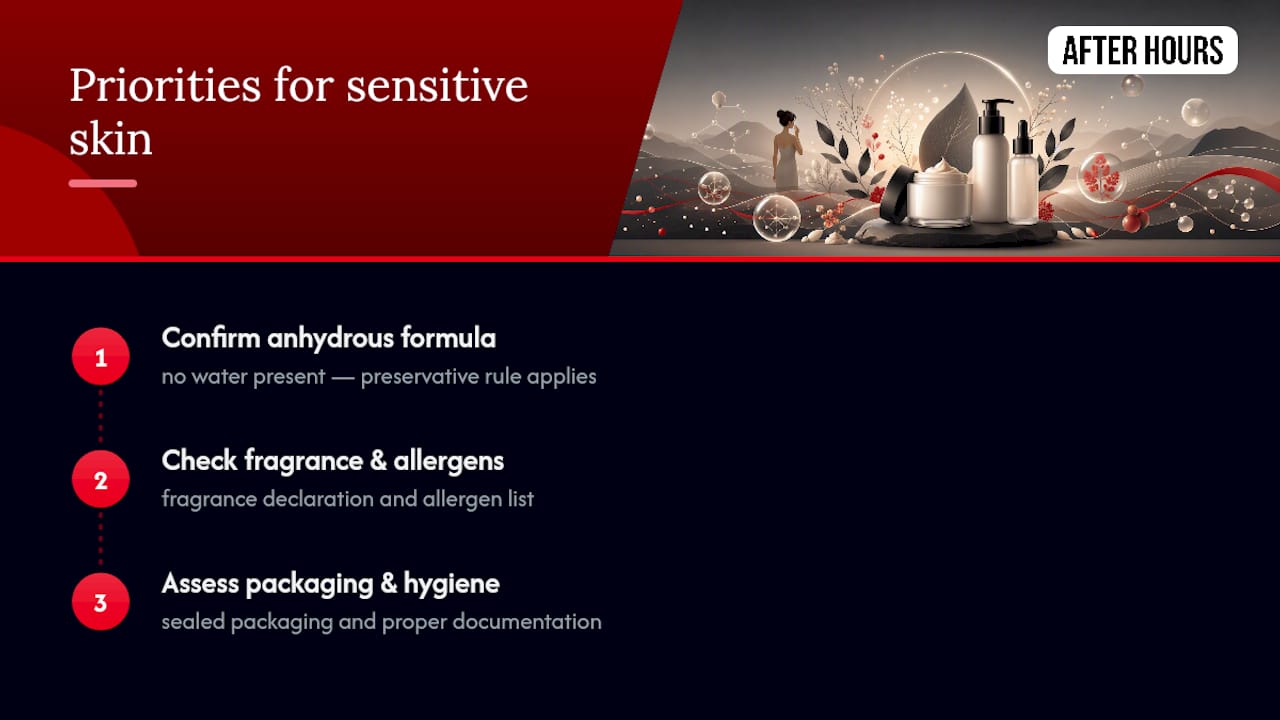
If you have reactive or easily irritated skin, prioritise in this order: confirm the formula is genuinely anhydrous, check the fragrance and allergen declaration, then look at packaging and hygiene habits. Ingredient purity matters less than most guides suggest. Formulation logic and proper documentation matter more.
— Darnell
Shop Afterhoursbodybutter's anhydrous, preservative-free range
Afterhoursbodybutter's body butters are formulated as vegan, cruelty-free anhydrous blends, meaning no water phase, no need for broad-spectrum preservatives, and full transparency on what's actually in the jar. Every formula leans on fat-soluble vitamins and stable plant oils rather than synthetic filler, built specifically for skin that reacts to more than it tolerates.
Before you buy, check the product page for the full INCI list, declared fragrance allergens, and storage guidance, the same three checks recommended earlier in this guide. That way you know exactly what you're applying and how to keep it fresh once it's opened. Visit the Afterhoursbodybutter shop to browse the current range and find the formula that matches your skin's specific needs.
Where to check the rules yourself
For the regulatory detail behind this guide, start with GOV.UK's guidance on making cosmetics available in Great Britain, which sets out the CPSR requirement in full. Phoenix Compliance Services' explainer on CPSR for body butters and oils covers the technical assessment process in more depth.
Sources
- Gov
- CPSR for Body Butter & Body Oils (UK & EU Guide) — Phoenix Compliance Services
- Body butter safety assessment (CPSR) | Lexora