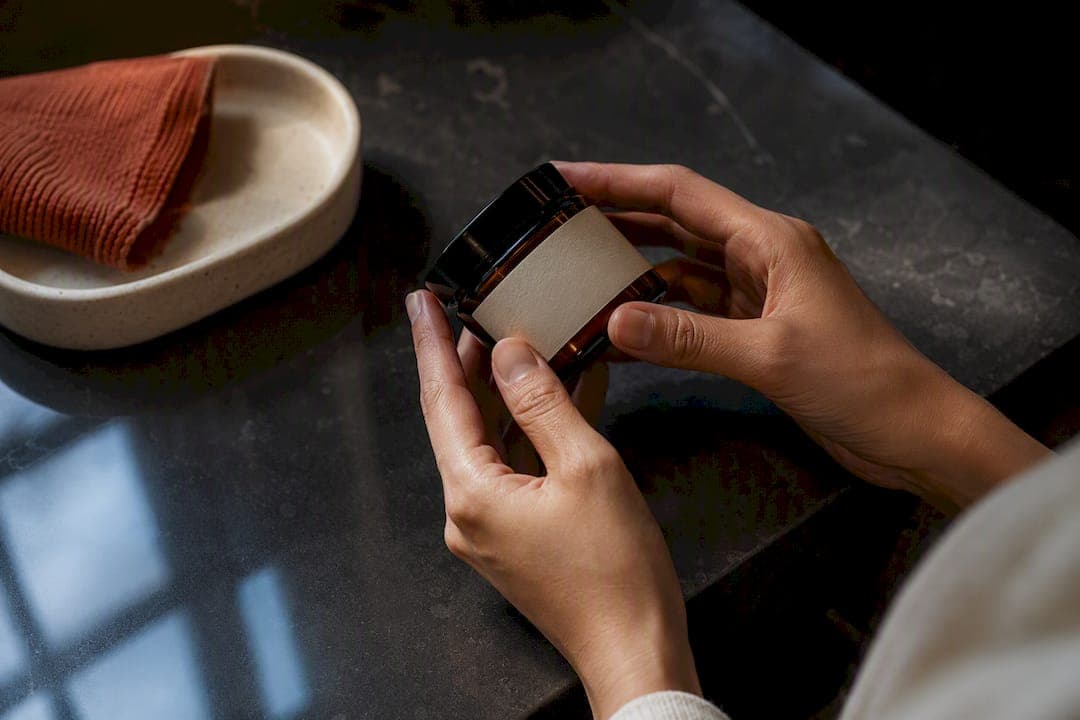
Fragrance-free is the safer choice if you have sensitive or allergy-prone skin, because it means no fragrance materials have been intentionally added. Unscented products can still contain masking fragrances designed to cancel out other smells. Check the ingredient list (INCI) for "fragrance" or "parfum" and named allergens, and favour products carrying a recognised certification seal over an unverified front-of-pack claim.
TL;DR:
- Fragrance-free products are generally safer for sensitive skin because they do not contain intentionally added fragrance materials, unlike unscented products which may include masking agents.
- Masking agents are still chemicals that can trigger allergies, and many unscented products rely on them to neutralize odors, making fragrance-free claims more reliable.
- Labels claiming "fragrance-free" or "unscented" are not strictly regulated, so ingredients like botanical extracts or essential oils can still pose allergy risks despite marketing claims.
- Recognizing common fragrance allergens such as limonene, linalool, and citrus oils is crucial, as they are found in natural extracts and can be just as allergenic as synthetic scents.
- Certified products from organizations like the National Eczema Association or EPA's Safer Choice standards provide stronger assurance than vague label claims but still do not guarantee allergy safety for every individual.
Table of Contents
- Unscented vs fragrance-free: what "unscented" actually means
- Unscented or fragrance free: how the label loopholes work
- Why the difference between unscented and fragrance-free matters for reactive skin
- How to choose personal care products for sensitive or reactive skin
- Masking agents and named allergens worth knowing on sight
- What certification seals actually confirm
- Formulation experience behind this guidance
- Scent preference versus skin safety: an editorial view
- A fragrance-free range built for sensitive skin
- Sources
- FAQ
Unscented vs fragrance-free: what "unscented" actually means
"Unscented" is an outcome claim. It tells you the finished product has no perceptible smell, but it says nothing about what went into achieving that. Brands frequently add masking agents, fragrance compounds whose job is to neutralise the odour of other ingredients rather than add a scent of their own. Wirecutter's reporting on EPA guidance confirms this is standard practice across the industry, not a rare workaround.
That distinction matters more than it sounds. A masking agent is still a fragrance chemical, and allergenicity depends on molecular structure, not on whether you can smell it. An odourless compound can sensitise skin just as effectively as a strongly perfumed one.
Common reasons brands reach for masking agents include:
- Covering the natural smell of raw plant oils or proteins
- Neutralising the scent of preservatives or emulsifiers
- Meeting consumer expectations that skincare should smell "clean" or neutral
None of that helps someone with reactive skin, which is exactly why "unscented" and "fragrance-free" are not interchangeable terms.
Unscented or fragrance free: how the label loopholes work
"Fragrance-free" means no fragrance materials have been deliberately added for scent, which is a narrower and generally more reliable claim than "unscented." Even so, the label isn't foolproof. McGill's Office for Science and Society points out that neither term has a universally recognised legal definition, which leaves room for interpretation brands can exploit.
The most common loopholes to watch for:
- Botanical extracts and essential oils added for their "skin benefits" but containing the same allergenic molecules as synthetic fragrance
- Ingredient synonyms on the INCI list, such as "citrus peel oil" instead of naming limonene directly
- Natural fragrance claims, which sound reassuring but carry no reduced allergy risk
DermApproved's analysis of this labelling trap makes the same point: the front-of-pack claim is marketing. The INCI list is the only part of the packaging that tells the truth.
Why the difference between unscented and fragrance-free matters for reactive skin
Fragrance is one of the most common triggers of allergic contact dermatitis, a delayed immune reaction where the skin's defence cells mistake a chemical for a threat and mount an inflammatory response on repeat exposure. It's not an instant reaction like a chemical burn. It builds with repeated contact, which is why someone can use a product for months before a rash appears.
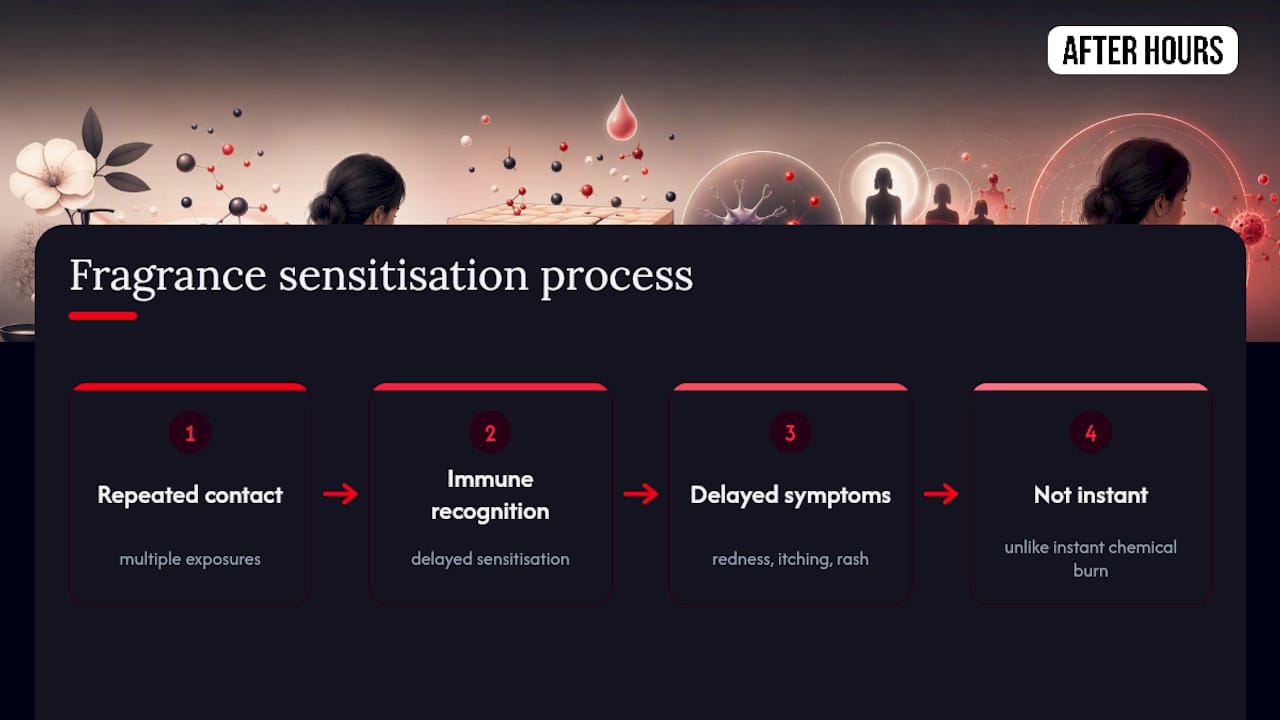
Fragrance sensitisation shows up often enough in clinical practice that dermatologists routinely test for it. Peer-reviewed research on fragrance allergy and dermatitis identifies fragrance chemicals as a leading cause of contact allergy, and a PMC review of fragrance allergens lists the specific molecules most frequently responsible. SkinDetekt's dermatology-facing overview draws the same conclusion: fragrance-free products carry meaningfully lower risk for sensitive skin than unscented ones, precisely because masking agents remain a hidden variable.
If you notice redness, itching, or a rash that tracks with a specific product, stop using it straight away. Patch-test any replacement on a small area of skin, such as the inner forearm, for 48 hours before applying it more widely. Persistent or worsening reactions warrant a visit to a dermatologist rather than more guesswork at home.
How to choose personal care products for sensitive or reactive skin
Shopping for sensitive skin doesn't need to be complicated once you know what to check and in what order.
- Start with the front label, but don't stop there. Prefer products marked "fragrance-free" over "unscented," and treat any certification seal as a stronger signal than either claim alone.
- Turn the bottle over and read the INCI list. Look specifically for "fragrance," "parfum," or "aroma", any of these means fragrance chemicals are present regardless of what the front label says.
- Scan for named allergens and botanical red flags. Ingredient names ending in "oil," "extract," or "water" derived from citrus, lavender, or ylang ylang can carry the same allergenic compounds as synthetic perfume. After Hours Body Butter's guide to reading skincare labels breaks down exactly which INCI terms to flag.
- Patch-test before committing to full use. Apply a small amount to the inner arm or behind the ear once daily for two to three days, checking for redness, itching, or bumps before using the product on larger areas.
- Introduce one new product at a time. If you switch your cleanser, moisturiser, and body butter simultaneously and react, you won't know which one caused it.
Pro Tip: Keep a simple note on your phone listing any ingredient that has previously caused a reaction. Cross-check it against every new INCI list before you buy, rather than relying on memory.
Masking agents and named allergens worth knowing on sight
A handful of ingredient names come up again and again in fragrance allergy testing, and recognising them on a label is worth more than trusting any marketing claim.
- Masking agents: often listed simply as "fragrance" or "parfum," with no obligation to name the individual compounds used to cancel out other odours.
- The EU's commonly flagged fragrance allergens: limonene, linalool, citronellol, geraniol, eugenol, coumarin, and hydroxycitronellal appear repeatedly in contact allergy prevalence data as leading causes of reaction.
- Essential oils and botanical extracts: lavender, citrus, and ylang ylang oils naturally contain several of the molecules above, so "natural" doesn't mean lower risk.
Oxidised versions of some of these compounds, particularly linalool and limonene, become more allergenic once exposed to air, which is one reason a bottle that's been open for months can provoke a reaction a fresh one didn't.
What certification seals actually confirm
The National Eczema Association's Seal of Acceptance and the EPA's Safer Choice fragrance-free standard both apply stricter ingredient limits than an unverified "fragrance-free" claim on packaging alone. Seals like these involve a formal review of the full ingredient list against defined allergen thresholds, rather than trusting a brand's own wording.
That said, certification confirms compliance with a specific standard's scope, not a guarantee against every possible reaction. Individual sensitivities vary, and a certified product can still contain an ingredient that troubles you personally. Certification narrows the risk considerably. It doesn't remove it.
Formulation experience behind this guidance
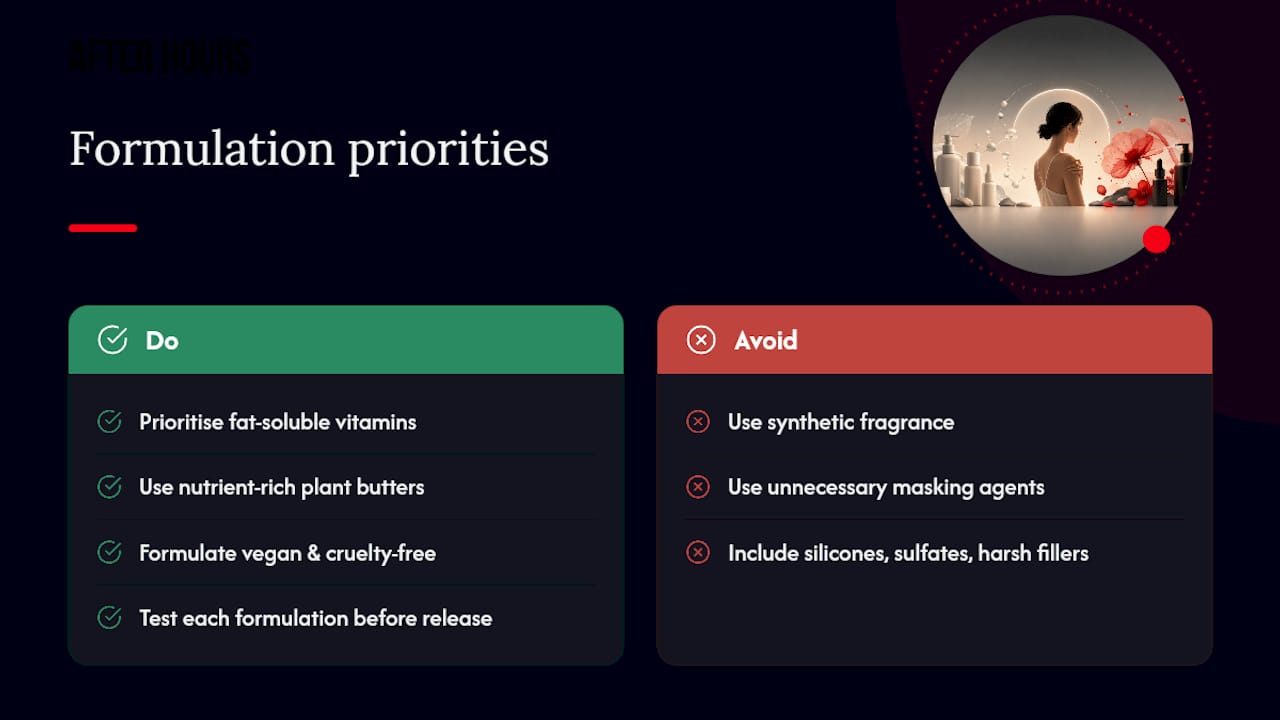
This guide is written by Darnell, who covers fragrance-free and preservative-free formulation for After Hours Body Butter. The brand builds its body butters as vegan, cruelty-free, and chemical-free, formulated specifically for sensitive skin and concerns like acne and dryness, without silicones, sulfates, or harsh fillers.
Formulating this way means prioritising fat-soluble vitamins and nutrient-rich plant butters while deliberately avoiding synthetic fragrance and unnecessary masking agents, even where they might make a product smell more "finished." Customers have reported visible reductions in irritation and improved skin texture, feedback that shapes how each new formulation gets tested before release. Readers wanting more product-specific detail can see the brand's fragrance-free body butter guidance for how these choices translate into finished products.
Scent preference versus skin safety: an editorial view
Plenty of people can wear a heavily perfumed lotion for years without a problem, and there's no need to talk anyone out of a scent they love if their skin tolerates it. The calculation changes the moment skin starts reacting, or has a documented history of eczema or contact dermatitis. At that point, fragrance-free stops being a preference and becomes the sensible default.
The real skill isn't memorising a list of banned ingredients. It's building the habit of reading INCI lists before buying anything, and treating a certification seal as a shortcut rather than a substitute for that habit. Trial-and-error under dermatology guidance, when a reaction does happen, beats guessing at home indefinitely.
— Darnell
A fragrance-free range built for sensitive skin
Some brands offer body butters made without fragrance materials, synthetic or masked, from the start rather than reformulated after complaints. Such ranges may be vegan, cruelty-free, and built around fat-soluble vitamins for skin prone to reactions from standard products.
If the ingredient-scanning habits above feel like a lot to keep track of every time you shop, starting with a brand that already formulates for sensitive skin removes most of that friction. Afterhoursbodybutter's body butters are made without silicones, sulfates, or harsh fillers, and readers dealing with barrier damage or ongoing irritation may also find the brand's calming body moisturiser guidance useful alongside a simpler sensitive skin routine. Visit the site to browse the current range and check formulation details for yourself before you buy.
Sources
- PubMed: study on fragrance allergy and dermatitis
- PMC review article on fragrance allergens and contact dermatitis
- McGill OSS: What is the difference between 'unscented' and 'fragrance-free'?
FAQ
Is it better to use unscented deodorant?
Fragrance-free deodorant is generally the safer pick for sensitive underarm skin, since "unscented" versions can still rely on masking agents that trigger reactions.
Does fragrance-free mean no smell?
Not necessarily. It means no fragrance materials were intentionally added, but raw ingredients like plant oils or shea butter can carry a faint natural smell of their own.
Is it better to use unscented soap?
Fragrance-free soap is the stronger choice for reactive or eczema-prone skin, because unscented soap can contain masking fragrances that unscented labelling doesn't disclose.
Is it better to use fragrance-free body wash?
Yes, particularly for anyone with a history of contact dermatitis. Checking the INCI list for "parfum" or named allergens matters more than trusting the front label alone.
What's the real difference between unscented and fragrance-free?
Unscented describes the finished smell and can involve masking fragrance. Fragrance-free means no fragrance ingredients, masking agents included, have been deliberately added.