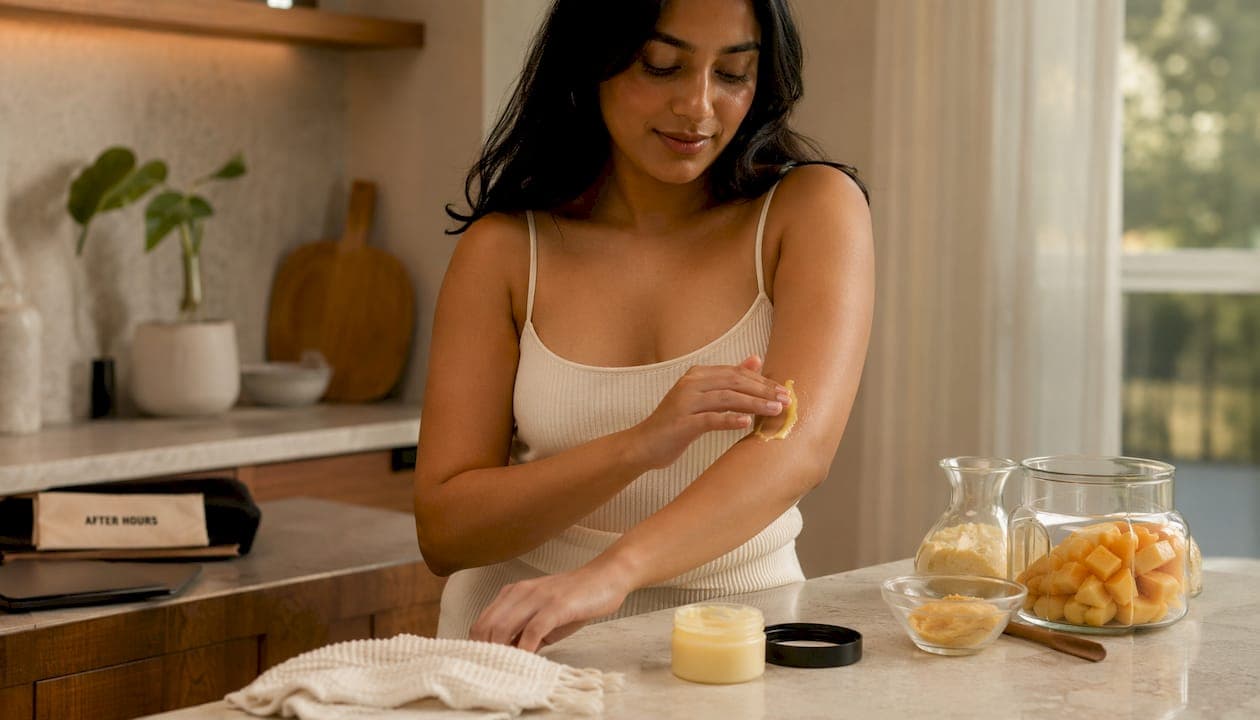
Mango butter hydrates skin by delivering a concentrated blend of stearic and oleic fatty acids that soften the outer layer and slow moisture loss. It forms a thin occlusive barrier on the surface, reducing transepidermal water loss while vitamins E, A, and C protect and renew skin cells underneath. Its low comedogenic rating makes it suitable for most skin types, including acne-prone skin. Key benefits at a glance:
- Seals in moisture with a lightweight, non-waxy barrier
- Replenishes skin lipids to reduce dryness and tightness
- Delivers antioxidants that protect against environmental damage
- Absorbs cleanly without clogging pores
- Supports skin barrier repair with consistent use
Table of Contents
- How mango butter works to hydrate your skin at the cellular level
- What are the main benefits of mango butter for skin moisture?
- What experts say about mango butter's hydration effect
- Why mango butter is a reliable natural hydrator
- Afterhoursbodybutter: natural body butter for real results
- Key takeaways
How mango butter works to hydrate your skin at the cellular level
Mango butter's hydration effect starts at the structural level. Its fatty acids fill gaps between skin cells, reinforcing the protective barrier that keeps moisture in. The balance between stearic and oleic acids is what makes it effective: stearic acid firms and protects, while oleic acid penetrates deeper to moisturise from within.
Once applied, mango butter forms an occlusive layer that reduces water evaporation from the skin's surface. This is particularly useful in dry or cold weather, when the skin barrier is under more stress. Vitamins A and C support cell renewal and even skin tone, while vitamin E reduces oxidative damage.
Practical application tips:
- Apply to slightly damp skin after a shower to lock in moisture
- Use a small amount — it melts on contact and spreads easily
- Focus on dry areas: elbows, knees, heels, and hands
- Use daily for cumulative barrier-strengthening results
- For face use, apply a pea-sized amount to avoid over-application
What are the main benefits of mango butter for skin moisture?
Mango butter's benefits go beyond basic surface hydration. Regular use supports skin firmness, reduces irritation, and improves overall texture over time.
- Dry skin relief: The fatty acid profile softens and smooths rough, flaky skin without feeling heavy.
- Reduced tightness: Consistent application reduces the sensation of tight, uncomfortable skin, particularly in winter.
- Skin firmness: Oleic and stearic acids support the skin's structural lipids, improving suppleness over time.
- Cracked skin repair: A 2008 study found mango butter outperformed a commercial lotion in treating cracked heels, reducing scars and cracks more effectively.
- Acne-prone skin compatibility: With a comedogenic rating around 2, it is less likely to block pores than heavier butters such as cocoa butter.
- Sensitive skin tolerance: Most people tolerate mango butter well. Those with tree nut allergies should patch-test first.
- Texture improvement: Vitamins A and C support cell renewal, contributing to smoother, more even skin over time.
For a broader look at how plant butters compare, the guide on skin nourishing butters covers the full range of options.
What experts say about mango butter's hydration effect
The evidence behind mango butter's moisturising action is grounded in how skin barrier function works. Dermatological research confirms that ingredients filling intercellular gaps are among the most effective at retaining moisture long-term.
"Mango butter fills microscopic gaps between skin cells, improving moisture retention and skin barrier resilience. Over time, consistent application reduces dryness sensation and supports the skin's natural moisturising ability." — PMC skin hydration research
Its antioxidant constituents — vitamins E, A, and C — protect skin cells from environmental stress, which is a key factor in maintaining a healthy, hydrated barrier, as supported by the face balm tallow designed for the modern man that nourishes skin naturally. This is not purely surface-level hydration; it improves the skin's own capacity to hold moisture over time.
Pro Tip: Apply mango butter every evening for at least four weeks to see measurable improvements in skin texture and moisture retention. Consistency matters more than quantity.

Afterhoursbodybutter's formulations are built around this principle: chemical-free, cruelty-free ingredients that work with the skin's biology rather than masking dryness temporarily. Their approach to strengthening the skin barrier reflects the same evidence-backed thinking.

Why mango butter is a reliable natural hydrator
Mango butter earns its place as a natural moisturiser through a combination of factors that few single ingredients match.
- Its fatty acid profile both penetrates and protects, addressing hydration at multiple levels
- Antioxidant vitamins reduce damage that degrades the skin barrier over time
- Low comedogenic rating makes it broadly compatible across skin types
- It absorbs without residue, making daily use practical and comfortable
- Regular application builds cumulative barrier strength, not just temporary relief
For those dealing with dry or sensitive skin, mango butter is a well-tolerated, evidence-supported option worth adding to your daily routine.
Afterhoursbodybutter: natural body butter for real results
Afterhoursbodybutter makes premium, vegan body butters using natural ingredients including mango butter. No harsh chemicals. No fillers. Formulated for people who want visible results: softer skin, reduced dryness, and better moisture retention. Free UK delivery on orders over £30. Shop now, pay later with Klarna. Browse the full range at afterhoursbodybutter.co.uk and find the right product for your skin.
Key takeaways
Mango butter hydrates skin by combining occlusive fatty acids with antioxidant vitamins to reinforce the skin barrier and reduce moisture loss.
| Point | Details |
|---|---|
| Fatty acid barrier action | Stearic and oleic acids fill intercellular gaps and slow transepidermal water loss. |
| Antioxidant protection | Vitamins E, A, and C protect skin cells and support renewal for improved texture. |
| Clinical evidence | A 2008 study showed mango butter outperformed commercial lotion on cracked heel repair. |
| Broad skin compatibility | Mango butter has a low comedogenic rating, making it generally suitable for acne-prone and sensitive skin types. |
| Afterhoursbodybutter | Offers chemical-free, cruelty-free body butters formulated with natural ingredients for dry and sensitive skin. |