
Natural butters are defined as plant-derived fats that replenish the skin's lipid barrier, reduce moisture loss, and deliver bioactive compounds including antioxidants and anti-inflammatory agents. The role of natural butters in skin care goes well beyond basic moisturisation. Shea, cocoa, and mango butters each carry distinct fatty acid profiles and unsaponifiable fractions that actively repair the skin barrier rather than simply coating it. The global natural skin care market was valued at USD 7.5 billion in 2024, driven largely by demand for these plant-based lipids. That figure reflects a clear shift: people are choosing ingredients with a documented function, not just a pleasant texture.
What does the science say about natural butters for skin?
The evidence for plant-based emollients is grounded in barrier biology. Botanical lipids reduce transepidermal water loss and reinforce the skin's protective layer. This matters because a compromised barrier is the root cause of dryness, sensitivity, and reactive skin conditions.
The American Academy of Dermatology endorses barrier repair as a leading strategy for managing dry, eczema-prone, and reactive skin, with plant-derived emollients playing a meaningful role. That endorsement places natural butters firmly within evidence-based skin care, not the realm of wellness trends.
Two mechanisms explain how butters work:
- Occlusive action: Butters form a physical layer on the skin surface that slows water evaporation. Cocoa butter, with its high saturated fatty acid content, delivers the strongest occlusive effect.
- Emollient action: Butters fill gaps between skin cells, softening and smoothing the surface. Shea butter excels here due to its oleic acid content and unsaponifiable fraction.
- Anti-inflammatory activity: The unsaponifiable compounds in shea butter, including lupeol, α-amyrin, and β-amyrin, inhibit inflammatory pathways. This is active therapeutic function, not passive moisturisation.
- Antioxidant protection: Unrefined butters contain tocopherols and phytosterols that neutralise free radicals and slow oxidative skin ageing.
"Shea butter's therapeutic power comes from its unsaponifiable fraction rather than its occlusive effect alone, actively calming skin inflammation." Dermatologists now recommend combining clinical actives with plant butters to soothe, repair, and build long-term skin resilience.
The distinction between occlusive and emollient effects is not academic. It determines which butter you choose and how you layer it within a routine.
How do shea, cocoa, and mango butter compare?
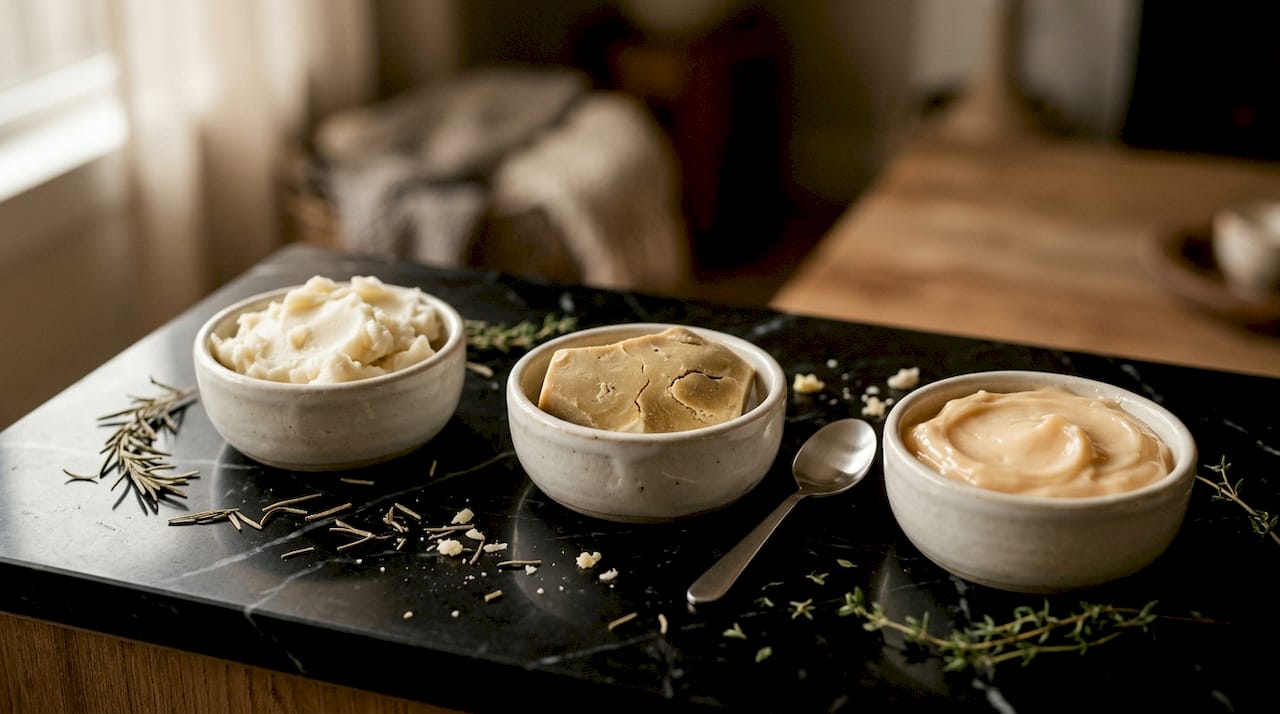
Texture and melting points dictate ideal use: shea suits heavy-duty repair, mango suits light facial application, and cocoa suits firm, solid product formulations. Each butter has a distinct fatty acid profile that shapes its behaviour on skin.
| Butter | Key fatty acids | Texture | Best for |
|---|---|---|---|
| Shea | Oleic (40–60%), stearic (20–50%) | Soft, creamy | Dry, mature, eczema-prone skin |
| Cocoa | Stearic, palmitic (high saturation) | Firm, waxy | Very dry, cracked skin, elasticity support |
| Mango | Oleic, stearic, palmitic (balanced) | Light, non-greasy | Combination skin, humid climates |
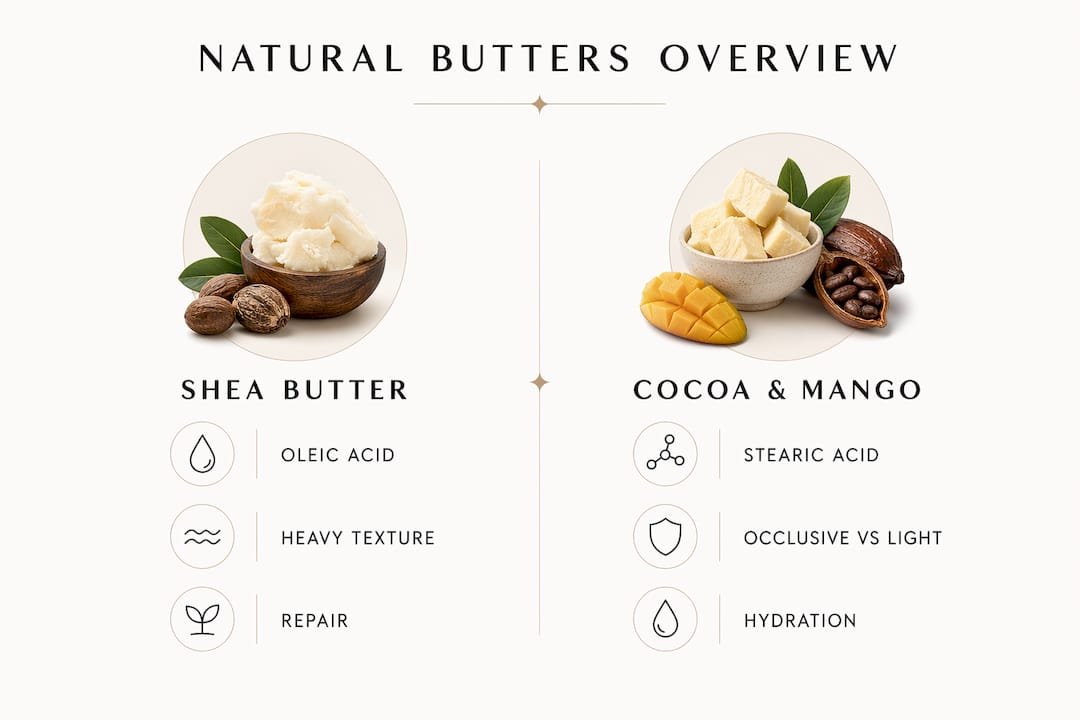
Shea butter carries a unique fatty acid profile with oleic acid at 40–60% and stearic acid at 20–50%, closely mirroring the skin's own lipid composition. Its unsaponifiable fraction reaches up to 17%, making it the most therapeutically active of the three. That fraction contains triterpenes that actively calm redness and irritation.
Cocoa butter is highly occlusive due to its dominance of stearic and palmitic acids. It forms an effective physical barrier and supports skin elasticity, which makes it well suited to very dry or cracked areas. Its firm texture also makes it a reliable base for solid body butter formulations.
Mango butter offers a lighter, non-greasy finish with a higher melting point than shea. It absorbs without heaviness, which suits combination skin types and people living in warmer or more humid climates where heavier butters feel uncomfortable.
Pro Tip: If you have oily or combination skin and find shea butter too heavy, mango butter applied to damp skin gives you barrier support without the greasy residue.
What formulation factors affect how well butters work?
Single butters rarely meet the full requirements of healthy skin on their own. Combining butters low in linoleic acid, such as shea, with linoleic-rich oils like rosehip is necessary to avoid clogged pores and mimic the fatty acid balance of healthy sebum. Linoleic acid is the fatty acid most depleted in acne-prone and barrier-compromised skin, so its absence in a formulation is a real gap.
Unrefined butters retain the full unsaponifiable fraction responsible for therapeutic barrier repair. Refined butters lose these compounds during processing, leaving a neutral, odourless fat with limited active benefit. The difference is significant: up to 17% unsaponifiable content in unrefined shea versus near zero in refined versions.
Key formulation principles to apply:
- Choose unrefined over refined wherever possible. The colour and natural scent are signs of retained bioactives, not impurities.
- Pair with linoleic-rich oils. Rosehip, hemp seed, and evening primrose oil all complement shea and cocoa butter by supplying the fatty acids those butters lack.
- Match melting point to application. A butter that melts at body temperature spreads easily and absorbs well. One with a very high melting point may sit on the skin surface longer than intended.
- Avoid over-occluding acne-prone skin. Cocoa butter's high occlusivity can trap sebum on congestion-prone areas. Use lighter butters or dilute with non-comedogenic oils for those skin types.
Pro Tip: Check the colour of your shea butter before buying. Unrefined shea ranges from ivory to pale yellow. Bright white shea has almost certainly been refined and stripped of its active compounds.
How to use natural butters for different skin types
Selecting the right butter for your skin type determines whether you get genuine results or just a temporary softening effect.
-
Dry and mature skin: Shea butter is the first choice. Its oleic acid content nourishes deeply, and its anti-inflammatory triterpenes calm the low-grade irritation that often accompanies dry or ageing skin. Apply to slightly damp skin after bathing to lock in moisture.
-
Eczema-prone and sensitive skin: Shea butter's unsaponifiable fraction actively reduces redness and irritation. Use unrefined shea as a standalone treatment on flare-prone areas. Patch test on the inner arm for 24 hours before applying to the face or large body areas.
-
Very dry or cracked skin: Cocoa butter's firm, occlusive texture makes it the strongest barrier option. The Men's Cocoa Body Butter from Afterhoursbodybutter uses this principle directly, targeting deep moisture for dry skin with a cocoa-based formulation.
-
Combination and oily skin: Mango butter or kokum butter suit this type best. Both absorb without heaviness and do not add excess oleic acid to skin that already produces sufficient sebum. Layer thinly and allow full absorption before dressing.
-
Acne-prone skin: Pair a light butter with a linoleic-rich oil. Rosehip oil alongside a small amount of mango butter gives barrier support without the comedogenic risk of heavier, oleic-dominant butters used alone.
-
All skin types: Dermatologists recommend a hybrid approach. Use clinical actives such as niacinamide or retinol to address specific concerns, then apply a natural butter as the final moisturising step to soothe, seal, and support long-term resilience.
Gradual introduction matters. Add one new butter to your routine at a time and observe your skin's response over two weeks before layering additional ingredients.
Key takeaways
Natural butters repair the skin barrier through both occlusive and active therapeutic mechanisms, with unrefined versions delivering the most benefit due to their retained unsaponifiable fractions.
| Point | Details |
|---|---|
| Barrier repair is the core function | Natural butters reduce transepidermal water loss and reinforce the skin's protective lipid layer. |
| Unrefined beats refined | Unrefined shea retains up to 17% unsaponifiable compounds; refined versions lose these active components. |
| Match butter to skin type | Shea suits dry and sensitive skin; cocoa suits cracked skin; mango suits combination and oily skin. |
| Pair with linoleic-rich oils | Butters low in linoleic acid need complementary oils like rosehip to avoid pore congestion. |
| Hybrid routines work best | Combining clinical actives with natural butters addresses specific concerns while building long-term resilience. |
What I have learned from working with natural butters
Unrefined shea butter is the most versatile base I have encountered. It works on dry elbows, post-shave irritation, and sensitive facial skin without causing the breakouts that heavier formulations often trigger. The key is understanding that its value comes from the unsaponifiable fraction, not the fat itself.
The biggest misconception I see is that all natural butters are interchangeable. They are not. Cocoa butter on acne-prone skin is a common mistake. Its occlusivity is a strength on cracked heels and very dry body skin, but it can worsen congestion on the face or chest. Mango butter in that same situation gives you barrier support without the risk.
Texture matters more than people acknowledge. A butter that feels unpleasant to apply will not get used consistently, and consistency is what produces results. Afterhoursbodybutter addresses this directly by combining natural butters with sensory appeal, which is why products like the Blueprint Aura Body Butter get used daily rather than sitting unused on a shelf.
Combining butters with herbal extracts amplifies the anti-inflammatory effect. Calendula and green tea extract alongside shea butter, for example, give you both the lipid barrier repair and additional antioxidant activity that neither ingredient delivers alone. That combination is where natural skin care moves from pleasant to genuinely functional.
— Darnell
Natural body butters from Afterhoursbodybutter
Afterhoursbodybutter formulates each product around the principles covered here: unrefined plant butters, complementary oils, and no synthetic fillers.
The Blueprint Aura Body Butter and Shadowed Timber Body Butter both use natural butter bases designed for deep hydration and barrier support. The Men's Cocoa Body Butter targets dry skin specifically with cocoa butter's occlusive strength. Every product is vegan, cruelty-free, and free from synthetic chemicals. Browse the full product range to find the right formulation for your skin type and concerns.
FAQ
What is the main role of natural butters in skin care?
Natural butters restore and maintain the skin's lipid barrier by reducing transepidermal water loss and delivering fatty acids that mirror the skin's own composition. Unrefined versions also supply anti-inflammatory and antioxidant compounds through their unsaponifiable fractions.
Is shea butter or cocoa butter better for dry skin?
Both work well, but for different degrees of dryness. Shea butter suits dry and sensitive skin with its anti-inflammatory properties, while cocoa butter's stronger occlusivity makes it better suited to very dry or cracked skin.
Can natural butters cause breakouts?
Highly occlusive butters like cocoa butter can worsen congestion on acne-prone or oily skin. Lighter options such as mango butter, paired with a linoleic-rich oil like rosehip, provide barrier support without the comedogenic risk.
What is the difference between refined and unrefined shea butter?
Unrefined shea butter retains up to 17% unsaponifiable compounds, including the triterpenes responsible for anti-inflammatory and antioxidant activity. Refined shea butter loses these compounds during processing, leaving a neutral fat with limited therapeutic benefit.
How do you apply natural butters for best results?
Apply to slightly damp skin immediately after bathing to seal in moisture. Introduce one butter at a time, patch test for 24 hours, and allow two weeks of consistent use before assessing results.