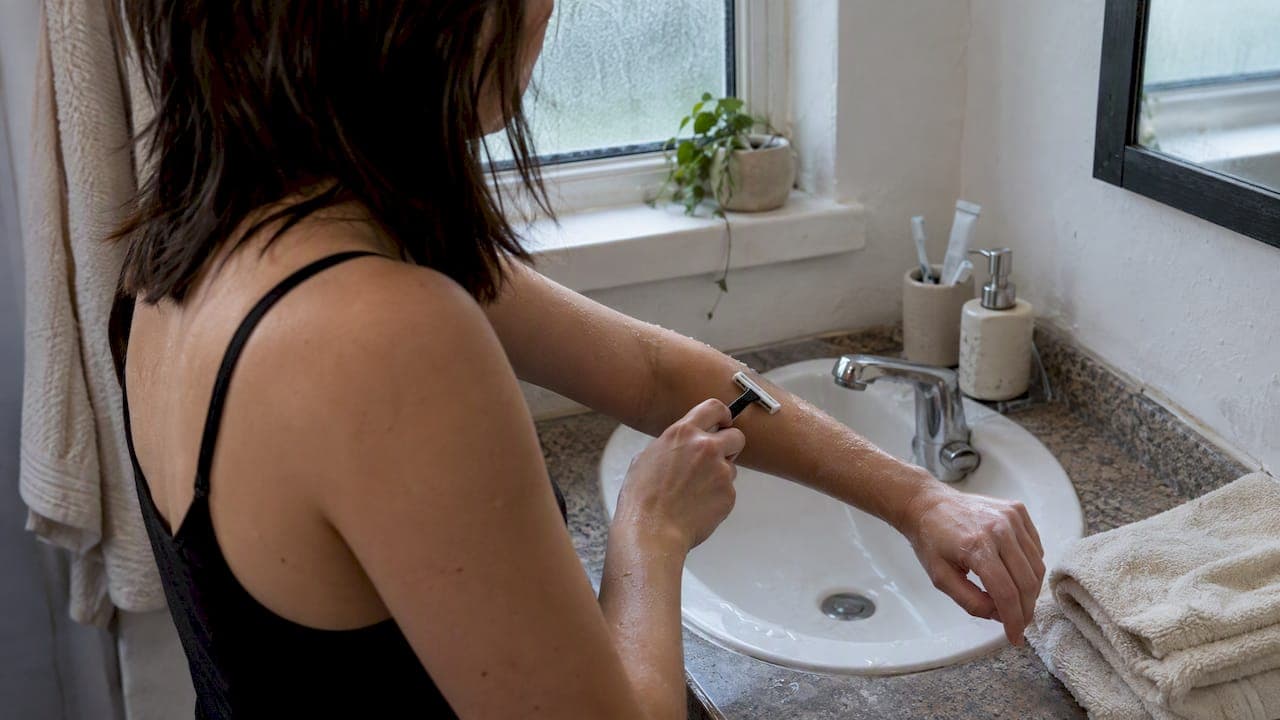
The safest approach to sensitive skin shaving is a short wet shave with a sharp blade, shaved with the grain, using soap-free prep and alcohol-free aftercare. Limit yourself to only a few passes over any area, and skip the alcohol-based aftershave altogether. This routine draws on NHS guidance and practical experience with sensitive-skin care.
TL;DR:
- Using a sharp, clean blade and limiting shaving passes to two reduces irritation and the risk of ingrown hairs, especially when shaving with the grain.
- Avoid soap-based products, hot water that is too hot, and alcohol-based aftershaves, opting instead for soap-free cleansers and alcohol-free, emollient-rich aftercare products.
- Shave with short strokes at a shallow angle on a clean, prepped face or body, and rinse the blade after each pass to minimize irritation and bacterial buildup.
- Post-shave, rinse with cool water, pat dry, and apply a fragrance-free, emollient balm to restore the skin barrier and reduce redness or itching.
- For sensitive areas like the groin or underarms, prefer trimming, depilatory creams, or laser hair removal over shaving, and always use very gentle techniques to prevent irritation.
Table of Contents
- How to prepare your skin before you shave
- Choosing razors and shaving products that reduce irritation
- Step-by-step shaving technique to limit nicks and ingrown hairs
- Immediate and ongoing aftercare for shaved skin
- Shaving sensitive areas safely and safer alternatives
- Red flags, ingrown hairs and prevention that actually works
- Picking a post-shave moisturiser that actually helps
- A realistic note on sensitive skin and shaving
- A fragrance-free body butter for after you shave
- FAQ
- Sources
How to prepare your skin before you shave
Good prep does most of the work. Warm water softens hair and opens pores, so shave after a warm shower or hold a warm compress against the area for a few minutes first.
Skip the soap-based foam. Standard soap strips natural oils and leaves skin more reactive, so a soap-free cleanser or emollient works better as a base layer, a point backed by clinical guidance on folliculitis prevention. Light exfoliation once or twice a week helps free trapped hairs before they become ingrown, but keep it gentle. A rough scrub or a stiff brush does more harm than good on reactive skin.
Avoid these right before you shave:
- Fragranced soaps, body washes or shaving foams
- Harsh exfoliating scrubs or brushes
- Hot water that's too hot to touch comfortably
- Products containing alcohol or added fragrance
Choosing razors and shaving products that reduce irritation
A single or twin-blade razor usually causes less trauma than a multi-blade cartridge, because fewer blades means fewer passes dragging across the same skin. Electric shavers suit people who react badly to any wet blade contact, though they tend to leave a closer stubble rather than a completely smooth finish.

Swap foam for a soap-free shaving oil, gel or cream. These formulations cushion the blade without drying the skin, which matters when the barrier is already compromised.
Watch the label for:
- Fragrance-free and alcohol-free wording
- Non-comedogenic formulas
- Emollient-rich ingredients rather than foaming agents
- Minimal ingredient lists with no dyes
Blade care matters too. A dull or dirty blade drags and tears rather than cuts cleanly, raising infection risk, so replace disposable blades every five to seven shaves and rinse cartridge razors thoroughly after each use.
Pro Tip: Store your razor somewhere dry between uses. A damp bathroom shelf speeds up rust and bacterial build-up on the blade.
Step-by-step shaving technique to limit nicks and ingrown hairs
Shave with the grain, use light pressure, and stop at two passes maximum. That's the whole method in one line, and it's the detail most people skip when they're in a hurry.
- Hold the razor at a shallow angle, close to 30 degrees against the skin.
- Use short strokes rather than long drags, following the direction your hair grows.
- Re-lather if the area feels dry or the razor starts to catch.
- Rinse the blade after every single stroke to clear trapped hair and product.
- Stop immediately if you notice redness, stinging or visible irritation building up.
Legs and arms tolerate slightly longer strokes than the face or neck, where skin is thinner and more reactive. On curved areas like knees or ankles, slow down and use shorter strokes to keep the blade flat against the skin.
Immediate and ongoing aftercare for shaved skin
Right after shaving, rinse with cool water rather than hot, and pat the skin dry instead of rubbing. A cool compress held against freshly shaved skin for a minute or two calms the acute redness that follows a shave, a technique reflected in NHS aftercare advice.
Follow with an alcohol-free balm or a fragrance-free body butter to put moisture and lipids back into the skin. Skip anything with a strong scent or an alcohol base, since both tend to sting freshly shaved skin and can trigger more irritation than they solve.
Razor burn and temporary breakouts are common after shaving and are minimised by avoiding daily very-close shaves, pairing wider shaving intervals with regular emollient use.
Reach for an antiseptic or medicated cream only if you see signs of infection, such as spreading redness, pus or warmth around a cut. For the first two to four weeks after switching up your routine, moisturise daily and hold off on harsh scrubs or fragranced products while your barrier settles. Our barrier-repair guidance walks through this window in more detail.

Shaving sensitive areas safely and safer alternatives
Groin, underarm and pubic skin reacts faster and harder than skin on your legs or face. Shaving here carries more risk than trimming, because thinner skin and tighter clothing friction combine to irritate the area quickly.
If you do shave these areas, use very light strokes, a fresh blade, soap-free prep and an emollient straight afterwards.
Safer alternatives worth trying first:
- Clipper or trimmer, left on a longer guard setting
- Depilatory cream, patch-tested on a small area 48 hours before full use
- Professional laser hair removal, following a consultation to check suitability
After any hair removal in these areas, loose, breathable clothing reduces the rubbing that turns mild irritation into something worse.
Red flags, ingrown hairs and prevention that actually works
Most razor irritation settles within a day or two. See a GP or dermatologist if you notice spreading redness, fever, pus-filled bumps or a lesion that won't heal.
Prevention steps worth building into your routine:
- Shave with the grain, not against it
- Limit passes to two over any single area
- Avoid chasing an extremely close shave, which raises ingrown hair risk
- Replace disposable razors regularly and clean electric shaver heads after use
- Consider clipper trimming instead of a wet shave for areas with recurring problems
For ongoing pseudofolliculitis barbae, dermatology consensus places behavioural changes to shaving habits ahead of procedural treatment, meaning adjusting your technique is usually the first step before anything more involved.
Picking a post-shave moisturiser that actually helps
Our formulas are made for skin that's just been shaved and needs calm, not more stimulation. Look for fragrance-free, fat-soluble nutrient-rich formulas with a texture that absorbs rather than sits greasy on top. Regular moisturising rebuilds the lipid layer shaving disturbs, which lowers how often irritation returns; for more on choosing effective products, see our guide to best Korean moisturizers for barrier repair. Our sensitive-skin routine guide covers how this fits into a daily routine.
A realistic note on sensitive skin and shaving
Sensitive skin shaving rarely gets fixed by one clever product. Small, boring changes stack up: fewer passes, soap-free prep, a fragrance-free balm applied consistently.
Patch test anything new before it touches your whole face or body, and drop any step that stings or reddens the skin, even if it's supposed to help. If irritation keeps coming back despite these changes, a dermatologist can rule out something like eczema or rosacea driving the reaction rather than the shave itself.
— Darnell
A fragrance-free body butter for after you shave
Freshly shaved skin needs something calming, not something with a strong scent fighting against it. Our body butters are fragrance-free and emollient-rich, formulated to support the skin barrier right when it's most exposed.

A few reasons this fits a post-shave routine:
- No added fragrance to sting freshly shaved skin
- Formulated with care and without irritants like silicones or sulfates
- Thoughtfully packaged
This isn't a medical treatment, and it won't replace advice from a GP or dermatologist for persistent irritation. For everyday aftercare, browse our Body Butters range and find one that suits your skin. For wider ingredient comparisons, our fragrance-free picks guide covers more options.
This article is general information, not a substitute for advice from a qualified doctor. Consult a qualified healthcare professional about your own circumstances before acting on anything here.
FAQ
What should I shave with if I have sensitive skin?
A sharp single or twin-blade razor paired with a soap-free shaving oil or gel tends to cause the least irritation. Electric shavers are a reasonable alternative if wet shaving consistently triggers redness.
Why am I so sensitive to shaving?
Sensitivity usually comes from a combination of a weakened skin barrier, fragranced products, or shaving technique that drags the blade over the same area too many times. Limiting passes to two and switching to soap-free prep often reduces the reaction noticeably.
How do I calm down irritated skin from shaving?
Rinse with cool water, pat dry rather than rub, and apply a cool compress for a minute or two. Follow with an alcohol-free, fragrance-free balm to replace lost moisture and calm the surface.
What do dermatologists recommend for shaving?
Dermatology consensus favours behavioural changes to shaving habits as the first step for recurring razor irritation, ahead of procedural or topical treatment. That typically means shaving with the grain, limiting passes, and using a fresh, clean blade.
Sources
- Ingrown hairs - NHS
- Best Practices for Managing Pseudofolliculitis Barbae: An Expert Consensus Delphi Study | JAMA Dermatology
- Folliculitis barbae update - Barnsley CCG
- Vulval care - Royal Devon and Exeter NHS Foundation Trust