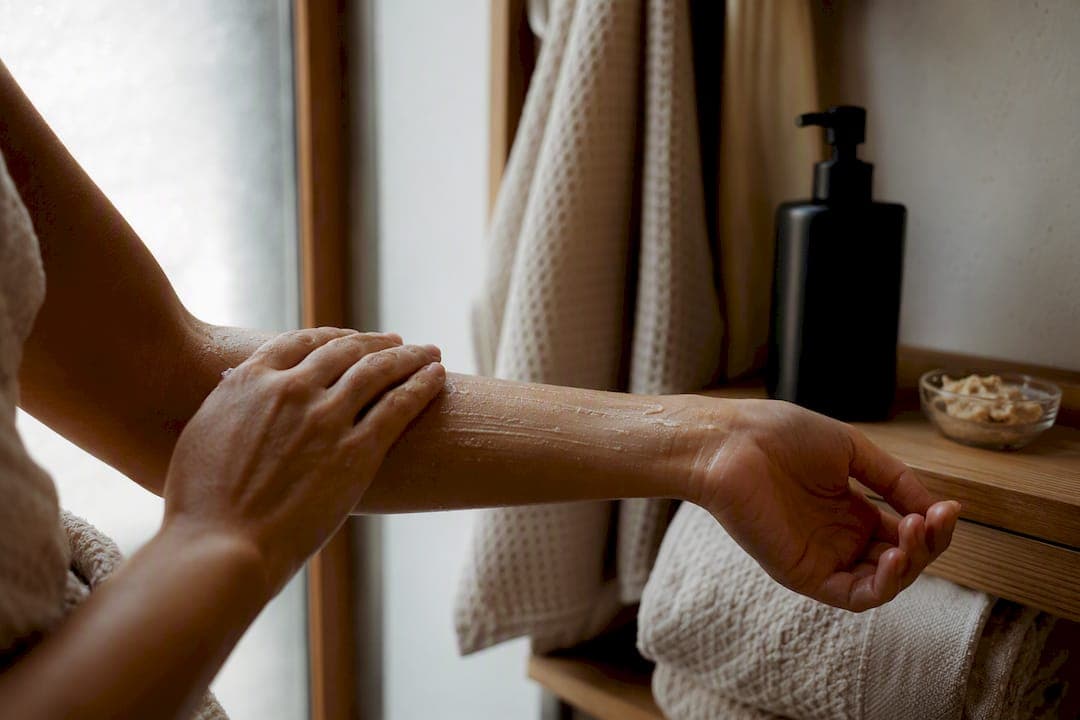
Yes, soap causes dry skin by stripping natural oils and pushing your skin's surface pH away from its healthy range. The fix is straightforward: switch to a pH-balanced or syndet cleanser, wash with lukewarm water, and moisturise while skin is still damp. Your skin's pH stays disrupted for roughly 90 minutes after washing, so that window is when hydration matters most.
TL;DR:
- Switching to a pH-balanced cleanser and rinsing with lukewarm water significantly reduces skin pH disruption and lipid loss, preventing dryness.
- The skin's pH remains elevated for about 90 minutes after washing with alkaline soap, during which hydration and barrier repair are most effective.
- Using surfactant-based products with glycerin, ceramides, or hyaluronic acid helps restore and reinforce the skin barrier more effectively.
- Cold weather, indoor heating, and hot showers exacerbate soap-related dryness, making gentle cleansing and humidification essential in winter.
- Long-term use of harsh alkaline soaps and antibacterial products can chronically impair the microbiome and skin barrier, increasing sensitivity and irritation over time.
Table of Contents
- What causes dry skin from soap: pH, lipids and residue
- Which soaps and ingredients dry out skin, and what works instead
- How to stop the drying cycle and restore moisture
- Barrier repair beyond moisturiser: occlusives and humectants explained
- Choosing the right cleanser for your skin type
- Why winter and humidity make soap-related dryness worse
- The long-term cost of harsh soap on skin and its microbiome
- Darnell's take: nourishment matters more than most routines admit
- Restore what soap strips away, starting tonight
- Sources
What causes dry skin from soap: pH, lipids and residue
Healthy skin sits at a surface pH of around 4.5 to 5.5. Dermatologists call this the acid mantle, a thin, slightly acidic film made of sweat, sebum and dead skin cells that keeps bacteria out and moisture in. Traditional bar soap is alkaline, often sitting between pH 9 and 10, and washing with it pushes your skin's surface pH sharply upward.
That shift does not resolve the moment you towel off. Research cited by Time shows skin pH can stay elevated for about 90 minutes after washing with alkaline soap, leaving the barrier compromised for longer than most people assume. During that stretch, your skin is more permeable, more reactive, and losing water faster than usual.
Soap does a second kind of damage at the same time. It dissolves sebum, the natural oil that would otherwise sit on the skin's surface and slow water evaporation. According to Harvard Health, the outer layer of healthy skin holds 20 to 35% moisture, and dry skin drops below roughly 10%. Strip the lipids that trap that moisture and the water simply evaporates.
Hard water compounds the problem. Calcium and magnesium in tap water react with soap to form an insoluble residue, often called soap scum, that clings to skin rather than rinsing away. A PMC review of skin barrier factors notes this film can intensify the tight, dry feeling many people report straight after washing.
Put the mechanism together and it runs in a clear chain:
- Alkaline soap raises surface pH away from its 4.5 to 5.5 baseline
- Sebum and barrier lipids dissolve and rinse away
- Water evaporates faster with no lipid layer to slow it
- Skin feels tight, flaky or visibly dry within minutes
Which soaps and ingredients dry out skin, and what works instead
Some products are simply harder on skin than others, and the label usually tells you before you ever wash with it. Highly alkaline saponified bars, the classic hard soap made from fat and lye, sit at the top of the offender list. Strong detergent surfactants such as sodium lauryl sulfate strip lipids aggressively. Antibacterial washes used daily, when you have no actual reason to disinfect, remove far more of the microbiome than they need to. Heavy synthetic fragrance and gritty exfoliating scrubs add insult to an already compromised barrier.
The gentler category worth looking for is syndet, short for synthetic detergent. Syndet bars and pH-balanced liquid cleansers are formulated closer to your skin's natural 4.5 to 5.5 pH, and dermatology-backed reporting points to them as noticeably less stripping than classic soap. Look for wording like "fragrance-free" or "for sensitive skin," and treat these as genuine formulation signals rather than marketing filler.
Medicated antibacterial cleansers still have a place, but generally only for a diagnosed skin infection or under a GP's advice, not as a daily default. Here's a quick label checklist before you buy:
- Check the pH claim, ideally "pH-balanced" or "5.5"
- Scan the ingredients for glycerin, ceramides or hyaluronic acid
- Avoid "antibacterial" unless you have a specific medical reason
- Choose "fragrance-free" over "unscented," which can still contain masking fragrance
- Skip bars with visible grit or "deep cleansing" scrub claims for everyday use
Pro Tip: Reserve strong, old-fashioned soap for handwashing. Hand skin is thicker and more tolerant, and dermatologists commonly draw that same distinction when advising on body versus hand cleansing.
How to stop the drying cycle and restore moisture
Fixing soap-related dryness comes down to sequence, not just product choice. Follow these four steps every time you wash:
- Swap the cleanser. Replace alkaline bar soap with a syndet or pH-balanced liquid formula.
- Turn the water down. Lukewarm water and minimal scrubbing cause far less lipid loss than hot water and vigorous friction.
- Rinse fully, pat dry. Leftover residue, especially in hard water areas, keeps irritating skin after you step out. Pat rather than rub.
- Moisturise on damp skin, immediately. This is the step most people skip, and it's the one that matters most.
Timing here is not a nicety. Skin pH stays disrupted for around 90 minutes after washing with alkaline soap, and that's precisely the window when your barrier is most permeable and most able to absorb a moisturiser rather than just sit under it. Harvard Health's guidance on moisturising is direct on this point: apply cream or lotion within minutes of bathing, while skin is still damp, to trap water at the surface rather than let it evaporate.
A few secondary habits help beyond the shower itself. Run a humidifier through winter, when indoor heating pulls moisture from the air as effectively as any soap does. Cut down on full-body washing to once a day if you're not visibly dirty or sweating heavily. Look for moisturisers built around glycerin, ceramides, shea butter or urea, all ingredients with real evidence behind barrier repair, rather than fragrance-heavy formulas that add another irritant on top of an already stressed barrier. Our guide to strengthening your skin's moisture barrier covers this in more depth.
Barrier repair beyond moisturiser: occlusives and humectants explained
Moisturising is the umbrella term, but two distinct ingredient categories do different jobs, and understanding the difference changes how you shop.
Humectants pull water toward the skin. Glycerin, hyaluronic acid and urea all draw moisture from deeper skin layers and, in humid conditions, from the air itself, up into the surface. They're excellent at boosting hydration levels but need something to lock that water in afterwards, otherwise it simply evaporates again.
Occlusives do the locking. Shea butter, plant oils and heavier butters form a physical layer on the skin's surface that slows water loss dramatically. This is exactly why applying a rich cream or body butter to damp skin, straight after washing, works so much better than applying it to dry skin later: the humectant properties draw in the water already on your skin, and the occlusive layer traps it there.
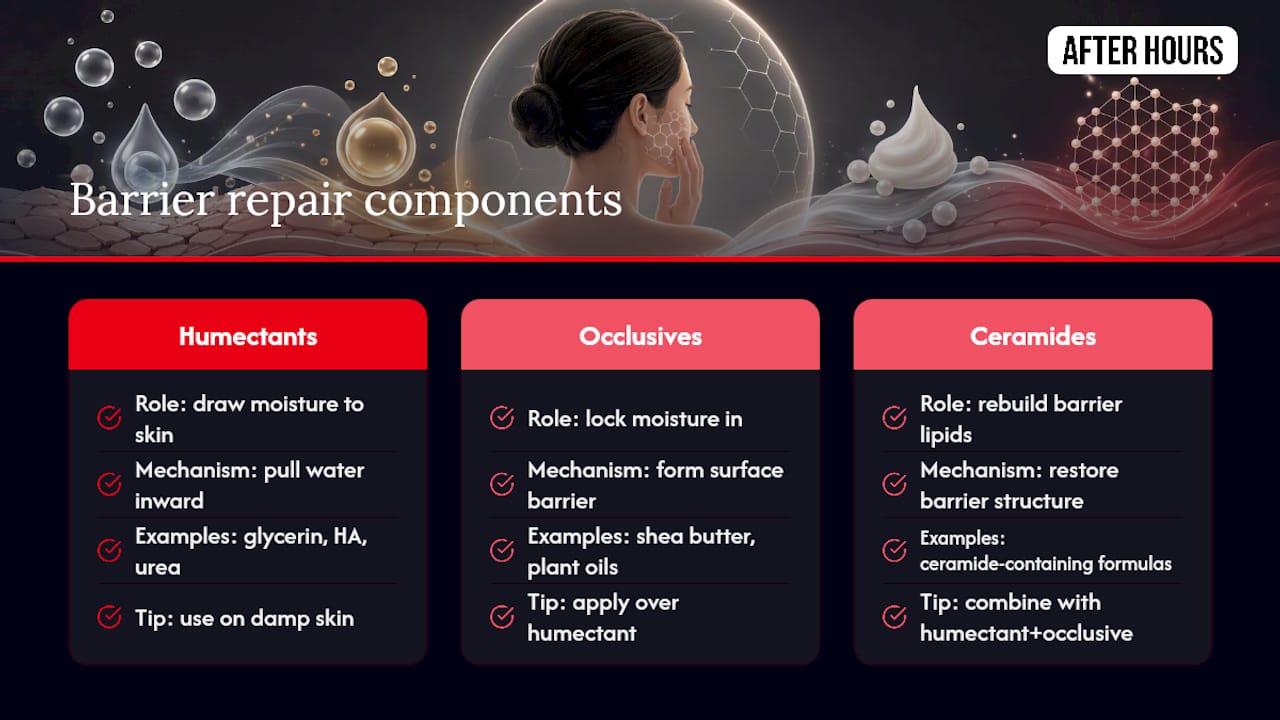
Ceramides deserve a mention on their own. These are lipids your skin already produces as part of its natural barrier, and soap strips them out along with sebum every time you wash. Formulas that reintroduce ceramides help rebuild the physical structure of the barrier itself, not just the surface hydration sitting on top of it. Combining a humectant, an occlusive and ceramide support in one routine covers all three angles of repair rather than treating dryness as a single problem with a single fix.
Choosing the right cleanser for your skin type
Not every dry-skin case needs the same fix, and matching cleanser to skin type saves a lot of trial and error.
If your skin is dry but not reactive, a fragrance-free syndet bar or pH-balanced cream cleanser is usually enough. Look for glycerin or shea butter in the ingredient list rather than a long list of foaming agents.
Sensitive or eczema-prone skin needs a narrower approach: fragrance-free is non-negotiable, and cleansers with added ceramides or oat-derived ingredients tend to cause fewer flare-ups than standard formulas. Avoid anything marketed as "deep cleansing" or containing alcohol high on the ingredients list, since both tend to compound existing irritation.
Combination skin, dry on the body but oilier on the face or scalp, often does best with two separate products rather than one all-purpose wash. A gentler, richer cleanser for the body and a lighter formula for oil-prone areas avoids over-drying one zone while under-cleansing another.
If you're unsure where to start, our guide to a body care routine for sensitive skin walks through a straightforward routine by skin type. As a general rule, the more reactive your skin, the more it pays to prioritise a short ingredient list over a long list of active claims.
Why winter and humidity make soap-related dryness worse
Environmental conditions and soap chemistry compound each other rather than acting independently. Cold air holds less moisture than warm air, and indoor heating strips even more out, which means your skin is already losing hydration through evaporation before soap ever gets involved.

Wash with an alkaline soap on top of that dry air and the effects stack. Your barrier is already under strain from low ambient humidity, so the sebum loss and pH disruption from soap have less reserve moisture to work with, and dryness shows up faster and more visibly, often as flaking or a rough, tight texture that wasn't there in summer.
Hot showers make this worse still, and they're more tempting exactly when it's cold outside. Hot water accelerates lipid loss beyond what soap alone would cause, which is why dermatologists consistently recommend lukewarm water year-round but especially in winter. A humidifier in bedrooms and living spaces helps counter the ambient dryness, but it doesn't undo damage from harsh soap. The two factors need addressing separately: control the humidity around you, and control what you wash with.
The long-term cost of harsh soap on skin and its microbiome
Occasional dryness from one hot shower is temporary. Repeated exposure to harsh, alkaline soap over months or years is a different problem entirely, because the barrier doesn't just recover fully between washes.
Each wash with a stripping soap disrupts the skin's surface pH for around 90 minutes, and if you shower daily, that's roughly 90 minutes of vulnerability compounding day after day. Over time, a barrier that never fully recovers becomes chronically more permeable, more prone to irritation, and slower to heal from minor damage like small cracks or abrasions.
The skin microbiome, the community of bacteria that lives on your skin's surface and helps regulate inflammation, depends on that acidic environment to function. Antibacterial soaps and harsh alkaline surfactants used daily don't discriminate between harmful and beneficial bacteria, and a microbiome disrupted repeatedly has less chance to reestablish itself before the next wash strips it again. Some dermatology research links long-term barrier disruption of this kind to increased sensitivity, a higher likelihood of conditions like eczema flaring, and skin that reacts badly to products it previously tolerated fine.
None of this is irreversible. Switching to a gentler cleanser and giving the barrier consistent support lets both the pH balance and the microbiome recover, but it happens gradually over weeks, not overnight.
Darnell's take: nourishment matters more than most routines admit
Most dry skin advice stops at "moisturise more," and that's incomplete. What actually rebuilds a stripped barrier is fat, specifically the fat-soluble vitamins and lipid-rich ingredients that mimic what soap just washed away. A thin lotion sitting on the surface isn't doing the same job as a butter formulated to replace sebum with something structurally similar.
That's the thinking behind how After Hours Body Butter formulates: nutrient-dense, fat-soluble ingredients designed to nourish skin that's already been compromised by daily washing, not just mask the tightness for an hour. If your skin still feels persistently tight, cracked or inflamed after weeks of gentler washing and consistent moisturising, that's a signal to see a GP or dermatologist rather than push through with product changes alone.
Good skincare doesn't fight against a stripped barrier. It works with the recovery your skin is already trying to do, and gives it the raw materials to actually finish the job.
— Darnell
Restore what soap strips away, starting tonight
Afterhoursbodybutter formulates specifically for skin that's been stripped by daily washing, using fat-soluble vitamins and nutrient-rich, vegan ingredients rather than thin lotions that sit on the surface without addressing lipid loss. Every product is made and packaged sustainably in the UK, with no synthetic fragrance or harsh chemicals to add further irritation to an already compromised barrier.
Apply it to damp skin straight after your shower, within that same window when your barrier is most receptive to hydration. Most customers notice softer, less tight-feeling skin within days of consistent use, particularly on areas prone to soap-related dryness like arms, legs and hands. For a fragrance-free option built around sensitive skin specifically, see our fragrance-free body butter range. Browse the full collection and find the formula suited to your skin at Afterhoursbodybutter.
This article is general information, not a substitute for advice from a qualified doctor. Consult a qualified healthcare professional about your own circumstances before acting on anything here.
Sources
- Dermatologists have a dirty little secret — Time
- Dry skin - Harvard Health
- PMC article on skin barrier and external factors