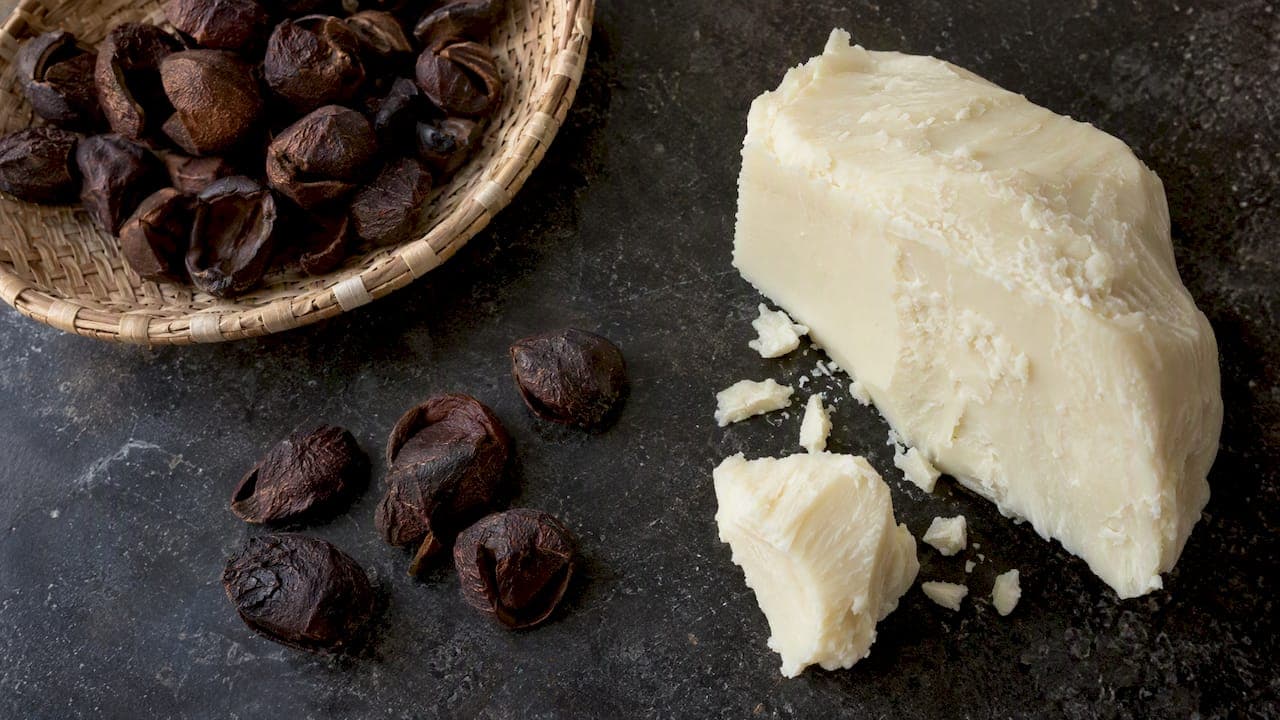
Kokum butter is a light, hard setting plant butter prized for deep moisturising and a non-greasy finish that suits many facial and lip uses; understanding the difference between body care and skincare helps in choosing the right products featuring kokum butter. It absorbs quickly and is commonly described as non-comedogenic, which is why it turns up in balms and sensitive-skin formulas. Human clinical research is limited, so much of what we know still rests on traditional use and small studies, but the ingredient fits well for dry, sensitive or acne-prone skin seeking light hydration.
TL;DR:
- Kokum butter is lightweight, non-greasy, and absorbs quickly, making it suitable for facial, lip, and sensitive skin formulations.
- Its antioxidant and anti-inflammatory compounds are promising, but human clinical trials remain limited, especially for topical uses.
- Compared to shea and cocoa butters, kokum is better for lighter products, as it holds shape well and leaves less residue on the skin.
- Use kokum butter in small amounts on clean skin, layering onto damp skin after washing, and consider blending with lightweight oils for smoother application.
- Always select cosmetic-grade kokum, patch test before use, and avoid using culinary kokum on skin or in topical applications.
Table of Contents
- At-a-glance benefits overview
- Deep dive: how kokum butter benefits skin
- How kokum compares with other butters for different skin needs
- How to use kokum butter safely and effectively
- Safety rules: edible versus cosmetic grades, and patch testing
- Publisher perspective: how we use kokum in our formulations
- Nutritional benefits and internal health effects if consumed
- Potential benefits for hair care
- Historic and traditional uses in Ayurveda and other medicine systems
- Environmental and sustainability aspects of kokum butter production
- Practical takeaway: should you try kokum butter?
- Try our kokum-containing body butters
- FAQ
- Sources
At-a-glance benefits overview
Kokum butter earns its reputation across a few clear categories, each with a different strength of evidence behind it.
- Moisturising and emollient: forms a light film that softens skin without heaviness, a well-documented traditional and cosmetic use.
- Healing and soothing: used historically on dry, cracked skin and minor wounds, though human trial data stays thin.
- Antioxidant activity: contains compounds studied for their protective effects in laboratory settings.
- Non-comedogenic reputation: generally considered less likely to block pores than heavier butters, a commonly cited claim.
- Formulation stability: hard at room temperature, which helps balms and bars hold their shape.
We see it most often in lip balms, facial balms, bar soap and body butters, where its texture does the work that heavier butters cannot.
Deep dive: how kokum butter benefits skin
The texture that makes kokum butter so workable in balms comes down to its fat structure. Kokum seed fat is rich in stearic-oleic-stearic, or SOS, triglycerides and is solid at room temperature, giving it a relatively high melting point that still melts cleanly on contact with skin. That combination explains the dry, non-greasy finish that distinguishes it from denser butters.
A 2022 review in a peer-reviewed journal catalogued the bioactive compounds in Garcinia indica, the plant kokum comes from, including garcinol, hydroxycitric acid and anthocyanins. Laboratory and animal studies cited in that review point to antioxidant and anti-inflammatory activity for these compounds, which supports the traditional reputation kokum has for soothing irritated or damaged skin. The same review is candid about the gap: human clinical trials on topical kokum use remain scarce, so these mechanisms are plausible rather than proven in people.
Consumer-health sources echo this caution. WebMD lists kokum's moisturising properties and its reputation for being less likely than cocoa or coconut butter to clog pores, while noting that strong human research is still missing for many of the specific claims made about it.
One figure worth noting: kokum seed oil content runs at roughly 23 to 26% of the seed, a yield that matters for how the butter is extracted and why it remains a modestly priced specialty ingredient rather than a bulk commodity oil. The evidence base is real but early stage: enough to justify traditional and cosmetic use, not enough to call any single effect guaranteed.
How kokum compares with other butters for different skin needs
Shea, cocoa and kokum all moisturise, but they behave differently on skin and in formulas. Shea butter is softer and richer, which suits very dry or flaking skin that needs heavier, longer-lasting hydration. Cocoa butter sits closer to shea in richness and brings a firmer set, useful in bars but often too heavy for facial use. Kokum sits at the lighter end: it absorbs faster, leaves less residue and holds its shape well in balms and lipsticks.
- Choose shea when skin is severely dry, cracked or in need of overnight intensive care.
- Choose cocoa for firm, structured bars where scent and richness matter more than lightness.
- Choose kokum for facial balms, lip products and any formula that needs hardness without grease.
For a closer look at how shea and other butters stack up on texture and absorption, see our comparison of mango butter and shea.
How to use kokum butter safely and effectively
Kokum butter works well in a daily routine and in home blending, provided a few basics are followed.
- Apply a small amount to clean skin, warming it between your fingers first so it melts and spreads evenly.
- Use on face and lips sparingly, once or twice daily, since a little cover a wide area.
- For body use, layer onto slightly damp skin after washing to help lock in moisture.
- For hair, work a small amount through ends only rather than the scalp, to avoid weighing down fine hair.
- When blending DIY balms, start around 10 to 20% kokum butter against a liquid oil base, melting gently over low heat before combining.
Lip balm, facial balm and bar soap are the easiest starting projects, since kokum's hardness gives structure without extra wax.
Pro Tip: Blend kokum with a lightweight liquid oil such as jojoba to cut any residual heaviness and improve how easily it spreads.
Safety rules: edible versus cosmetic grades, and patch testing
Kokum has a long history as an edible fat in parts of India, but edible-grade and cosmetic-grade kokum butter are not interchangeable. Healthline explains that skincare-grade kokum butter is refined and packaged specifically for topical use, and advises against putting culinary-grade oil on skin as a substitute.
- Buy products labelled for topical or cosmetic use, not food-grade kokum, when shopping for skincare.
- Patch test first: apply a small amount to the inner forearm, leave for 24 to 48 hours, and watch for redness, itching or swelling, following NHS patch-testing guidance.
- Stop use and seek advice if irritation develops, and NHS contact dermatitis guidance confirms that individual reactions can occur even with natural ingredients.
- During pregnancy, breastfeeding or for children, check with a pharmacist or GP before introducing a new topical product if there is any doubt.
Publisher perspective: how we use kokum in our formulations
We reach for kokum butter in several of our sensitive-skin blends because its light, fast-absorbing feel suits people who want moisture without a greasy aftermath. Paired with other fat-soluble, nutrient-rich ingredients, it helps us build body butters that address dryness and irritation without the heaviness that puts some sensitive-skin customers off richer formulas.
As the author of this piece, I have worked directly with kokum butter in formulation and consistently notice how much faster it settles into skin compared with heavier butters, with customers reporting less residue and steadier moisture retention over repeated use. We still recommend a patch test for every new product, kokum included, since individual skin responds differently regardless of how an ingredient performs in general.
Nutritional benefits and internal health effects if consumed
Edible kokum, distinct from the cosmetic-grade butter used in skincare, has a long history in Indian cuisine and traditional remedies, often used in drinks and curries for its tart flavour. A 2026 review in the International Journal of Pharmaceutical Sciences describes kokum's traditional and contemporary uses, including its seed oil composition and its place in indigenous medicine, while noting that robust clinical trials in humans remain limited.

The same bioactive compounds studied for topical effects, including hydroxycitric acid and anthocyanins, have also drawn research interest for general antioxidant activity when the fruit or extract is consumed, according to the PubMed review on Garcinia indica. That review is careful to flag the same evidence gap seen in topical research: promising laboratory findings, but not yet matched by large-scale human studies.
For anyone considering kokum as food rather than skincare, the practical point is separation: edible kokum products are prepared and regulated differently from the butter used in balms and body products, and the two should not be substituted for each other.
Potential benefits for hair care
Kokum butter's light, fast-melting texture carries over well into hair care, where heavier butters can leave strands looking weighed down or greasy. Worked sparingly through the ends of hair, it can help smooth texture and reduce the dry, brittle feel that comes from heat styling or weather exposure.

Because kokum sits on the lighter end of the plant-butter spectrum, it suits fine or fragile hair better than heavier options like shea or cocoa butter, which tend to sit on the scalp and weigh hair down when used in similar amounts. Evidence specific to hair strength and growth remains anecdotal and tied to traditional use rather than clinical studies, so claims here are best treated as a reasonable extension of its general emollient properties rather than a separately proven benefit.
Applied to the scalp in small amounts, kokum may help condition dry patches, though anyone prone to oily roots should stick to the lengths and ends and avoid the scalp altogether.
Historic and traditional uses in Ayurveda and other medicine systems
Kokum, or Garcinia indica, has a long-standing place in traditional Indian medicine, where the fruit, seeds and extracted butter have each been put to different uses. The 2026 IJPS review documents traditional topical applications for wound care and skin fissures alongside internal uses in regional cuisine and folk remedies, framing kokum as a resource valued across both food and medicine.
Ayurvedic practice has historically used kokum butter to soothe dry, cracked skin and minor burns, applying it directly as a balm. This traditional use lines up closely with what the plant's bioactive profile would predict: compounds with antioxidant and anti-inflammatory properties, as catalogued in the PubMed review of Garcinia indica bioactives, offer a plausible explanation for why the butter was chosen for healing purposes long before modern cosmetic chemistry existed.
What traditional use cannot provide is controlled clinical proof. The value of this history lies in pointing researchers towards compounds worth studying further, not in standing alone as evidence that any specific modern formulation will perform the same way.
Environmental and sustainability aspects of kokum butter production
Kokum trees grow wild and cultivated across parts of India's Western Ghats, and the butter is extracted by pressing the dried seed kernels, a mechanical process that avoids the solvent-heavy extraction used for some other plant oils. Seed oil content sits at roughly 23 to 26% of the seed, a modest yield that keeps kokum a smaller-scale specialty ingredient rather than an intensively farmed commodity crop.

Because kokum trees are often grown alongside other crops or left semi-wild rather than planted in large single-crop plantations, sourcing tends to support smaller agricultural communities rather than industrial-scale monoculture. This is a general feature of how kokum is typically grown and harvested, not a guarantee tied to any specific supplier, so anyone shopping with sustainability in mind should still check how an individual brand sources its kokum.
Practical takeaway: should you try kokum butter?
Kokum butter is a solid first choice if you want light, fast-absorbing moisture for your face, lips or slightly oily-prone skin, without the heaviness of shea or cocoa. It is not the right pick if you have severe, flaking dryness that needs intensive overnight hydration, or a confirmed allergy to Garcinia-family plants, in which case a patch test and a conversation with a pharmacist come first.
— Darnell
Try our kokum-containing body butters
We build our body butters around natural ingredients chosen for how they feel on sensitive and acne-prone skin, kokum included where its light, non-greasy profile fits the formula. Every blend skips silicones, sulfates and harsh fillers, leaning instead on fat-soluble vitamins and nutrients to support moisture retention without clogging pores.

- Made without animal testing.
- Formulated without synthetic chemicals, built around natural, nutrient-dense ingredients.
- Packaged with a focus on reducing unnecessary waste.
If you want to feel the difference between reading about kokum and actually using it, our Body Butters are ready to try.
FAQ
Is kokum butter better than shea butter?
Neither is strictly better: kokum is lighter and faster-absorbing, which suits facial balms and lip care, while shea delivers heavier, longer-lasting hydration for very dry skin. The right choice depends on your skin type and what you are formulating.
Who should not consume kokum?
Edible kokum is generally recognised as a traditional food ingredient, but anyone with a known allergy to Garcinia-family plants should avoid it, and pregnant or breastfeeding people should check with a clinician before adding new foods or supplements. Cosmetic-grade kokum butter is not intended to be eaten at all.
Can I use kokum butter on my face?
Yes, kokum butter is widely used in facial balms because of its light, non-greasy, commonly non-comedogenic reputation. As with any new topical product, a patch test is recommended first, following NHS guidance on patch testing.
Can kokum butter be eaten?
Edible-grade kokum has a long history in Indian cooking, but this is different from the skincare-grade butter sold for cosmetic use. Healthline advises against using culinary kokum on skin or cosmetic-grade kokum as food, since the two are processed and labelled differently.
What does kokum butter do for acne-prone skin?
Its light, fast-absorbing texture and non-comedogenic reputation make it a reasonable moisturiser choice for acne-prone or combination skin, since it is less likely than heavier butters to leave a pore-clogging residue. Evidence is still mostly observational, so patch testing and gradual introduction remain sensible.
Sources
- Bioactive compounds, bio‐functional properties, and food applications of Garcinia indica : A review
- Kokum butter: Benefits, uses and nutrition (Healthline)
- Patch testing patient information (University Hospitals Sussex / NHS)
- Health benefits of kokum butter (WebMD)