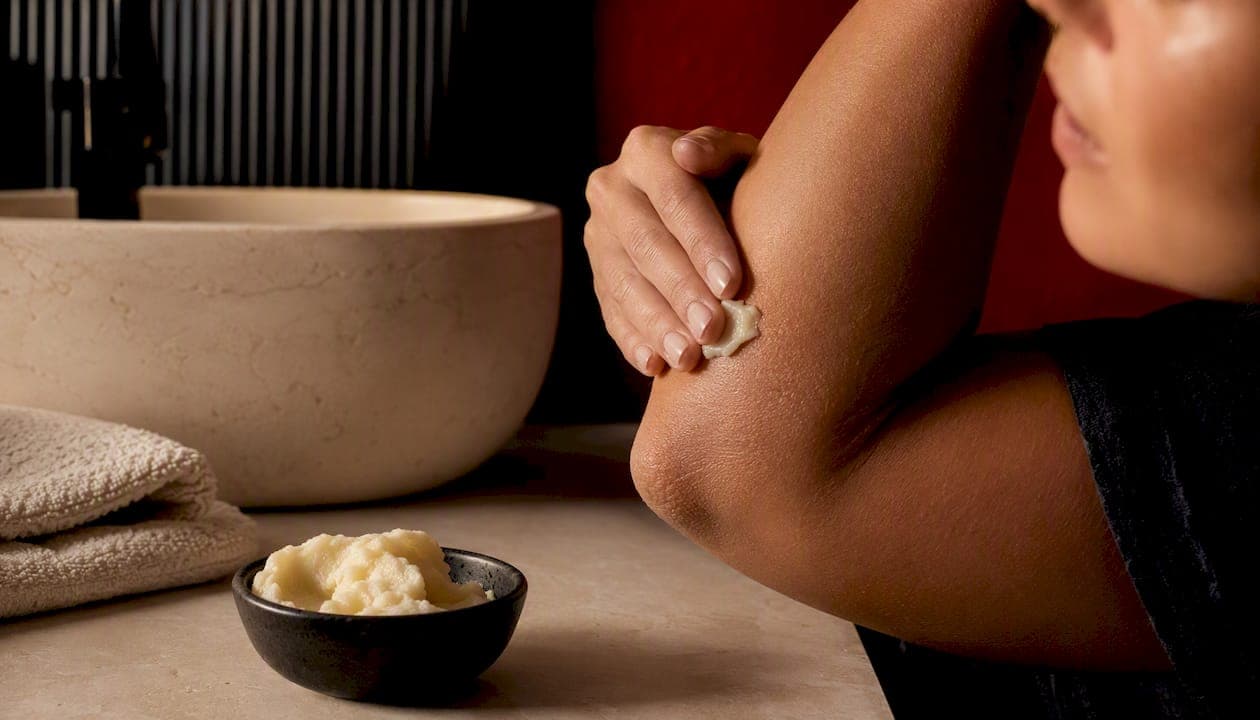
Yes, cocoa butter is comedogenic for most skin types that already run oily or acne-prone. Dermatology ingredient databases typically place it around 3 to 4 out of 5 on comedogenic scales, meaning it carries a real chance of clogging pores. Formulation changes the picture: a small amount blended into a lightweight lotion behaves very differently from a pure, thick body butter. Afterhoursbodybutter's own body-focused formulas exist precisely because that distinction matters.
TL;DR:
- The comedogenic rating of cocoa butter varies depending on formulation, with higher concentrations in body butters making clogging more likely; light lotions with low cocoa butter content pose less risk.
- Testing results differ across populations and methods, so patch testing for individual skin response remains more reliable than solely relying on ingredient ratings.
- Heavy, occlusive products containing high levels of cocoa butter are best reserved for dry body areas, as facial skin has a higher density of follicles and is more prone to breakouts.
- Applying cocoa butter in pure or concentrated forms on oily or acne-prone skin increases the likelihood of pore clogging, especially if layered with other occlusive ingredients.
- Proper removal through double cleansing is necessary to prevent residue buildup that can lead to breakouts, with emphasis on gentle cleansing methods for cocoa butter-containing products.
Table of Contents
- Does cocoa butter clog pores? What the research shows
- What changes the risk: concentration, formulation and occlusion
- Where to use cocoa butter and where to leave it out
- How to patch test cocoa butter safely
- After Hours perspective: formulating cocoa butter responsibly
- How to remove cocoa butter properly to avoid clogged pores
- The upside: why cocoa butter still earns its place in skincare
- How cocoa butter behaves on oily, dry, combination and sensitive skin
- Common myths about cocoa butter and acne
- Editorial take: why face-versus-body is the only rule that matters
- If you need heavy moisturisation for dry body skin
- Sources
Does cocoa butter clog pores? What the research shows
Cocoa butter's reputation as a pore-clogger isn't guesswork. Ingredient-rating resources place it consistently in the moderate-to-high range on the comedogenic scale, a system dermatologists use to rank how likely an ingredient is to block hair follicles and trigger breakouts, running from 0 (won't clog pores) to 5 (highly likely to clog pores).
Statistic: DermApproved's ingredient database lists cocoa butter around 3 to 4 out of 5, and notes that formulation makes a real difference: body butters can contain anywhere from 30% to 80% cocoa butter, while lotions often carry only 2% to 20%.
Clinical guidance backs the caution without treating it as an absolute rule. The Cleveland Clinic confirms cocoa butter works well as an occlusive moisturiser for dry skin, but flags it as a plausible trigger for flare-ups in people already prone to acne, and generally steers facial use towards lighter alternatives. Healthline reaches a similar conclusion: caution is warranted on the face, but the risk drops considerably when cocoa butter sits low in the ingredient list rather than forming the bulk of the formula.
The laboratory evidence is messier than a single rating suggests. One peer-reviewed assay found that cocoa butter failed to behave as a reliable positive control for comedogenicity in a small Asian cohort, a finding that points to real variation between populations and test designs rather than a fixed universal answer. Broader literature on lipid chemistry and comedogenesis, including reviews collected on PubMed, reinforces that older assays relying on rabbit-ear models don't always translate cleanly to human skin.
What this means in practice:
- A 3 to 4/5 rating is a useful warning sign, not a diagnosis for every individual.
- Human trials sometimes contradict animal-derived positive controls, so treat ratings as calibrated caution rather than certainty.
- Population differences in test subjects can shift results, which is why dermatologists favour patch testing over relying on a rating alone.
What changes the risk: concentration, formulation and occlusion
A comedogenic rating describes the raw ingredient, not the finished product sitting in your bathroom cabinet. Concentration does most of the heavy lifting here. A pure, thick body butter that lists cocoa butter as the first or second ingredient behaves nothing like a face cream where it appears eighth on the list at 2%.
Occlusion compounds the effect. Layering a heavy cocoa-butter balm underneath sunscreen and makeup traps everything against the skin, giving oil, sweat, and dead skin cells nowhere to go. That combination is a common cause of breakouts that people wrongly blame on a single product.
Fatty-acid profile matters too. Cocoa butter is rich in oleic acid, and oleic-rich occlusives are known to feed Malassezia, the yeast behind fungal acne, which can look identical to bacterial acne but doesn't respond to the same treatments.
Pro Tip: Check the ingredients list, not just the front-of-pack claims. If cocoa butter appears in the first three to five ingredients of a facial product, treat it with the same caution you'd give a pure body butter.
Quick label-reading rules worth keeping:
- INCI position near the top of the list means high concentration and higher risk.
- A thick, waxy texture that sits on skin rather than absorbing suggests heavy occlusion.
- Combination with other rich butters or waxes stacks the comedogenic load rather than diluting it.
Where to use cocoa butter and where to leave it out
Face and body don't carry the same risk profile, and that's the single most useful distinction in this whole conversation. The face has a far higher density of sebaceous follicles, particularly across the T-zone, which is exactly where oily and acne-prone skin struggles most with occlusive ingredients.
- Avoid heavy, leave-on cocoa butter products on an oily or acne-prone face. The follicle density and oil production in that region make blockages more likely, echoing the Cleveland Clinic's general caution on facial use.
- Reserve pure or high-concentration cocoa butter for drier body areas, such as elbows, knees, heels, and the torso, where follicle density is lower and dryness is often the bigger problem.
- Lip products with cocoa butter are generally fine, since lips have no sebaceous glands and can't develop the same comedones.
- Swap in shea butter, squalane, or lightweight esters for facial moisture, since shea typically rates 0 to 2 out of 5 on the same comedogenic scale.
- Choose anti-Malassezia-friendly emollients if you suspect fungal acne, since oleic-rich butters tend to feed the yeast rather than calm it.
If you're building a facial routine from scratch, a body oil versus butter comparison is a useful place to start weighing texture against absorption speed.
How to patch test cocoa butter safely
Testing beats guessing, and it takes less effort than most people assume.
- Apply a small amount to your inner forearm or behind the ear, areas that mimic body skin without risking a facial breakout.
- Photograph the area before applying anything, so you have a genuine baseline to compare against.
- Wait 48 to 72 hours, and ideally up to a week, since some reactions build slowly rather than appearing overnight.
- Introduce the product into one area of your routine at a time, never several new products simultaneously, so you know exactly what caused any change.
- Stop immediately if you notice new whiteheads, increased oiliness, redness, or itching, and note the timeline for a dermatologist if the reaction persists.
Pro Tip: Keep a simple note on your phone logging the date you started, the amount used, and any changes you spot. It turns a vague impression into evidence a clinician can actually work with.
After Hours perspective: formulating cocoa butter responsibly
Afterhoursbodybutter builds around this exact face-versus-body distinction rather than ignoring it. The brand's vegan, cruelty-free formulas, including the Men's Cocoa Body Butter, are designed for dry body skin rather than acne-prone facial routines, using chemical-free ingredients and fat-soluble vitamins to nourish skin that genuinely needs richness.
Where cocoa butter appears in a face-adjacent blend, the formulation strategy leans on lower concentrations paired with non-comedogenic emollients, rather than relying on cocoa butter alone to do the moisturising work. That's the same logic dermatology guidance points towards: concentration and pairing determine outcome far more than the raw ingredient rating alone.
How to remove cocoa butter properly to avoid clogged pores
Cocoa butter's richness is exactly why it needs a proper cleanse, not a quick rinse. Water alone won't break down an oil-based occlusive, which means residue can sit on skin long after you think it's gone, quietly contributing to the blockages people wrongly blame on the product itself.
Start with a proper oil-based or balm cleanser first, since oil dissolves oil far more effectively than a foaming face wash applied straight onto a greasy layer. Follow with a gentle, water-based cleanser to lift away what the first step loosened, an approach commonly known as double cleansing. Focus on areas where product tends to pool, such as the jawline, hairline, and any spot near heavier product application.
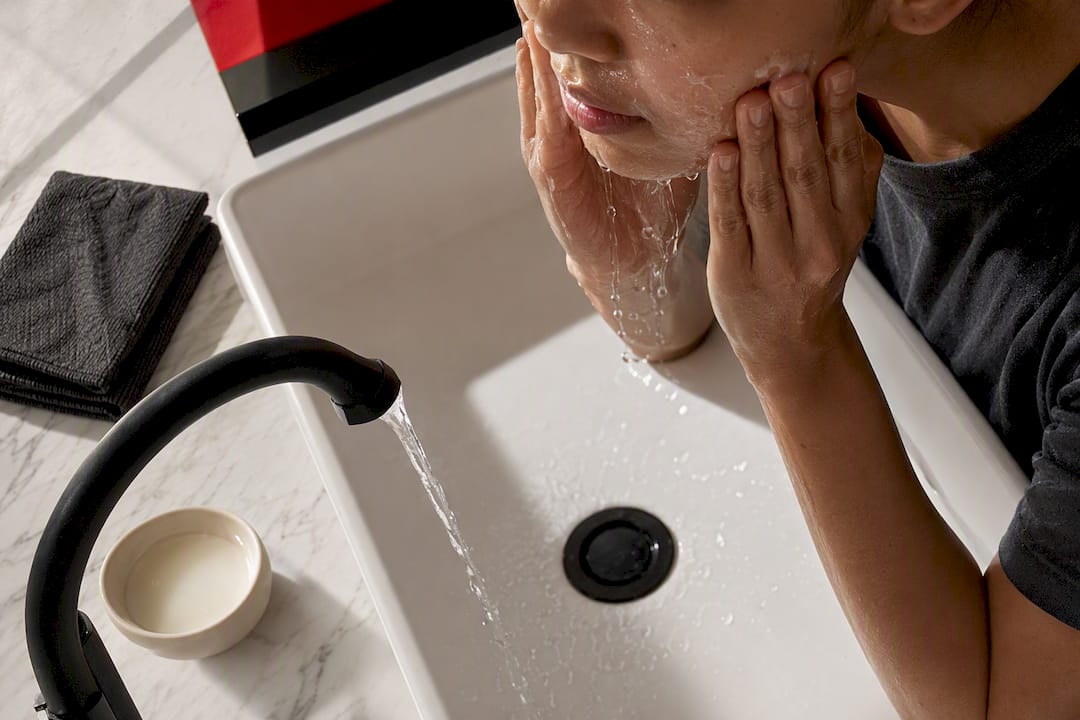
Warm, not hot, water helps the process without stripping skin or triggering excess oil production as a rebound effect. Pat skin dry rather than rubbing, particularly if it's already irritated. For body areas, a washcloth or gentle exfoliating cloth in the shower helps clear residue from skin that's naturally thicker and less reactive than facial skin.
If you're using cocoa butter on the body overnight, consider a light rinse the following morning rather than layering a fresh application on top of yesterday's residue. Build-up over several days is a common, avoidable cause of body breakouts that people mistake for the product simply "not agreeing" with their skin.
The upside: why cocoa butter still earns its place in skincare
Comedogenic risk is only half the story, and dismissing cocoa butter outright ignores what makes it genuinely useful. Its dense fatty-acid content, rich in oleic, stearic, and palmitic acids, makes it one of the more effective occlusive moisturisers available for very dry or compromised skin, according to the Cleveland Clinic.
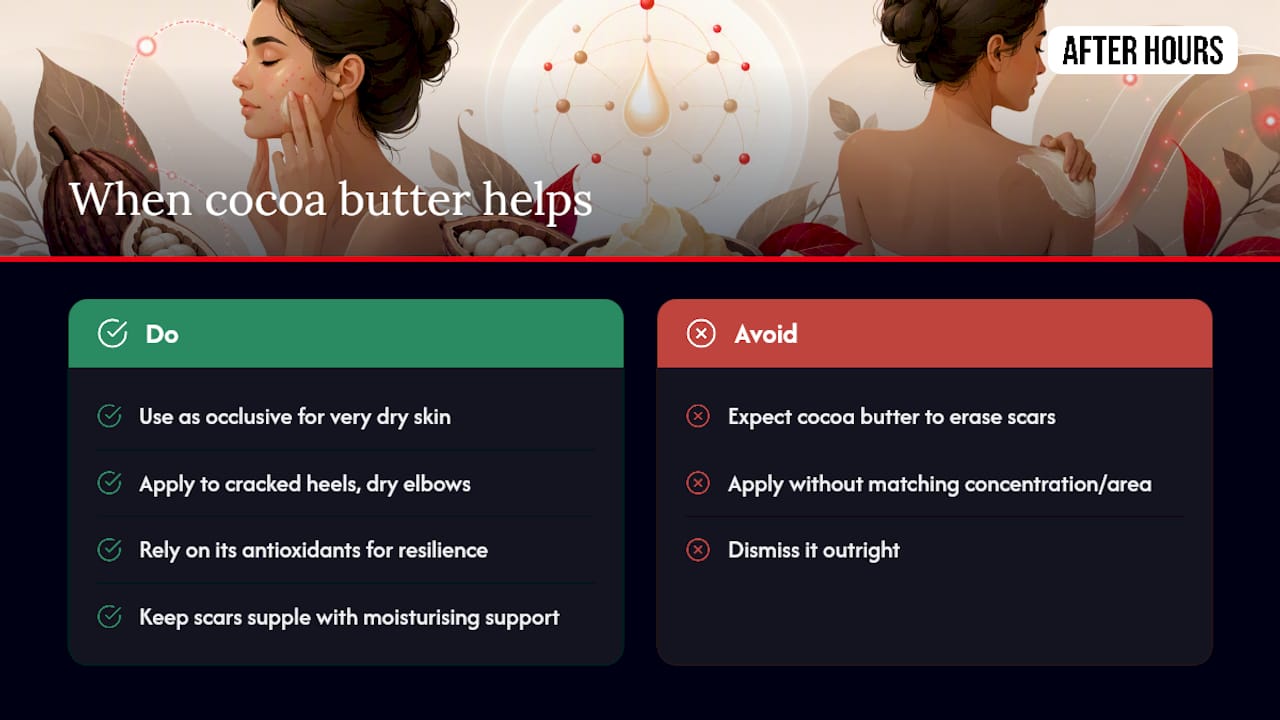
That occlusive quality locks moisture into the skin barrier rather than letting it evaporate, which is exactly what cracked heels, dry elbows, and winter-stressed skin need. Cocoa butter also carries natural antioxidants that support skin's resilience against everyday environmental stress, a benefit separate from its moisture-locking effect.
The often-cited use for scars and stretch marks deserves a fair note of caution rather than blanket endorsement: cocoa butter can help keep the surrounding skin supple and hydrated while it heals, which supports the skin's own repair process, but it isn't a proven treatment that erases scarring on its own. The moisturising benefit is real and well documented; the healing claims popular online go further than the evidence supports.
The practical takeaway isn't "avoid cocoa butter." It's "match the concentration and area to what your skin can actually tolerate," which is a very different, far more useful, instruction.
How cocoa butter behaves on oily, dry, combination and sensitive skin
Skin type changes the calculation more than almost any other factor. Oily skin already produces excess sebum, so adding a heavy occlusive on top increases the odds of a build-up that traps bacteria and triggers breakouts, particularly across the face. Dry skin sits at the opposite end: the same occlusive properties that risk clogging an oily face can be genuinely restorative on skin that's flaking, tight, or cracked, especially on the body.
Combination skin needs a split approach rather than a single verdict. Many people with combination skin tolerate cocoa butter well on drier cheeks or body areas while reacting badly if it's applied across an oilier T-zone, which is why blanket advice tends to fail this skin type specifically.
Sensitive skin introduces a different concern entirely: irritation rather than clogging. Cocoa butter itself is rarely a classic irritant, but fragrance additives, preservatives, or other ingredients bundled into a finished formula often are. A sensitive-skin routine that isolates variables, testing plain cocoa butter separately from a heavily fragranced blend, makes it far easier to identify the actual culprit behind any reaction.
Common myths about cocoa butter and acne
The idea that cocoa butter "always" causes breakouts doesn't hold up against the evidence. Plenty of people with normal or dry skin use it on their bodies with no issue whatsoever; the comedogenic rating describes probability, not certainty, and individual variation is significant.
Another persistent myth: that natural or vegan automatically means non-comedogenic. Comedogenicity is about pore-clogging potential and fatty-acid structure, not about whether an ingredient is synthetic. Plenty of natural oils and butters rate poorly on the same scale as synthetic occlusives.
There's also a common assumption that if cocoa butter caused one breakout, it will cause every breakout, regardless of concentration or area. That ignores everything formulation science tells us about how differently a 70% pure butter behaves compared with a 3% inclusion in a lightweight lotion.
Finally, some assume comedogenic ratings are fixed scientific fact rather than a useful but imperfect heuristic. The Asian-cohort study on positive controls is a clear example of a rating behaving inconsistently once tested against real human skin rather than an animal model.
Editorial take: why face-versus-body is the only rule that matters
Most advice on cocoa butter treats it as a single yes-or-no ingredient, and that framing does readers a disservice. The evidence doesn't support a blanket ban, and it doesn't support blanket reassurance either. What it supports is a location-and-concentration rule that's more useful than any single comedogenic number: pure, high-concentration cocoa butter belongs on the body, where follicle density is lower and dryness is usually the bigger issue than oil.
Where conventional advice falls short is treating the 3 to 4/5 rating as a verdict rather than a starting point. That number came from assays with real limitations, including the Asian-cohort study that questioned cocoa butter's reliability as a comedogenic benchmark altogether. Ratings deserve respect, not blind obedience.
If you take one thing from this, prioritise patch testing over rating charts. A rating tells you what's plausible across a population; a patch test tells you what's actually true for your skin. That's the gap most articles on this topic skip past entirely.
— Darnell
If you need heavy moisturisation for dry body skin
If your skin is dry, cracked, or winter-worn on the body rather than breaking out on the face, cocoa butter's occlusive strength is exactly what you want, not what you need to avoid. Afterhoursbodybutter formulates specifically for that use case rather than trying to be everything to everyone.
Its body butters are built for dry body skin, not acne-prone faces, using vegan, cruelty-free, chemical-free ingredients with fat-soluble vitamins that support genuine moisture retention rather than a temporary surface feel. Every product is manufactured and packaged sustainably in the UK, so you get deep hydration without the environmental trade-off some heavier balms carry. If your elbows, heels, or overall body skin need real richness rather than a light lotion, browse the full range on the Afterhoursbodybutter site and find the formula matched to your skin's actual needs.
Sources
- Cocoa Butter — Skincare Products — DermApproved
- Cocoa butter: Benefits and uses — Cleveland Clinic
- Cocoa butter for face: Skin health and scars — Healthline
- Does Cocoa Butter Clog Pores? Comedogenic Rating + Tips — ReadLabel
- Isopropyl Myristate and Cocoa Butter are not Appropriate Positive Controls for Comedogenicity Assay in Asian Subjects