
Yes, body butter works on hands, especially when they're rough, cracked, or badly dehydrated. Its thick, occlusive texture seals in moisture far better than a runny lotion. Save it for evening treatments or severe dryness, though; for washing hands ten times a day, a lighter hand cream absorbs faster and won't leave you gripping the door handle. Read the ingredient list before you buy: shea, ceramides, and hyaluronic acid do the real work.
TL;DR:
- Body butter provides long-lasting moisture and barrier repair, especially effective overnight for severely dry or cracked hands.
- Applying body butter immediately after washing enhances humectant effectiveness by trapping residual moisture on damp skin.
- Heavy formulas with ceramides and hyaluronic acid promote barrier restoration over one to two weeks of consistent use.
- Use body butter sparingly, only when hands are idle, and avoid over-application to prevent greasiness and transfer.
- Fragrance-free options and ingredient transparency are critical, especially for sensitive or eczema-prone skin.
Table of Contents
- What body butter does for hands
- Body butter vs hand cream and lotion: which one when?
- How to use body butter on hands properly
- Ingredients to look for (and what to avoid)
- Checklist: choosing the right body butter for your hands
- Why you can trust this guidance
- Hand-specific body butter vs general body butter: does it matter?
- Common mistakes that undo good hand care
- Getting the routine right matters more than the jar
- After Hours Body Butter for hands: which texture to choose
- Sources
- FAQ
What body butter does for hands
Body butter works through three mechanisms that sound technical but are easy to picture: occlusion, emollience, and humectancy. Occlusives sit on the skin's surface and physically block water from escaping. Emollients (oils and butters) fill the gaps between skin cells to smooth rough patches. Humectants pull moisture from the air into the skin itself.
Together, they slow transepidermal water loss, the process by which dry, cracked hands lose hydration faster than they can replace it. That's why an occlusive-heavy formula feels almost immediately soothing on chapped knuckles, even though the deeper barrier repair takes longer.
- Instant effect: smoother texture and reduced tightness within minutes.
- Cumulative effect: better moisture retention after several days of consistent use.
- Barrier repair: improves over one to two weeks with formulas containing ceramides and hyaluronic acid, which dermatology brands cite as actives that restore barrier function.
Pro Tip: Apply straight after washing, while skin is still slightly damp. Humectants work better when there's some water already there to grab onto.
Frequent handwashing, especially with antibacterial soap, strips natural oils faster than most people realise, and clinical guidance consistently recommends moisturising immediately after washing to stop the barrier degrading further. If your hands are cracked deeply enough to bleed, show signs of infection (redness spreading, warmth, pus), or you suspect dermatitis, no butter fixes that alone. See a clinician first.
Body butter vs hand cream and lotion: which one when?
Texture is the deciding factor. Lotions are thin and mostly water, so they absorb fast but offer minimal lasting protection. Hand creams sit in the middle, thicker than lotion, still practical for daytime use. Body butter is the heaviest of the three, whipped or solid at room temperature, and built to sit on skin rather than vanish into it.
That thickness is precisely what makes butter effective for severe dryness and useless for some situations.
- Overnight rescue: butter wins outright. Nobody's typing or handling paperwork while asleep.
- Desk work or driving: a hand cream avoids the greasy residue that transfers to keyboards and steering wheels.
- Frequent washing (catering, healthcare, parenting): lighter creams reapply faster between washes without pilling.
- Glove work: butter under gloves for a set period intensifies absorption; butter before glove-free manual tasks just makes tools slip.
The trade-off is reapplication frequency versus payoff. Cream needs topping up more often but never gets in your way. Butter needs fewer applications but demands a window where your hands can be idle. Choose based on what your hands actually do in the next hour, not just how dry they feel right now.
How to use body butter on hands properly
Getting results from body butter is less about the product and more about the routine around it. Two simple approaches cover almost every situation.
Daytime maintenance:
- Warm a small amount between your palms first. It liquefies slightly and spreads without pilling.
- Massage into the backs of the hands, between fingers, and around cuticles, where dryness usually starts.
- If it feels tacky after a minute, pat a little lighter lotion over the top to cut the residue without losing the moisture underneath.
Overnight rescue for cracked or very dry hands:
- Cleanse gently with a mild, fragrance-free wash. Skip anything foaming or antibacterial that night.
- Apply a noticeably thicker layer than you would in the day, working it into knuckles and any cracked areas.
- Slip on cotton gloves or thin cotton mitts. Overnight occlusion under gloves measurably improves absorption compared with leaving hands bare.
- Repeat nightly until skin feels smooth again, then drop to two or three nights a week for maintenance.
Light exfoliation once a week helps butter absorb better on thickened, calloused skin, but never exfoliate over open cracks or broken skin. If you're trying a fragranced formula for the first time, patch-test on the inside of your wrist for 24 hours before applying it across both hands.
Pro Tip: Keep a small pot of body butter by your bed rather than in the bathroom. You're far more likely to actually use it if it's within arm's reach when you're already lying down.
Full step-by-step visuals and dosing guidance are covered in this guide to applying body butter, alongside a breakdown of how much product to use per application.
Ingredients to look for (and what to avoid)
The ingredient list matters more than the marketing on the jar. A handful of actives consistently outperform the rest.
- Shea butter: a rich emollient that soothes and restores dry skin, often supporting long-lasting moisturisation.
- Cocoa butter: similar occlusive weight to shea, slightly firmer, good for very thick formulas.
- Sunflower, jojoba, and avocado oils: lighter plant oils that absorb at different depths and layer nourishment when blended with heavier butters.
- Ceramides and hyaluronic acid: the pairing dermatology brands rely on for barrier repair and hydration retention.
- Glycerin: a humectant that draws moisture in, working best alongside an occlusive rather than alone.
- Niacinamide and allantoin: soothing actives worth seeking out if your hands are irritated rather than simply dry.
Essential oils and added fragrance are the most common triggers for irritation on already-compromised skin. If your hands are cracked or inflamed, fragrance-free is the safer starting point, even if it means a less indulgent scent experience. Vegan, cruelty-free formulations tend to lean naturally toward simpler ingredient decks, which is one reason so many buyers now treat that labelling as a genuine selection filter rather than a marketing add-on. Whatever you choose, scan the INCI list for known allergens before committing to a full-size jar, and patch-test anything new.
Checklist: choosing the right body butter for your hands
Match the product to the problem rather than the prettiest packaging. Run through this before you buy:
- Severity first: genuinely cracked or scaly hands need a dense, heavy butter. Mild daily dryness suits a whipped or aerated texture that spreads more easily.
- Ingredient transparency: a short, readable list with named actives (shea, ceramides, hyaluronic acid) beats a long list of vague "fragrance" or "parfum" entries.
- Fragrance-free where possible: especially non-negotiable for eczema-prone or reactive skin.
- Dermatologist-friendly claims: brands that reference dermatologist testing or clinician formulation are signalling a formula built with sensitive skin in mind, not just a nice-sounding label.
- Packaging and value: a reusable glass jar outlasts a plastic tub, and a smaller size lets you trial a formula before committing to the full jar.
A deeper look at how different plant butters compare on cost and performance sits in this budget-conscious ingredient guide, useful if you're comparing several options before buying.
Why you can trust this guidance
Afterhoursbodybutter formulates vegan, cruelty-free body butters built around chemical-free ingredients and fat-soluble nutrients, with a focus on dryness, sensitivity, and irritation. That's the same lens applied throughout this guide: ingredient literacy over marketing claims, and practical routines over vague promises.
This guidance is a starting point, not a diagnosis. Persistent cracking, bleeding, or skin that doesn't respond to two or three weeks of consistent moisturising deserves a proper look from a GP or dermatologist rather than another jar of butter.
Hand-specific body butter vs general body butter: does it matter?
Products labelled specifically as "hand butter" are usually formulated to be thicker and more occlusive than a general body butter, precisely because hands face more washing, friction, and environmental exposure than the rest of the body. A tub meant for legs or shoulders often prioritises spreadability and a lighter afterfeel, since it's covering a larger surface without repeated water exposure.
That doesn't mean a general body butter fails on hands. Many whole-body formulas are dense enough to double up, particularly ones built around shea or cocoa butter as the primary base. The difference tends to show up in packaging and portion size rather than the core formula: hand-specific products often come in smaller, pocket-friendly tubs designed for frequent, small applications, while body butters arrive in larger jars meant for full-body coverage after a shower.
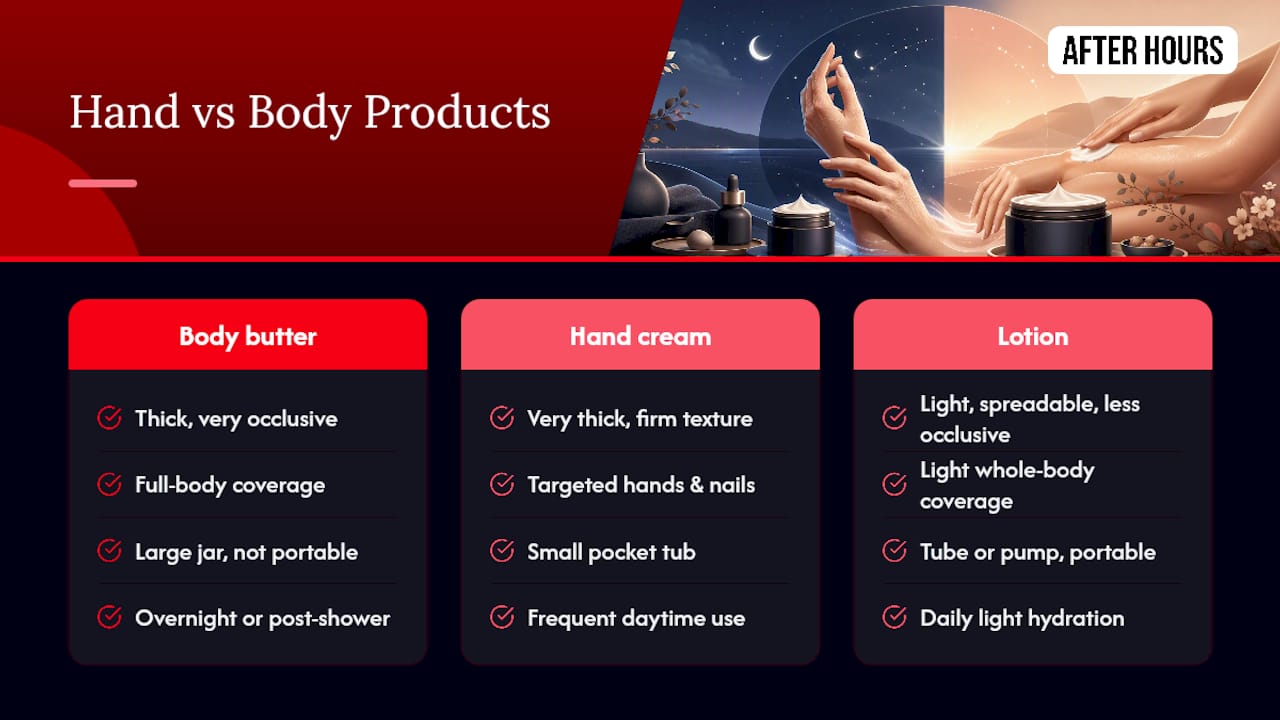
The practical rule: if you're applying to hands multiple times a day, a dedicated hand formula in a portable size saves you dipping into a large jar with wet or greasy fingers. If you're doing one thorough overnight treatment, a rich general body butter works just as well, since the goal at that point is maximum occlusion rather than convenience. Check the label for "hand and nail" or "intensive" wording. It usually signals a firmer, less runny texture built for targeted repair rather than all-over glide. Deeper formulation comparisons are covered in this guide to nourishing skin butters.
Common mistakes that undo good hand care
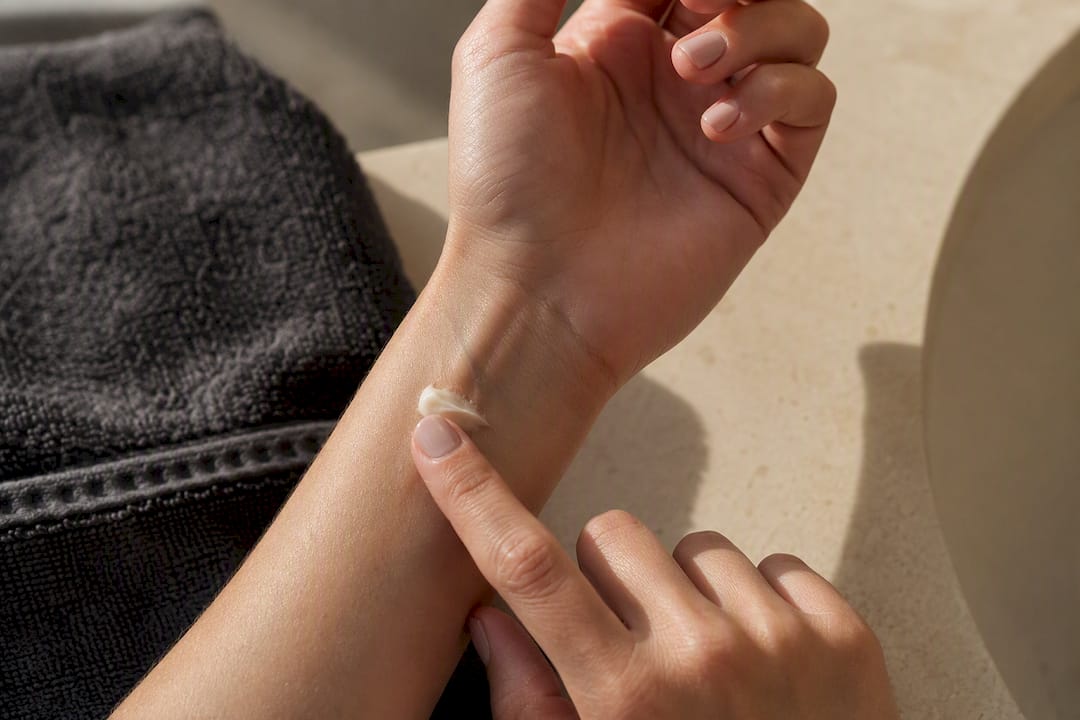
Over-application is the single most common issue. A pea-sized amount covers both hands comfortably. Piling on more doesn't speed up absorption; it just sits on the surface, leaves everything greasy, and transfers onto phones, keyboards, and door handles for the next hour.
Applying to dry, unwashed hands is another frequent misstep. Butter spreads and absorbs more evenly over lightly damp skin straight after washing, so slapping it onto dusty or sweaty hands mid-afternoon often just smears rather than sinks in.
Skipping the patch test on fragranced or heavily botanical formulas is a mistake that only shows up after the damage is done, usually as redness or a rash across the backs of the hands within a day or two of first use. Thirty seconds testing on the wrist saves a week of irritation.
Using the same thick overnight formula every single time you wash your hands during the day creates the opposite problem: constant greasy residue with no real added benefit, since daytime skin doesn't need the same intensity as overnight repair. Save the heavy formula for when hands are genuinely idle.
Finally, expecting overnight results from years of accumulated dryness sets an unrealistic bar. Genuine barrier repair with ceramide and hyaluronic acid formulas plays out over one to two weeks of consistent use, not one lucky application before bed.
Getting the routine right matters more than the jar
The mistake most guidance makes on this topic is treating body butter like a single-purpose product. It isn't. The formula that rescues genuinely cracked hands overnight is the wrong choice for hands that wash forty times a shift, and no amount of luxury packaging changes that. What actually determines results is matching texture to timing, something most product pages skip entirely in favour of talking about scent and jar size.
Ingredient literacy matters more than most buyers assume. Two jars can promise identical results while one leans on genuinely restorative actives like ceramides and shea, and the other relies on fragrance and filler to feel indulgent. Reading past the front label is the single habit that separates people who see real improvement from people who keep buying new jars every few months without asking why the last one didn't work.
Consistency, not intensity, drives the actual barrier repair. A modest amount used properly, at the right time of day, beats an expensive jar used sporadically whenever hands feel unbearably dry. That's the part conventional advice tends to underplay.
— Darnell
After Hours Body Butter for hands: which texture to choose
Some body butters are built around richer, high-lipid formulas designed to nourish stressed and sensitive skin rather than deliver a thin, quick-absorbing glide. That density is exactly what overnight hand rescue calls for: a thick layer worked into cracked knuckles before bed, left to work under cotton gloves, does more for genuinely dry hands than a fast-absorbing lotion ever will.

Many formulas are vegan, cruelty-free, and made without silicones, sulfates, or harsh fillers, aligning with the ingredient considerations covered earlier in this guide. If you have particularly reactive or sensitive skin, patch-test on your wrist first, the same advice that applies to any new fragranced or botanical product. Browse the full range of body butters to find a texture suited to your hands, and check the application guides linked throughout this piece for step-by-step routines once you've chosen one.
Sources
- Shea Butter Hand Cream | L'Occitane en Provence
- Therapeutic Hand Cream for Rough, Cracked Skin | CeraVe
- Cicaplast Hand Cream for Dry Hands | La Roche‑Posay
FAQ
Can you use body butter on hands?
Yes. Its thick, occlusive texture makes it particularly effective for very dry, rough, or cracked hands, especially as an overnight treatment. For hands washed frequently through the day, a lighter hand cream is usually more practical between applications.
Can I just use body butter instead of lotion?
You can, but it depends on the situation. Body butter suits overnight or intensive treatment because of its thickness, while lotion absorbs faster and suits daytime use when your hands need to stay dry for typing, driving, or handling objects.
Do you leave body butter on or wash it off?
Leave it on. Body butter works by sitting on the skin and slowing moisture loss, so washing it off shortly after application defeats the purpose. For overnight use, many people wear cotton gloves to protect bedding while the product continues absorbing through the night.
Is body butter better for you than lotion?
Neither is universally better; they suit different needs. Body butter offers stronger occlusion and is better for severe dryness or overnight repair, while lotion absorbs faster and works better for frequent daytime reapplication where a thick residue would be impractical.