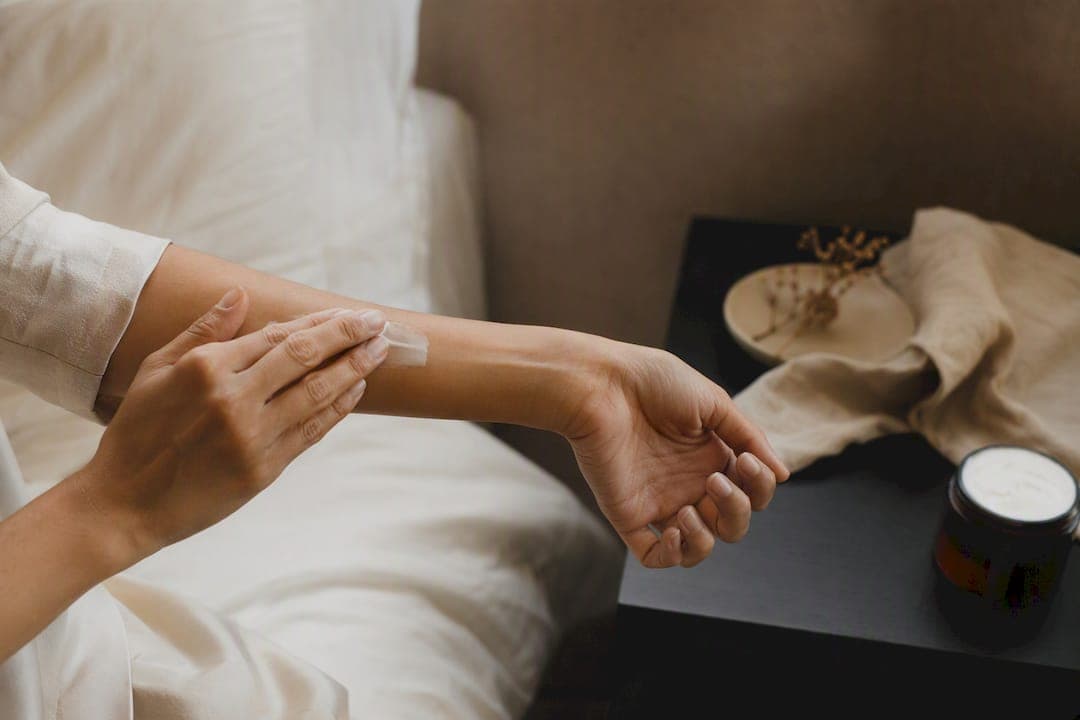
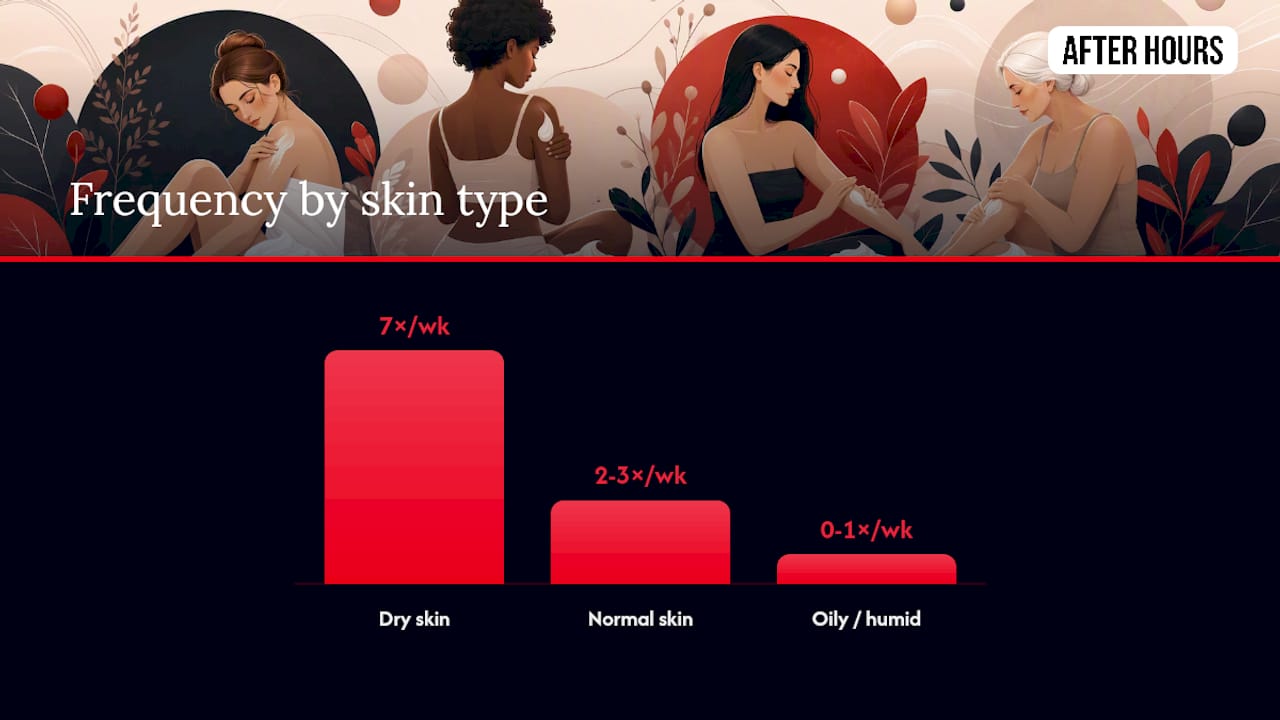
Start with a pea-sized amount for each arm, an almond-sized amount for each leg, and a heaped teaspoon for each foot. Apply to damp skin within a few minutes of stepping out of the shower. Use daily if your skin is dry, several times per week if it's normal, and only where needed if it's oily or you live somewhere humid. That's the rule. Everything else is adjustment.
Watch your skin for cues rather than sticking rigidly to a schedule:
- Tight, flaky, or rough patches? Increase the amount or frequency.
- Greasy sheen or clogged pores after 20 minutes? You've used too much. Scale back.
- Product sitting on top of skin instead of sinking in? You applied it too dry. Damp skin absorbs body butter far more efficiently.
Key Takeaways
Correct body butter amounts depend on the body area treated, while frequency depends on skin type, season, and visible skin signals rather than a fixed daily rule.
| Point | Details |
|---|---|
| Measure by area | Use pea-sized amounts for arms and hands, almond-sized for legs, and a heaped teaspoon for feet. |
| Apply on damp skin | Moisturise within a few minutes of showering so body butter seals in existing moisture. |
| Adjust frequency by skin type | Dry skin often needs daily use, normal skin two to four times weekly, oily skin only as needed. |
| Avoid acne-prone areas | Skip heavy butter on active breakouts on the back or chest; use lighter, non-comedogenic products there. |
| Choose a vegan, targeted formula | Afterhoursbodybutter offers fragrance-free and richer options suited to sensitive or very dry skin. |
Table of Contents
- How much body butter to use on each part of your body
- How often should you use body butter?
- Does body butter work for acne-prone or sensitive skin?
- What mistakes ruin a body butter routine?
- Why trust this guidance on body butter amounts?
- Why "use a generous amount" is bad advice
- Find the right After Hours formula for your skin
- Sources
How much body butter to use on each part of your body
Body butter isn't a one-size-fits-all scoop. Different areas hold moisture differently, and applying the same amount everywhere either wastes product on your torso or starves your heels.
Here's what actually works, area by area:
- Lower legs — a small amount per leg, focused on shins and calves where skin tends to flake first.
- Feet — a moderate amount per foot, worked into heels and the balls of your feet where skin is thickest.
- Torso — a few small amounts distributed across chest and stomach, more if skin feels particularly dry after towelling off.
- Arms — a small amount per arm, concentrated on forearms rather than upper arms, which produce more natural oil.
- Hands — a small amount total, split between both hands.
- Elbows and knees — a small extra dab on top of your arm or leg application, since these areas lose moisture fastest.
The technique matters as much as the quantity. Warm the product between your palms first rather than dabbing it straight onto skin. This softens the butter, which improves spreadability and means you need less product overall. Press and smooth it into skin rather than rubbing vigorously. Rubbing generates friction that can irritate freshly showered skin, while pressing helps the product settle into the barrier.
Work from the bottom up: lower legs, then feet, then torso, arms, and finally hands and elbows or knees. This order means you're not smearing already-applied product as you move around, and it mirrors how experts recommend organising a body butter routine for better absorption.
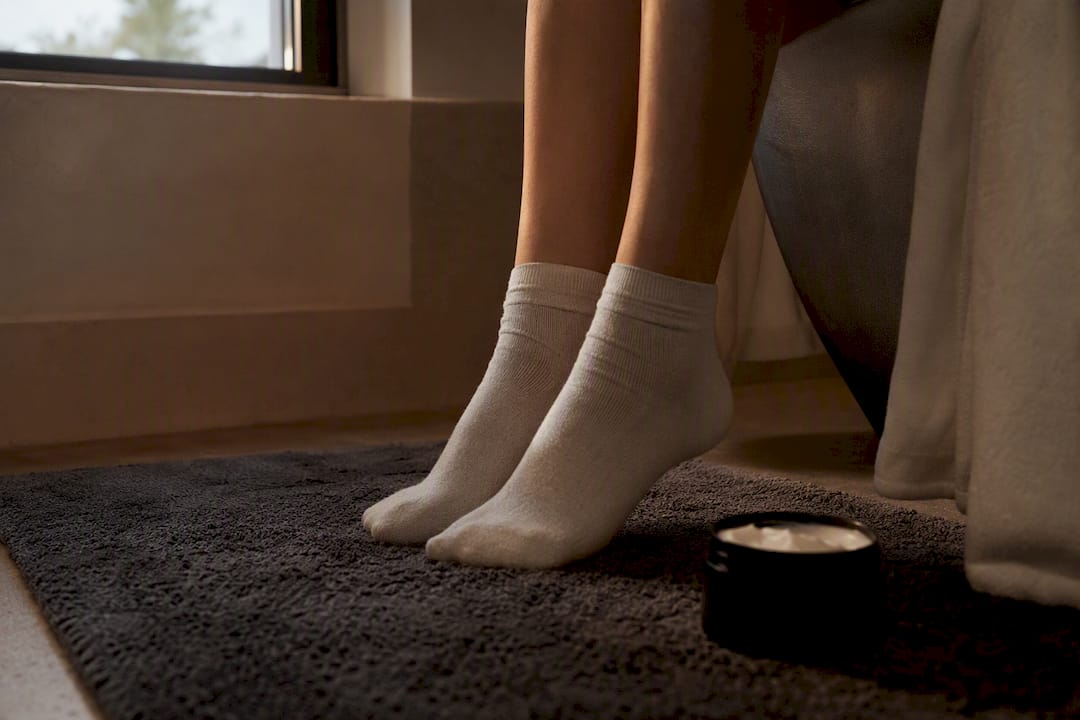
For genuinely stubborn dry patches, such as cracked heels or scaly elbows, one thin layer is rarely enough. Let the first application absorb for a minute, then add a second thin layer rather than piling on extra product in one go. For feet specifically, applying a heaped teaspoon and covering with cotton socks overnight gives the product hours to penetrate instead of transferring onto sheets.
Pro Tip: If your body butter feels stiff straight out of the jar, scoop your measured amount and rub it briskly between your palms for ten seconds before it touches your skin. You'll use noticeably less product to cover the same area.
How often should you use body butter?
Frequency isn't fixed. It shifts with your skin type and the season, and NHS guidance backs a tiered approach rather than a single universal answer.
- Dry skin: daily, and more frequently on particularly rough zones during winter.
- Normal skin: a few times a week is usually enough to maintain softness without overloading pores.
- Oily skin or humid climates: apply as needed, often just to elbows, knees, and heels rather than all over.
Seasonal shifts matter more than most people realise. Central heating strips moisture from the air just as effectively as cold wind does, so many people who manage fine with twice-weekly application in summer need daily use once radiators come on. In hot, humid weather, the opposite applies: heavy body butter can feel unnecessary during the day, and switching to a lighter lotion for daytime while saving body butter for after your evening shower often works better.
Let your skin tell you what it needs. Tightness after washing, visible flaking, or patchy roughness all signal you should increase frequency. A shiny or greasy appearance an hour after application means you can pull back. Treating any schedule as a starting point rather than a rule saves you from either under-treating dry skin or clogging pores you didn't need to worry about.
Does body butter work for acne-prone or sensitive skin?
Body butter isn't right for every area of every body, and pretending otherwise causes more breakouts than it prevents.
Active acne on the back or chest reacts badly to thick, occlusive formulas. Heavy body butter applied over active breakouts can trap bacteria and oil against the skin, making things worse rather than better. If you're dealing with breakouts on your torso, use a lighter, non-comedogenic moisturiser there instead, and reserve body butter for your limbs and feet, where breakouts are rarely a concern.
Sensitive skin needs a different kind of caution. Patch-test any new formula on your inner forearm for 24 hours before applying it more widely, particularly if it contains essential oils, and favour fragrance-free options with short, simple ingredient lists if you've reacted to products before.
The same logic applies to children and pregnant readers, whose skin is often more reactive than usual. Fragrance-free, minimal-ingredient formulas plus a patch-test on a small area first is the safer default here too.
Pro Tip: Not sure if a formula suits acne-prone skin? Apply a small amount to one shoulder for three nights running before committing to your whole back or chest.
What mistakes ruin a body butter routine?
Most complaints about body butter, whether it's too greasy, too slow to absorb, or simply not doing much, trace back to one of a handful of habits.
- Using too much at once. Start small and add more only where skin genuinely needs it, rather than layering a thick coat everywhere out of habit.
- Applying to bone-dry or dripping-wet skin. Damp skin, patted rather than rubbed dry, seals moisture in far more effectively than either extreme.
- Treating between-toe skin or active blemishes the same as everywhere else. These spots are prone to fungal issues or irritation and usually need a different, lighter product.
- Ignoring temperature. Cold body butter spreads poorly and tempts you to use more than necessary; a jar left somewhere warm for a few minutes before use softens it and cuts your usage right down.
Why trust this guidance on body butter amounts?
This guidance comes from Darnell, a contributor at Afterhoursbodybutter focused on natural body care and practical skincare routines, alongside dermatology sources and NHS guidance on moisturising frequency.
Afterhoursbodybutter builds its products around the same principle this article argues for: precision over guesswork. Its vegan, cruelty-free formulas skip synthetic fillers in favour of fat-soluble vitamins and nutrients, which is why customers with sensitive or acne-prone skin often report visible improvements in texture without new breakouts.
Small, correctly measured, regularly applied amounts do more for your skin barrier than occasional heavy layering ever will.
If you want more detail on ingredients or technique, the full guide to natural nourishing butters and a step-by-step application walkthrough cover both in more depth than this article has room for.
Why "use a generous amount" is bad advice
Most skincare content tells you to apply a "generous amount" of body butter and call it a day. That phrase is meaningless, and it's partly why so many people either end up with greasy residue on their sheets or give up on body butter entirely, convinced it's "too heavy" for their skin.
The truth is more boring and more useful: body butter works when the amount matches the area and the frequency matches the season. A teaspoon on your feet isn't excessive. The same teaspoon smeared across your forearm is. Conventional advice treats the whole body as one surface with one need, when in reality your shins lose moisture at a completely different rate than your torso does.
What I'd prioritise first, if you take nothing else from this: stop guessing and start measuring against your own skin's signals, not a fixed daily ritual. Tightness, flaking, and shine are more reliable guides than any calendar-based routine. Get the amount right for each area, and frequency becomes far easier to judge.
— Darnell
Find the right After Hours formula for your skin
Once you know how much to apply, the next decision is which formula suits your skin. Afterhoursbodybutter builds every product around vegan, chemical-free ingredients with fat-soluble vitamins that support the skin barrier directly, rather than masking dryness with fragrance and filler oils.
If your skin runs very dry, particularly through winter, look for a richer formulation designed for deeper, overnight-style nourishment on limbs and feet. If you're managing sensitive or acne-prone skin, choose a lighter, fragrance-free option and patch-test on your inner arm for 24 hours before applying it more broadly, especially anywhere near active breakouts. Afterhoursbodybutter's cruelty-free, sustainably packaged range is formulated in the UK with exactly this kind of skin in mind.
Browse the full range and find your match on the Afterhoursbodybutter shop, where product pages break down ingredients and best use cases for each formula.