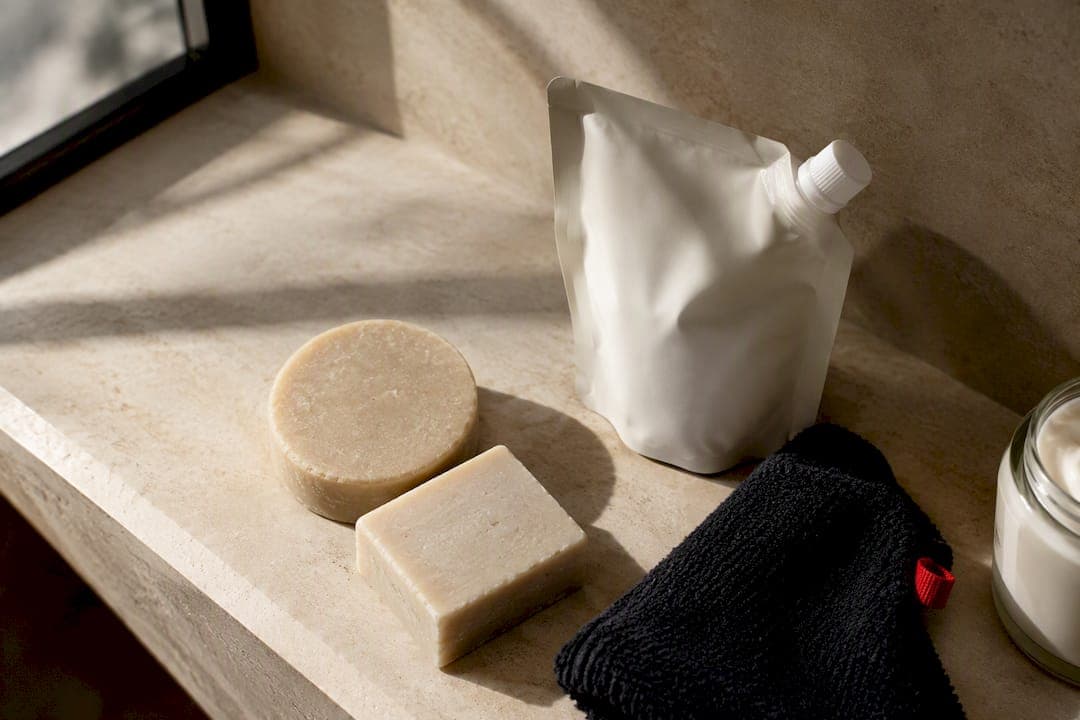
Zero waste body care means choosing products and packaging designed to leave nothing behind, no landfill plastic, no wasted product residue. The single highest-impact swap is moving from pump-dispensed plastic bottles to solid bars or refillable jars, since both cut packaging weight and reduce leftover product. Some body care brands offer options formulated with this in mind.
TL;DR:
- Switching to refill pouches that are reused multiple times significantly lowers environmental impact compared to single-use containers.
- Replacing pump bottles with jars or solid bars reduces leftover residue and minimizes plastic waste, especially if the container is made from recyclable mono-materials.
- Choosing bars, jars, and pouches made from recycled content and designed for emptiability increases sustainability and eases proper disposal.
- Using fewer, gentler ingredients in formulas and avoiding added fragrances benefits sensitive skin and reduces irritation risks.
- Prioritizing products with clear INCI labels and sustainable sourcing of ingredients maximizes both health and environmental benefits.
Table of Contents
- What counts as zero waste body care: bars, butters and refills
- Does refilling actually reduce environmental impact? The evidence
- How to read labels and check what's really in the jar
- A simple zero-waste routine that works day to day
- The core principle: reduce before you reuse or recycle
- What to do with empty bars, jars and pouches
- Common obstacles when switching to zero waste routines
- Simple DIY recipes for a plastic-free bathroom shelf
- Where the ingredients come from matters too
- Why packaging philosophy matters as much as the formula
- Ready to make the switch? Start with your next body butter
- Sources
- FAQ
What counts as zero waste body care: bars, butters and refills
Three product formats do most of the heavy lifting when you're cutting plastic from a bathroom shelf, and each suits a different skin type or lifestyle.
Solid soap and shampoo bars work well for most skin types and last longer than you'd expect, often outlasting two or three bottles of liquid equivalent. Keep them on a draining dish between uses, since sitting in water shortens their life fast. They're brilliant for travel, since there's no leakage risk and no liquid restrictions to worry about, though very dry or eczema-prone skin sometimes needs a heavier follow-up moisturiser afterwards.
Body butters and oils raise a packaging question that bars don't: jar or refill pouch? Thick, whipped textures like shea or cocoa butter blends sit naturally in a jar, where you scoop exactly what you need. Thinner oils pour more cleanly from a pouch or bottle. For dry or acne-prone skin, texture matters as much as ingredients. A dense butter locks in moisture better on very dry patches, while a lighter oil suits congestion-prone skin that reacts badly to heavy occlusives.
Refill pouches, concentrates and bulk buys cut packaging weight dramatically because you're shipping mostly product, not container. The catch: a refill only helps if the original container gets reused several times, not once. A single-use "refill" pouch that gets binned defeats the purpose.
- Bars: best for travel, low mess, longer shelf life
- Jars: best for thick butters, easy to empty fully
- Pouches: best for concentrates and repeat refills of a kept container
- Pump bottles: worst for both plastic use and leftover residue
Pro Tip: Check a jar's shape before buying. Straight sides and a wide mouth mean you can scrape out the last gram with a spatula, whereas tapered jars trap product in the corners.
Does refilling actually reduce environmental impact? The evidence
Yes, and the packaging format you choose matters more than most shoppers realise. Life cycle assessment research on cosmetic packaging found that switching to 100% recycled materials and reducing overall packaging weight cut environmental impacts by roughly 42 to 60 percent compared with standard virgin-plastic containers. That's a bigger lever than switching to a trendy bioplastic, which still carries meaningful water and energy costs in production.
The biggest packaging win rarely comes from a fancy new material. It comes from using less packaging and making what remains from recycled content.
Refill systems reinforce this. A case study on refill-and-reuse packaging found that even a single successful refill cycle meaningfully lowers packaging-related impact compared with buying single-use containers each time. The catch is reuse rate: a refill pouch shipped once and never reused adds transport impact without the offsetting benefit.
Emptiability data adds a second, less obvious factor. Testing on cosmetic containers found that pump dispensers can leave a significant portion of the product stranded inside the bottle, sometimes over a quarter, while jars and airless dispensers typically retain under 1%. A "greener" pump bottle that wastes a quarter of its contents can lose more real-world value than a plain jar you scrape clean.
Four rules worth following at the till:
- Prefer a refill scheme you'll actually use more than once.
- Choose mono-material, recyclable packaging over mixed plastics that can't be separated.
- Avoid bottles with long internal dip tubes, since they trap the most residue.
- When texture allows, pick a jar over a pump.
How to read labels and check what's really in the jar
UK cosmetics carry legal ingredient labelling, and knowing how to read it turns guesswork into a two-minute check. Under the Cosmetic Products (Safety) Regulations 2004, every cosmetic sold in the UK must list ingredients using INCI names, in descending order of weight. The first five or six names on the list make up the bulk of the formula, so scan those first rather than hunting for buzzwords further down.
- Check the INCI list on the packaging first. Ingredients above 1% concentration must appear in weight order; those below can appear in any order after that point.
- If a small or unwrapped bar has no printed list, UK labelling rules allow the information on an accompanying leaflet or a nearby shelf notice instead, so ask staff or check the retailer's website before assuming it's unregulated.
- Look up unfamiliar INCI names through a brand's own ingredient guide or a reputable INCI decoder before buying, particularly if you have reactive skin. Afterhoursbodybutter's own guide to decoding INCI labels walks through common terms in plain English.
- Flag added fragrance and common irritants if you have sensitive or eczema-prone skin. Fragrance mixes are a frequent trigger even in "natural" formulas.
- For genuinely dry skin, NICE clinical guidance recommends emollients and soap substitutes over regular soap, and specifically advises against certain products, such as aqueous cream, being used as a leave-on moisturiser.
A simple zero-waste routine that works day to day
A workable routine doesn't need a dozen products, just the right three or four used correctly.
- Cleanse with a solid soap or shampoo bar, stored on a draining dish so it isn't sitting in water between uses.
- Moisturise straight after washing, while skin is still slightly damp. Clinical guidance on emollients notes this locks in far more moisture than applying to fully dry skin.
- Apply body butter in downward strokes, following the direction hair grows, which reduces the risk of folliculitis around hair follicles.
- Use a separate spatula or clean hands for jarred products rather than dipping fingers repeatedly, which limits cross-contamination and extends shelf life.
- Store bars and butters away from direct sunlight and steam, since heat softens butters unevenly and shortens a bar's usable life.
Pro Tip: Travelling with a butter? Decant a small amount into a mini metal tin rather than carrying the full jar. It avoids exposing the whole product to temperature swings in a suitcase.
Bars kept dry between uses can last months rather than weeks, and a well-stored jar of body butter typically holds its texture and scent for as long as the ingredient list's shelf-life guidance states, usually printed as a small jar symbol with a number of months inside.
The core principle: reduce before you reuse or recycle
Zero waste body care follows the same hierarchy used across sustainable living generally: reduce first, reuse second, recycle or refill last. Recycling gets the most attention, but it's the weakest lever of the three, since recycling still consumes energy and not all plastic collected actually gets reprocessed.

Reduce means buying less packaging in the first place, choosing a concentrated bar over a diluted liquid, or a refill pouch over a fresh bottle every time. Reuse means keeping a container in service for years rather than months, a glass jar that gets refilled repeatedly rather than binned after one use. Recycle or refill is the fallback for packaging that's genuinely reached the end of its life, and it works best when the material is a single, easily sorted plastic or glass rather than a mixed laminate that recycling plants can't process.
The practical takeaway: a shopper who buys one long-lasting bar and refills one jar for a year has done more for reducing waste than someone who diligently recycles a dozen bottles. Volume avoided beats volume processed, every time.
What to do with empty bars, jars and pouches
Disposal is where good intentions often fall apart, so it's worth knowing the actual rules for each format. Empty glass jars go straight into standard household glass recycling once rinsed, and most councils accept them without question. Metal tins follow the same route, provided any plastic lid is removed and binned or recycled separately.
Plastic refill pouches are the trickiest item. Many are made from flexible film that standard kerbside recycling can't sort, so check whether the brand or a nearby supermarket runs a dedicated soft-plastic collection point before assuming it's recyclable at the kerb. Cardboard bar wrappers and boxes go in paper recycling, but only once any plastic viewing window has been removed.

Solid bars themselves generate almost no packaging waste at end of life, since a well-designed wrapper is often just a paper band. Compostable options exist for some fully natural bars, though check the specific formulation rather than assuming "natural" means compostable at home.
The wider lesson from emptiability research is that disposal habits matter less than reducing what needs disposing of in the first place. A container fully emptied and cleanly recycled once still generates more overall waste than a bar that never needed packaging beyond a paper band.
Common obstacles when switching to zero waste routines
The most common complaint about switching is texture mismatch, particularly with body butters. Some whipped butters feel heavier than a lotion at first, and people abandon them within a week rather than adjusting application amount or timing. Using less product, applied to damp skin, usually solves this faster than switching formulas entirely.
Availability is a genuine obstacle outside larger towns, where refill shops and bar-focused ranges are harder to find on the high street. Online ordering closes most of that gap now, though it reintroduces some delivery packaging, so batching orders to reduce shipping frequency helps offset that.
Cost perception trips people up too. A £12 bar looks expensive next to a £3 supermarket bottle until you calculate cost per wash, since bars typically outlast the equivalent liquid volume by a wide margin.
Cross-contamination worries put some people off jarred products entirely, particularly in shared households. The fix is simple and cheap: a small cosmetic spatula solves it completely, and it costs less than a single bottle of hand soap.
Finally, habit is the quiet obstacle nobody names directly. Reaching for a familiar pump bottle is automatic; reaching for a bar requires a beat of conscious thought for the first few weeks. That friction fades faster than most people expect, usually within a month of consistent use.
Simple DIY recipes for a plastic-free bathroom shelf
Making a basic body butter at home needs only three ingredients and a double boiler, and it removes packaging almost entirely if you store the result in a jar you already own.
Basic whipped body butter: melt equal parts shea butter and a light carrier oil (sweet almond or grapeseed) in a bowl over simmering water. Cool slightly, then whip with an electric mixer until pale and fluffy, roughly five minutes. Store in a clean jar.

Simple sugar scrub: mix two parts fine sugar with one part oil, adding a few drops of vitamin E oil as a natural preservative aid. Use within a few weeks, kept dry between uses, since sugar scrubs are prone to bacterial growth if water gets in.
Solid lotion bar: melt equal parts beeswax, shea butter, and carrier oil, pour into a used tin or silicone mould, and let it set fully before use. Rub directly onto skin like a bar of soap.
Homemade products lack the preservative systems in commercially tested formulas, so make smaller batches, use within four to six weeks, and always store away from bathroom humidity where bacteria multiply fastest. If a batch changes smell, colour, or texture, discard it rather than risk it on skin.
Where the ingredients come from matters too
Zero waste isn't only about packaging, it's also about what's inside the jar and how it got there. Shea butter, cocoa butter, and many carrier oils common in body care come from smallholder farming communities across West Africa and parts of Asia, where fair trade certification and direct-trade sourcing agreements can make a genuine difference to grower income.
Look for brands that name their sourcing region or supplier relationship rather than listing an ingredient with no context at all. Vague terms like "natural" or "ethically sourced" carry no legal definition in UK cosmetics labelling, unlike the INCI ingredient list itself, so treat them as marketing language rather than a verified claim.
Palm oil and its derivatives deserve particular scrutiny, since unsustainable palm cultivation drives deforestation in several producing regions. Certified sustainable palm oil exists, but it's worth checking whether a brand names its certification body rather than simply asserting sustainability.
Vegan and cruelty-free formulations sidestep animal-derived ingredients and animal testing entirely, which matters to many environmentally conscious shoppers alongside the packaging question. A genuinely sustainable routine considers both: what the jar is made from, and what went into growing what's inside it.
Why packaging philosophy matters as much as the formula
Some brands focus on vegan, cruelty-free formulations built without silicones, sulfates, or harsh synthetic fillers, and include fat-soluble vitamins intended to nourish skin directly rather than mask dryness temporarily. That ingredient discipline matters for the same reason emptiability data matters: what you're actually applying and how much of it you use both count towards real-world impact, not just what's printed on the label.
Some customer testimonials for similar products point to visible reductions in acne and irritation for sensitive skin, consistent with a chemical-free formulation strategy generally recommended for reactive skin types. Some brands package products sustainably in the UK, aligning with dematerialisation and recycled-content principles that life cycle research favours over unproven bioplastic alternatives.
None of this replaces checking a jar's own INCI list before buying, a habit worth building regardless of brand. But a formulation built around fewer, gentler ingredients and considered packaging is a reasonable starting point for anyone trying to cut both plastic and irritation at once.
— Darnell
Ready to make the switch? Start with your next body butter
Choosing a zero waste body butter comes down to three checks: the INCI list, the refill or packaging design, and whether shipping information matches how you actually shop. Afterhoursbodybutter's Body Butters range is formulated without silicones, sulfates, or harsh fillers, and packaged sustainably in the UK, giving you a straightforward option to compare against whatever's currently sitting on your bathroom shelf.
Some customer reports point to visible improvements in texture and reduced irritation for sensitive or acne-prone skin after switching, which may be worth considering alongside the waste associated with plastic pump bottles. Current pricing and full ingredient details sit on the Afterhoursbodybutter product pages, so check the INCI list, confirm the packaging suits your routine, and place your first order when you're ready.
Sources
- Reducing the environmental impacts of plastic cosmetic packaging: a multi-attribute life cycle assessment
- Integrating circularity indicators with life cycle assessment for plastic packaging: A refill-and-reuse system case study
- The Cosmetic Products (Safety) Regulations 2004
FAQ
What is the best environmentally friendly body wash?
Solid soap bars generally beat liquid body wash on environmental impact, since they need little to no plastic packaging and typically outlast bottled equivalents. Look for one with a short, recognisable INCI list and minimal added fragrance if your skin reacts easily.
Who owns the zero waste store?
"Zero waste store" describes a retail model, refill shops and bulk-buy outlets, rather than one single company, and ownership varies by location since most operate as independent local businesses. Afterhoursbodybutter operates separately as a direct online retailer of vegan body butters rather than a refill shop format.
What is the best chemical-free body wash in the UK?
There's no single "best" product, but a genuinely chemical-free option avoids silicones, sulfates, and synthetic fillers, checkable directly against the INCI list required under UK cosmetics labelling law. Afterhoursbodybutter formulates its body butters along these lines, without silicones, sulfates, or harsh fillers.
What is the best non-plastic shampoo?
Shampoo bars are the main non-plastic alternative to bottled shampoo, and they work for most hair types once you adjust to a slightly different lather and rinse routine. Store the bar on a draining dish between uses to stop it softening and wearing down faster than necessary.
## Recommended

- [No Water, More Actives: Waterless Body Moisturizer for UK Skin](https://afterhoursbodybutter.co.uk/blogs/news/waterless-body-moisturizer)
- [Brands: Pick Sustainable Body Butter Packaging That Protects Oil Rich](https://afterhoursbodybutter.co.uk/blogs/news/sustainable-body-butter-packaging)
- [Sustainable body care explained: your 2026 guide](https://afterhoursbodybutter.co.uk/blogs/news/sustainable-body-care-explained-your-2026-guide)
- [Waterless skincare benefits: potency and sustainability gains](https://afterhoursbodybutter.co.uk/blogs/news/waterless-skincare-benefits)