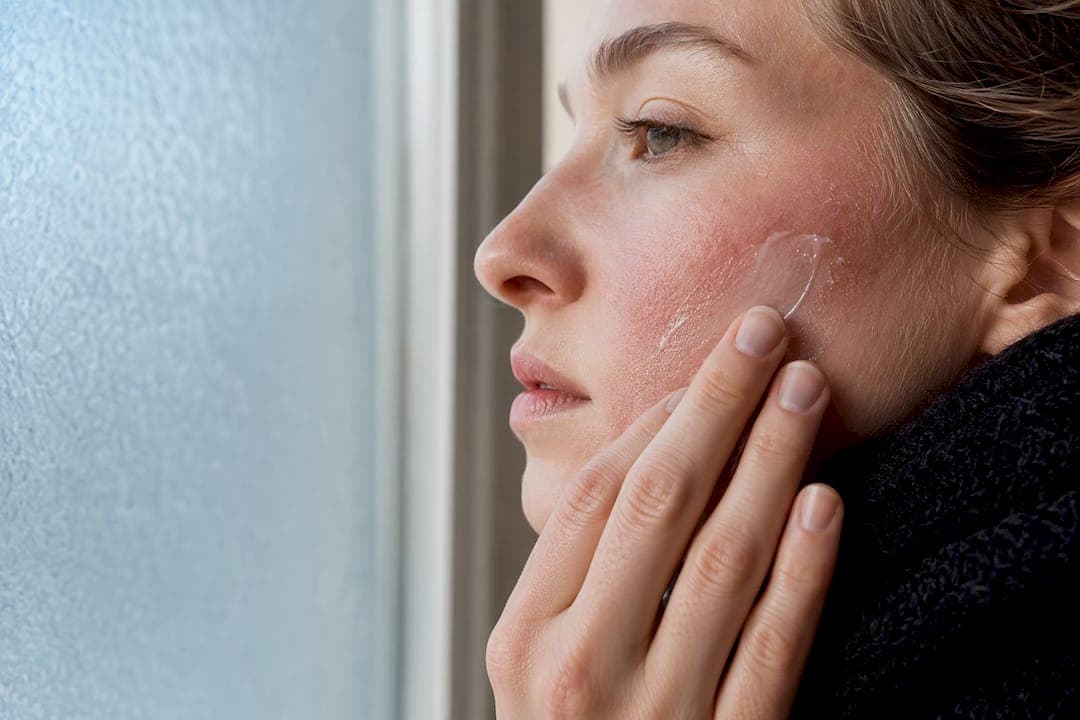
Get out of the wind, apply a bland emollient or barrier cream, and stop anything that strips the skin further. That's the whole first move. A fragrance-free moisturiser with ceramides, petrolatum or glycerin does most of the repair work, and sunscreen still matters if you're outdoors. Mild windburn usually settles with consistent gentle care; blistering, spreading redness or no improvement means it's time to see someone qualified.
TL;DR:
- Using a thick, fragrance-free barrier cream with ceramides or petrolatum is crucial for repairing windburned skin and should be reapplied regularly, especially after cleansing.
- Windburn causes redness, tightness, and flaking by stripping skin lipids, but it can be distinguished from sunburn by its milder symptoms and faster recovery.
- Care routines should avoid hot water, active ingredients, and exfoliants until the skin fully heals, and short-term hydrocortisone use can calm severe inflammation.
- Applying broad-spectrum SPF and covering exposed areas help prevent windburn, particularly when layered under protective clothing and using lip balm for lips.
- Recovery is faster with proper hydration and diet, emphasizing water intake and fat-soluble nutrients like omega-3s, vitamin C, and zinc to support skin healing.
Table of Contents
- What windburn is and its common symptoms
- Windburn versus sunburn: how to tell the difference
- How to treat windburn now: a step by step care routine
- Choosing a moisturiser for windburn: ingredients and textures that help
- Prevention: protecting your skin before you go outside
- When to see a healthcare professional
- The role of hydration and diet in skin recovery from windburn
- Common mistakes to avoid when moisturising windburned skin
- Practical notes from After Hours Body Butter
- A vegan body butter option for wind-damaged skin
- Sources
- FAQ
What windburn is and its common symptoms
Wind pulls moisture straight out of the skin. Cold, dry air combined with low humidity strips the lipids that hold your skin barrier together, leaving it thinner and more reactive than usual. That's why a walk in a stiff January wind can leave your face feeling tight and sore within an hour, even without a hint of sun.
The signs are hard to miss once you know what to look for:
- Redness across the cheeks, nose or hands
- A tight, stretched feeling that worsens when you smile or frown
- Stinging or a raw sensation on contact with water
- Flaking or rough patches within a day or two
- Heightened sensitivity to products you'd normally tolerate
Mild cases tend to improve with consistent, gentle care NHS guidance on sun safety. Left unmanaged, that same irritation can linger and make your skin more reactive to everyday products for weeks.
Windburn versus sunburn: how to tell the difference
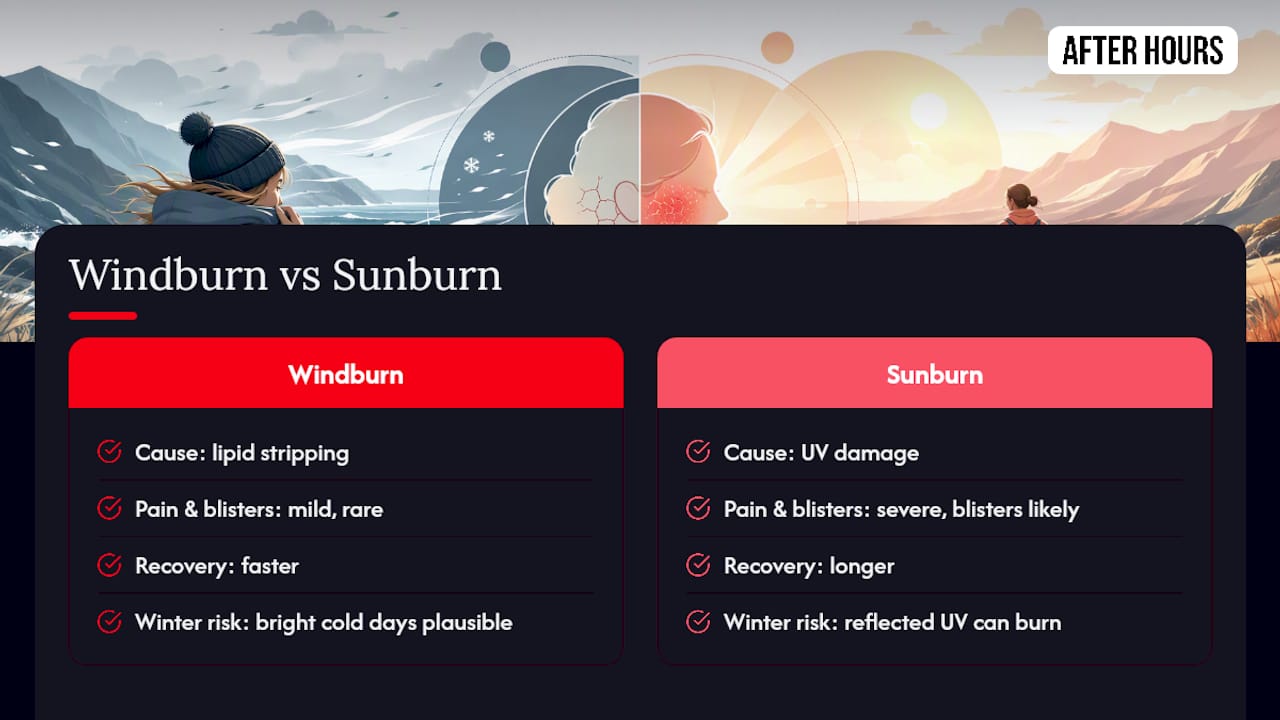
Windburn and sunburn often show up together, which confuses a lot of people. Windburn comes from mechanical stripping of the skin's surface lipids. Sunburn is UV damage, and it tends to bring blistering, more severe pain and a longer recovery.
If you were outside on a bright but cold day, both are plausible. Reflected UV off snow or water can burn skin even when the air feels freezing, so redness after a winter walk isn't automatically "just wind." That overlap is precisely why sunscreen stays relevant through winter, not only in summer. Treating the two together, rather than assuming it's purely wind, usually gets skin back to normal faster.
How to treat windburn now: a step by step care routine
Windburned skin heals fastest when you follow a consistent sequence rather than reaching for whatever's in the cabinet. Here's the order that works:
- Stop further exposure. Get indoors or shield your face, then cleanse gently with a creamy, non-foaming cleanser. Gel and water-based washes strip already-compromised skin further, so avoid them until you've recovered.
- Apply a bland emollient or barrier cream. Ointments containing ceramides, petrolatum or shea butter rebuild the barrier and lock in moisture. Reapply two to three times a day, and always straight after cleansing while skin is still slightly damp.
- Use 1% hydrocortisone sparingly, if needed. For intense redness or itching, short-term use over one to two days can calm inflammation, but the NHS is clear that it shouldn't be used long-term because of the risk of thinning skin. If things aren't improving, that's a signal to speak to a pharmacist or GP rather than keep applying it.
- Skip exfoliants, acids and retinoids entirely while healing. Active ingredients and hot water both aggravate a barrier that's already compromised; lukewarm water and bland products only, until the tightness and flaking have gone.
- Manage discomfort symptomatically. A cool (not cold) compress for a few minutes can ease stinging, and standard over-the-counter painkillers help if soreness is disrupting sleep or daily life.
Pro Tip: Keep your barrier cream in the fridge during a flare-up. The cool application soothes stinging on contact and makes reapplication feel less like a chore, which matters when you need to do it three times a day.
Choosing a moisturiser for windburn: ingredients and textures that help
The ingredient list matters more than the price tag here. Look for a formula built around genuine barrier-repair ingredients rather than one leaning on fragrance or trend actives. NHS guidance on emollients points to ceramides, petrolatum, shea butter, hyaluronic acid and glycerin as the ingredients that actually rebuild what wind has stripped away, and recommends fragrance-free, non-comedogenic formulas to avoid compounding the irritation.
Texture should match the area:
- Very dry patches (hands, cheeks, knuckles): a thick ointment or petrolatum-based balm creates the strongest occlusive barrier, though it can feel greasy and isn't ideal for acne-prone faces.
- Acne-prone or oily skin: a lighter, non-comedogenic cream or gel with ceramides and hyaluronic acid gives hydration without clogging pores.
- General body areas: a rich butter-based formula works well precisely because skin there tolerates heavier textures better than the face does.
Layering makes a real difference too. A humectant serum (hyaluronic acid or glycerin) goes on first to draw in moisture, a cream locks it in, and an occlusive ointment overnight prevents overnight water loss. A calming body moisturiser built around this kind of layering logic tends to outperform single-ingredient products for windburn recovery.
Prevention: protecting your skin before you go outside
Prevention beats treatment every time, and it takes about thirty seconds longer than skipping it entirely.
- Apply a barrier-rich moisturiser or emollient before you leave the house, and carry a travel-size version to reapply if you're out for hours.
- Layer broad-spectrum SPF over your moisturiser whenever you're outdoors, reapplying every two hours since UV still reaches skin on cold or cloudy days.
- Cover exposed skin with a scarf, hat or glasses, and choose windproof outer layers over rough wool or scratchy fabrics that add friction damage.
- Keep lips protected with a proper balm; they have no oil glands of their own and crack faster than any other area.
- Run a humidifier indoors during dry, heated winter months, and stick to gentle, creamy cleansers so you're not undoing your prevention work every time you wash your face.
When to see a healthcare professional
Most windburn resolves on its own within a few days of consistent care. See a GP or pharmacist if you notice blistering, severe swelling, spreading redness, pus, fever, or no improvement after several days of proper treatment. Hydrocortisone is only a short-term measure; persistent inflammation may need a prescription-strength option a clinician can assess in person.
The role of hydration and diet in skin recovery from windburn
Topical care repairs the surface, but skin recovers faster overall when it isn't fighting dehydration from the inside as well. Wind exposure accelerates water loss through the skin itself, and if you're also under-hydrated systemically, that repair process slows down noticeably. Drinking water consistently through the day, rather than a single large glass, helps maintain the skin's baseline moisture reserves that topical products are trying to protect.
Diet plays a supporting role too. Fats matter more than most people expect: essential fatty acids from foods like oily fish, nuts and seeds support the lipid layer that wind strips away, which is the same reasoning behind formulating body butters around fat-soluble nutrients rather than water-based fillers. Vitamin C and zinc both feature in skin repair processes generally, so a varied diet with enough of both gives your skin more raw material to work with while it heals.

None of this replaces the emollient in your bathroom cabinet. But treating windburn purely from the outside, while ignoring hydration and diet, tends to produce slower, patchier recovery. The two approaches work together rather than as alternatives, and neither substitutes for the other when skin is actively flaking or sore.
Common mistakes to avoid when moisturising windburned skin
The single biggest error is reaching for the wrong texture at the wrong time. People often grab a light, water-based lotion because it feels less heavy, but thin lotions evaporate quickly and leave already-stripped skin exposed again within the hour. A richer cream or ointment holds moisture in for longer, which is what damaged skin actually needs.
Over-cleansing is the second common trap. Washing windburned skin multiple times a day, especially with foaming or gel cleansers, removes the very lipids you're trying to restore. A creamy, non-foaming cleanser used once or twice daily is enough; anything more aggressive undoes your moisturiser's work before it's had a chance to settle.
Introducing active ingredients too early is another frequent misstep. Retinoids, exfoliating acids and strong toners all increase sensitivity, and applying them to windburned skin risks turning a mild flare into a longer-lasting problem. Wait until the tightness, flaking and stinging have fully resolved before reintroducing anything active.
Finally, don't skip moisturiser once redness fades. Skin can look recovered on the surface while the barrier is still rebuilding underneath, and stopping treatment too soon is a common reason windburn seems to "come back" the next time you're outside.
Practical notes from After Hours Body Butter
Formulating for sensitive, barrier-compromised skin teaches you quickly that fewer, better ingredients beat long lists. Natural fats and fat-soluble vitamins support the same lipid layer that wind strips away, which is why body-area barrier repair often responds well to nutrient-dense butters rather than thin lotions. For a deeper look at timelines, read our guide on strengthening your skin's moisture barrier.
— Darnell
A vegan body butter option for wind-damaged skin
If your hands, arms or body have taken the brunt of the wind, a rich, nutrient-dense body butter is often the simplest fix. There are vegan, cruelty-free body butters formulated using fat-soluble vitamins and natural ingredients, built specifically to nourish and support barrier repair without silicones, sulfates or harsh fillers.

Body areas with widespread dryness, cracked knuckles or rough patches on arms and legs generally do better with a thicker, butter-based formula than a thin facial lotion. Your face, particularly if you're acne-prone, usually needs something lighter and non-comedogenic instead. If it's your hands, elbows or body that took the worst of the weather, browse the Body Butters range and pick a formula suited to how dry your skin actually feels right now, not just what's on the shelf. For a broader daily routine alongside it, our winter dry skin relief guide walks through the sequencing.
Sources
For clinical guidance beyond this article, the NHS page on emollients and NHS sun safety advice cover moisturiser selection and sunscreen use in full. Medical News Today's overview of windburn adds practical detail on symptoms and product textures.
This article is general information, not a substitute for advice from a qualified doctor. Consult a qualified healthcare professional about your own circumstances before acting on anything here.
FAQ
How do you treat windburn on your skin?
Get out of the wind, cleanse gently with a creamy cleanser, then apply a fragrance-free moisturiser containing ceramides, petrolatum or glycerin. Avoid hot water and active ingredients like acids or retinoids until the redness and tightness have fully resolved.
How can I protect my skin from windburn?
Apply a barrier-rich moisturiser before heading outside, layer broad-spectrum SPF over it, and reapply sunscreen every two hours if you're out for a while. Cover exposed skin with a scarf or windproof clothing, and keep a rich body butter on hand for hands and cheeks that take the brunt of the weather.
What does a windburned face look like?
Windburned skin typically looks red, feels tight and stretched, and may flake or sting when touched or washed. It differs from sunburn in that it rarely blisters and tends to improve faster, usually within a few days with consistent moisturising.
What can I do to treat windburn on my lips?
Apply a thick, occlusive lip balm frequently throughout the day, since lips have no oil glands and dry out faster than surrounding skin. Avoid licking them, as saliva evaporates and worsens dryness, and choose a fragrance-free balm rather than one with menthol or citrus, which can sting cracked skin further.
Does After Hours Body Butter make a moisturiser suitable for windburn?
Some vegan body butters are formulated with fat-soluble vitamins and natural ingredients to nourish and support skin barrier repair, which suits body areas affected by windburn such as hands, arms and legs. Pricing for the Body Butters range is available on the site.