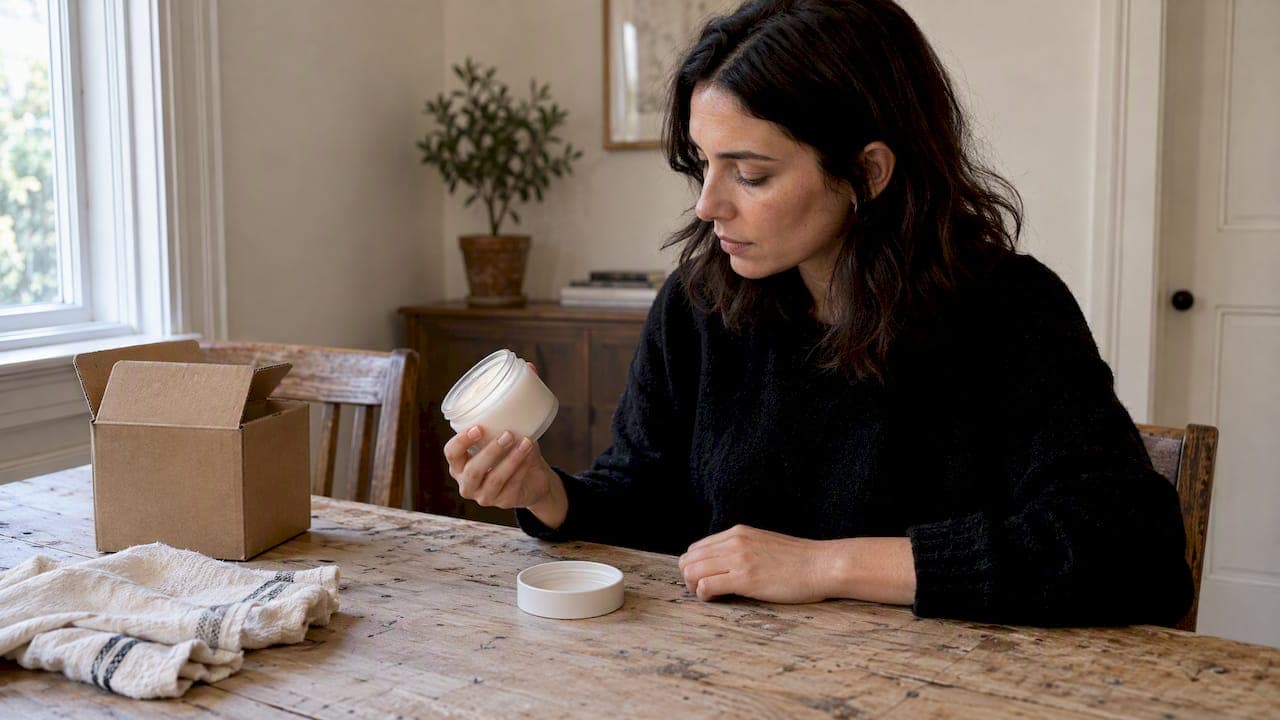
A sustainable body butter is a waterless, high-emollient formula made with ethically sourced plant fats and packaged for reuse or genuine recycling, not a tub with a green leaf printed on the label. Look for four things on the pack: a short, named ingredient list; a credible sourcing or certification claim such as COSMOS or UEBT; monomaterial or refillable packaging; and clear end-of-life instructions. We cover each of these aspects and apply them to our own range.
TL;DR:
- Look for body butters with a named, traceable list of plant fats like shea or cocoa butter; vague terms are a red flag.
- Prioritize certifications such as COSMOS, UEBT, or RSPO, and check for reputable sourcing statements to verify sustainability claims.
- Choose packaging made of glass, aluminium, or genuinely monomaterial plastic, and confirm your local recycling capabilities before disposal.
- Ensure the product’s end-of-life instructions are clear and consider brand schemes like refill programs or take-back schemes for better environmental impact.
- Be aware that waterless formulas need strict hygiene practices during manufacturing and home use to prevent contamination.
Table of Contents
- What sustainable body butter actually means
- Ingredients to look for and ingredients to question
- Certifications and on-pack claims that actually mean something
- The shea supply chain and what ethical sourcing really looks like
- Packaging, end of life and what to do with the empty jar
- How to choose a sustainable body butter
- A simple waterless body butter recipe you can make at home
- How After Hours Body Butter applies these standards
- Perfection isn't the goal, traceability is
- Why After Hours Body Butter fits this checklist
- FAQ
- Sources
What sustainable body butter actually means
Body butter and body lotion solve the same problem in different ways. Lotion is mostly water, thickened and emulsified with oils. Body butter skips the water almost entirely and relies on concentrated plant fats such as shea or cocoa butter, often whipped with lighter oils to soften the texture.
That waterless structure matters for your skin and for the planet. Thick, greasy preparations tend to seal moisture into the skin more effectively than watery lotions, which is why emollient guidance from NHS pathways points to greasier formulas as more effective for barrier repair, though not always as pleasant to apply. Fewer preservatives are needed because there is no water to support microbial growth, and the resulting product can often be packed into smaller, simpler containers.
- Waterless formulas need fewer or no preservatives, reducing chemical load.
- Concentrated fats tend to outperform watery lotions for barrier repair, according to emollient guidance.
- Smaller, denser formulas can mean less packaging per use.
The trade-off is hygiene. No water also means any contamination from fingers or utensils has nowhere to be diluted, so manufacturing and home use both need strict cleanliness.
Ingredients to look for and ingredients to question
Reading the ingredient panel tells you more than any marketing line on the front of the jar. A handful of plant fats do most of the work in a well-made body butter, and a handful of vague terms should make you pause.
Ingredients worth seeking out include ethically sourced shea and cocoa butter, jojoba oil, avocado oil, sustainably sourced coconut oil, and plant-derived vitamin E. These are stable, biodegradable, and widely available from suppliers who can show where they came from.
- Prefer named, traceable fats: shea, cocoa butter, jojoba, avocado oil, sustainable coconut.
- Question unspecified "fragrance" with no breakdown of what it contains.
- Avoid palm derivatives with no RSPO or COSMOS reference, since palm supply chains vary hugely in how they're managed.
- Skip ingredients that signal microplastics, such as polyethylene beads, and silicones added purely for texture rather than function.
Greasier butters aren't automatically right for everyone. Emollient guidance notes that very rich, oily preparations can be less acceptable to some users and may worsen acne or folliculitis in those prone to it, so the "best" ingredient list is partly a matter of personal tolerance.
Pro Tip: Patch-test a new body butter on your inner arm for two to three nights before applying it over larger areas.
Certifications and on-pack claims that actually mean something
Not every badge on a cosmetic tub carries the same weight. Some certifications audit the whole supply chain; others just mean a single ingredient passed a test.
COSMOS and the Soil Association standard cover organic and natural production rules, and they also set expectations on packaging. The COSMOS technical guide recommends monomaterial packaging and a minimum of 20% recycled content in primary packaging, which is a concrete, checkable standard rather than a vague promise.
UEBT (Union for Ethical BioTrade) verifies how companies treat biodiversity and the suppliers they source from, which matters for ingredients like shea and cocoa that come from smallholder communities. RSPO certification, or a clear reference to it, is the main practical check for palm-derived ingredients.
- COSMOS and Soil Association: organic and natural production rules, plus packaging guidance.
- UEBT: biodiversity protection and fair treatment of suppliers.
- RSPO: the standard reference point for sustainably sourced palm derivatives.
Treat unqualified words like "natural" or "zero waste" as marketing until a brand backs them with a named standard or a specific, checkable action.
The shea supply chain and what ethical sourcing really looks like

Shea butter is one of the clearest examples of how sourcing choices translate into real social outcomes. Shea kernels are harvested and processed largely by women's cooperatives across West Africa, and the economic value of that work depends heavily on whether buyers purchase raw kernels cheaply or support local processing into finished butter.
Research into Ghanaian shea cooperatives points to diverse cooperative structures as a stronger route to lasting benefit than one-off donations or generic CSR statements. Work on shea value chains backs this up: pre-finance, registered cooperatives, and simple transparent contracts tend to outperform charitable gestures because they give producers predictable income and room to add value locally rather than just selling raw material.
- Look for named cooperatives rather than generic "fair trade shea" claims.
- Check for pre-finance or advance payment schemes that help producers through the season.
- Favour brands that publish traceable batch information or impact reporting, not just a sentence on an "about" page.
If a brand's sourcing page can't answer where the shea came from and how producers were paid, that's a gap worth noticing. Our own approach to shea butter sourcing sets out the questions we ask our own suppliers, and it's a reasonable template for judging any brand's claims.
Packaging, end of life and what to do with the empty jar
Packaging is where a lot of otherwise good formulas fall down. Oil-rich body butters need a container that won't leach or react with fats, which has historically meant plastic, but monomaterial alternatives now cover most of the same ground.

Glass jars, aluminium tins, and aluminium tubes with non-plastic stoppers are the formats worth seeking out. Flexible multi-layer pouches and small mixed-plastic tubs look convenient but are rarely processed by UK kerbside recycling, because sorting facilities struggle with mixed materials at small scale.
Only around 14% of beauty packaging reaches sorting facilities in the first place, and roughly 9% is ultimately recycled, according to industry analysis of the sector. That gap is largely down to small, mixed-material items slipping through sorting systems designed for larger, simpler waste streams.
- Choose glass, aluminium, or clearly labelled monomaterial plastic over mixed-material pouches.
- Check your council's recycling rules rather than assuming a jar marked "recyclable" will be accepted locally.
- Clean jars thoroughly, but never add water to a waterless formula while it's still in use.
- Look for brand take-back or refill schemes, which the Planet Positive Beauty Guide treats as a more meaningful signal than a recyclability symbol on its own.
We go through the reasoning behind our own packaging choices in more detail on our sustainable packaging guidance page.
How to choose a sustainable body butter
A quick mental checklist makes shopping faster and keeps greenwashing claims from doing the work a real label should do.
- Check the ingredient list first. Named plant fats and oils beat vague umbrella terms every time.
- Look for a sourcing statement or certification. COSMOS, UEBT, or RSPO references carry more weight than a logo alone.
- Assess the packaging material. Glass, aluminium, or genuine monomaterial plastic beat mixed-material pouches.
- Read the end-of-life instructions. A brand that tells you what to do with the empty jar is further along than one that doesn't mention it.
- Match the formula to your skin. Rich, greasy butters suit dry skin well but may not suit acne-prone or folliculitis-prone skin, per emollient guidance.
Short, direct questions to a brand's customer service team can fill in gaps a product page leaves out: Where is your shea sourced, and is there a named cooperative? What happens to the jar when it's empty? Is the palm derivative, if any, RSPO certified?
Red flags worth walking away from include "fragrance" with no further detail, palm oil or palm derivatives with no certification mentioned anywhere, and tiny single-use plastic components bundled with an otherwise plastic-free jar.
Pro Tip: Keep a short note of the brands that answer sourcing questions clearly. It saves repeating the research next time you shop.
A simple waterless body butter recipe you can make at home
Making your own body butter avoids packaging questions altogether, provided you're careful about hygiene. This base recipe is a reasonable starting point, and most sensitivities can be managed with substitutions.
- Melt 100 grams of shea butter and 30 grams of cocoa butter gently in a double boiler until just liquid.
- Stir in 50 millilitres of a lighter oil, such as jojoba or sweet almond oil, once the butters have melted.
- Cool the mixture in a fridge until semi-solid, then whip with a hand mixer until light and fluffy.
- Transfer into a sterilised glass jar and label it with the date you made it.
Swap almond oil for sunflower or grapeseed oil if nut allergies are a concern, and leave out any added fragrance oils if your skin reacts to essential oils.
Sterilise every utensil and container in boiling water or a steriliser before you start, make small batches you'll use within a few months, and never introduce water into the mixture or the jar during use, since that removes the main reason waterless formulas stay stable without added preservatives.
Pro Tip: If a homemade or shop-bought body butter stings, causes new breakouts, or doesn't settle within a couple of weeks, stop using it and speak to a pharmacist or GP, particularly if you have a diagnosed skin condition.
How After Hours Body Butter applies these standards
Our range is formulated vegan and cruelty-free, built on chemical-free ingredients with no silicones, sulfates, or harsh fillers, and aimed specifically at skin concerns like acne, dryness, and irritation using fat-soluble vitamins and nutrients. Packaging decisions are made in the UK, and we write openly about the reasoning behind our sourcing and packaging choices on our blog rather than leaving it to a single claim on the label.
- Vegan, cruelty-free formulations without certain common additives.
- Manufacturing and packaging decisions made within the UK.
- Published sourcing and packaging explanations rather than unexplained claims.
That combination maps onto the checklist above: formulation transparency, sourcing explanation, and packaging reasoning you can actually read before you buy.
Perfection isn't the goal, traceability is
Chasing a flawless eco-product is a distraction from the choice that actually matters: pick brands that tell you where ingredients came from and what to do with the empty jar. A refill scheme or a take-back programme does more for the planet than a vague "eco" label ever will. Small, steady swaps beat waiting for the perfect product to appear.
— Darnell
Why After Hours Body Butter fits this checklist
Vegan, chemical-free formulations with no silicones, sulfates, or harsh fillers tick the ingredient-transparency box this article opens with, and UK-based packaging decisions give you a shorter, more checkable supply chain than many imports.
- Vegan and cruelty-free formulations built around fat-soluble vitamins and nutrients.
- UK-based manufacturing and packaging choices.
- Sustainability reasoning published openly rather than left to a label.
Browse the Body Butters range and read through our sourcing and packaging posts before you decide what goes in your bathroom cabinet next.
FAQ
What is the healthiest body butter?
The healthiest body butter is one with a short, named ingredient list of plant fats suited to your skin type, without vague "fragrance" terms or unverified palm derivatives. Greasier formulas support barrier repair more effectively but may not suit acne-prone skin, according to emollient guidance, so the right choice depends partly on personal tolerance.
Why do people use shea butter?
Shea butter is a rich, waterless emollient that has been used for generations across West Africa, both as a skincare staple and as a crop that supports the livelihoods of women's cooperatives who harvest and process it. Its high fat content makes it effective at softening and sealing moisture into dry skin.
Is body butter actually good for your skin?
Concentrated, waterless emollients like body butter are generally effective for maintaining the skin barrier and locking in moisture, particularly for dry skin. Emollient guidance notes that greasier preparations work well for barrier repair but can be less suitable for people prone to acne or folliculitis, so fit depends on your skin type.
What are some sustainable beauty brands worth knowing about?
Sustainable beauty brands worth researching are the ones that publish clear sourcing statements, hold recognised certifications such as COSMOS or UEBT, and give explicit end-of-life instructions for their packaging rather than a generic recyclability claim. We apply this same approach at After Hours Body Butter, using vegan, chemical-free formulations and UK-based packaging decisions.
Does sustainable packaging actually get recycled?
Not always, since many kerbside systems struggle with small or mixed-material cosmetic containers. Industry analysis suggests only around 14% of beauty packaging reaches sorting facilities and about 9% is ultimately recycled, which is why glass, aluminium, and genuine refill or take-back schemes matter more than a recycling symbol alone. Programmes like TerraCycle's closed-loop initiatives show what a more reliable alternative can look like.
Sources
- COSMOS-standard technical guide v4.0
- Planet Positive Beauty Guide
- Emollient guidance (NENC) Oct 2024