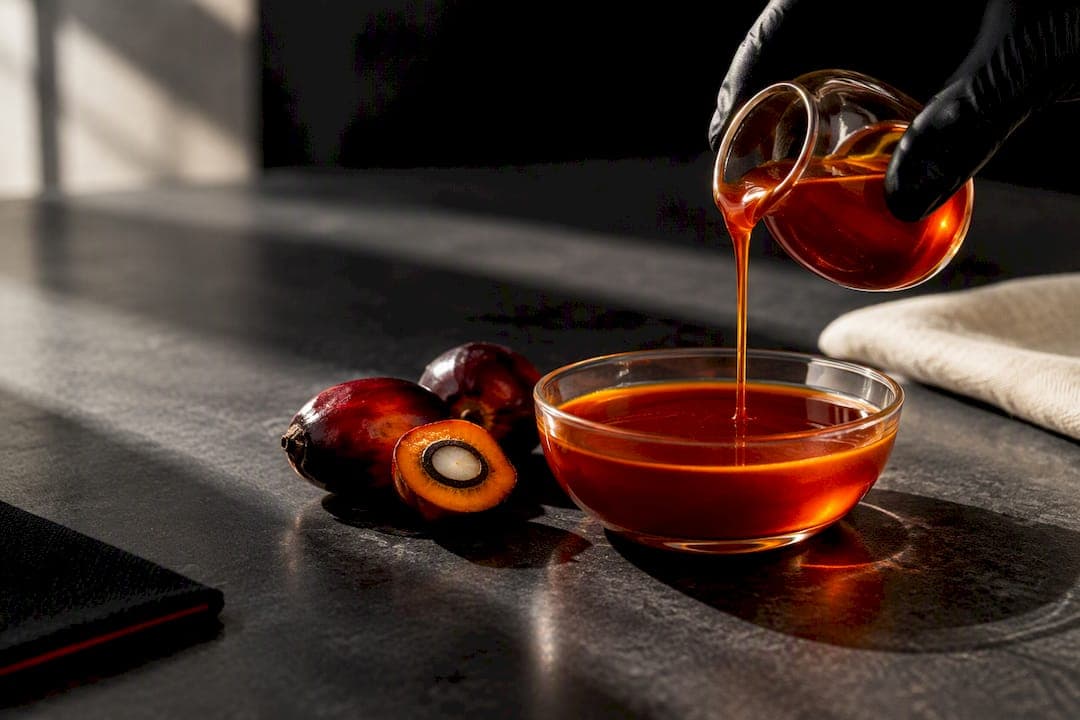
Palm oil derivatives can be safe and effective in skincare. The environmental and social footprint is the deciding factor. Choose certified derivatives with clear traceability, or pick a well-made palm-free alternative. Evidence supports real skin benefits from some palm-derived ingredients, but sourcing is what separates a responsible product from a harmful one.
TL;DR:
- Red palm oil contains antioxidants that can improve skin hydration and reduce redness, but these benefits do not automatically transfer to refined palm derivatives.
- Alternative plant oils and non-palm oleochemicals often increase cost and may require blending to match palm's texture and stability in formulations.
- The complexity of supply chains makes it difficult to verify the origin of palm derivatives, and brands rarely disclose specific sourcing details unless specifically asked.
- Choosing palm-free products like After Hours Body Butter simplifies verification, reduces environmental impact, and is suitable for sensitive and acne-prone skin.
Table of Contents
- What palm oil and palm-derived ingredients actually are
- What the research says about red palm oil and skin benefits
- Why palm sourcing is an environmental and ethical problem
- How to check a label and question a brand's sourcing
- Palm-free alternatives and the trade-offs formulators face
- Where After Hours Body Butter fits into this picture
- Balancing skin performance with your ethics
- A palm-aware option worth a look
- Sources
- FAQ
What palm oil and palm-derived ingredients actually are
Palm oil comes from the fruit of the oil palm tree. Palm kernel oil comes from the seed inside that same fruit. The two oils have different fatty acid profiles, which means they behave differently in a formula.
Both get processed into dozens of derivatives before they reach a skincare product. Formulators rarely use raw palm oil. Instead, they use fractions and chemically modified versions built for specific jobs.
- Emollients: soften and smooth skin, often listed as glycerides or palmitates.
- Emulsifiers: hold water and oil together in creams and lotions.
- Surfactant precursors: fatty alcohols and sulfates used in cleansers and washes.
- Texture and stability agents: waxes and esters that thicken a formula or extend shelf life.
Palm shows up everywhere in cosmetics because it is cheap to produce at scale and versatile enough to replace several other ingredients at once. That efficiency is exactly why tracing it back to a specific farm is so difficult once it enters a supply chain.
What the research says about red palm oil and skin benefits
Red palm oil is unrefined palm oil that keeps its natural carotenoids and vitamin E compounds, including tocopherols and tocotrienols. A 2025 narrative review found these compounds carry antioxidant and anti-inflammatory properties that support skin barrier function and hydration when applied topically.
Clinical data back this up with numbers. A PubMed clinical study found that formulations containing 5 to 10% red palm oil improved skin hydration by around 15 to 20% and reduced redness after 4 to 8 weeks of use.

Not every palm derivative behaves like red palm oil. Refined, bleached and deodorised palm oil loses most of its carotenoid content during processing, so the antioxidant benefits seen in unrefined red palm oil do not automatically carry over to every palm-derived ingredient on a label. Safety and performance depend on which derivative is used and at what concentration.
There are limits worth naming. Some people find heavier palm-derived emollients sit poorly on acne-prone skin, and comedogenicity varies by derivative and by individual skin type. Evidence on long-term topical use in larger populations is still limited, so treat the hydration figures above as a promising signal rather than a settled verdict for every formulation.
Why palm sourcing is an environmental and ethical problem
Palm cultivation has driven deforestation and the conversion of carbon-rich peatland into plantations, and palm oil mill effluent, known as POME, is a recognised source of water pollution near processing sites. Life cycle studies point to the farm stage as the biggest contributor to a palm product's environmental footprint, with forest and peat conversion sharply increasing the total impact of anything made downstream.

Derivatives make this harder to police, not easier. Once palm oil is broken into fatty alcohols, glycerine and stearates, it becomes chemically indistinguishable from the same compounds made elsewhere. A UK government and industry briefing notes that around 60% of palm oil consumption happens in derivative form, and that oleochemical supply chains are genuinely complex to trace back to source.
This is where certification categories matter, and they are not interchangeable:
- Segregated: certified palm stays physically separate from uncertified palm through the entire chain, the strongest guarantee.
- Mass balance: certified and uncertified palm are mixed, but the certified volume is tracked on paper.
- Book and claim (GreenPalm): a company buys credits that support certified growers without any physical link to the ingredient in the product.
Pro Tip: A "segregated RSPO" claim tells you far more about the palm in your product than a general "RSPO certified" label, which could mean nothing more than a credit purchase.
How to check a label and question a brand's sourcing
Palm-derived ingredients rarely say "palm" on the label. Ethical Consumer's research found these ingredients can hide behind more than 200 different INCI names, and UK and EU labelling rules do not require brands to state the botanical source of a vegetable oil derivative.
- Scan the ingredient list for sodium lauryl sulfate, sodium laureth sulfate, cetearyl alcohol, glyceryl stearate, stearic acid and palmitate compounds, all common palm derivative families.
- Check for a certification mark or statement on the packaging or product page, and note whether it specifies segregated, mass balance, or book and claim.
- Contact the brand directly if the sourcing isn't stated, and ask which certification category applies and whether it covers every palm-derived ingredient in the formula, not just the headline oil.
A brand that can name its certification tier and supplier is giving you a real answer. A brand that only says "sustainably sourced" with no further detail is not.
Palm-free alternatives and the trade-offs formulators face
Brands avoiding palm generally choose one of three routes. Alternative plant oils and butters, such as shea, cocoa or sunflower, replace palm's emollient role but bring their own comedogenicity profiles worth checking, including cocoa butter's moderate comedogenic risk on acne-prone skin. Non-palm oleochemicals, made from coconut, rapeseed or sunflower feedstocks, can replace fatty alcohols and surfactants but often cost more to produce at scale. Synthetic or biowax options, including engineered esters, can match palm's texture and stability closely, though studies on palm-derived biowaxes show that getting the sensory feel and shelf stability right still takes formulation testing regardless of the feedstock used.
- Texture matching often requires blending two or three alternatives to replicate what a single palm derivative did alone.
- Shelf life can shorten with some plant oil substitutes, which pushes formulators towards added stabilisers.
- Cost typically rises, since palm's low price is part of why it dominates the market in the first place.
For a deeper look at how these substitutions work in practice, our guide to palm oil alternatives walks through specific formulation routes and what to expect from each.
Where After Hours Body Butter fits into this picture
After Hours Body Butter makes vegan, cruelty-free body butters formulated without silicones, sulfates or harsh fillers, using fat-soluble vitamins and nutrients aimed at sensitive and acne-prone skin. Sustainable UK packaging is part of the brand's approach. Users often experience improvements in skin texture and moisture retention after use. For readers decoding labels elsewhere, our guide to reading skincare labels and sustainable body care primer cover the same ground in more depth.
Balancing skin performance with your ethics
Certified segregated palm derivatives are a reasonable choice when the formulation genuinely needs them and the brand can show its paperwork. Palm-free is the simpler choice when you'd rather not verify a supply chain every time you buy a moisturiser. Either way, patch test anything new, and don't accept a sustainability claim without asking which certification tier backs it.
— Darnell
A palm-aware option worth a look
After Hours Body Butter's range skips palm oil entirely, alongside silicones, sulfates and harsh fillers, so there's no derivative to trace or certification to question.
- Vegan and cruelty-free, formulated for sensitive and acne-prone skin.
- Made with fat-soluble vitamins and nutrients rather than palm-derived fillers.
- Packaged sustainably, with no published price beyond what's listed on the product page.
Browse the Body Butters range to see the full line-up.
Sources
- PubMed clinical study (ID 41302459)
- Red palm oil: nutritional composition, bioactive properties and potential applications (MDPI, 2025)
- Ethical Consumer: Palm oil and cosmetics (2023)
FAQ
What are the disadvantages of palm oil on skin?
Some palm derivatives can feel heavy on acne-prone skin and may contribute to clogged pores depending on the specific ingredient and concentration. Refined palm oil also lacks the antioxidant compounds found in red palm oil, so its skin benefits are less well supported.
Is it good to use palm oil on my face?
Red palm oil in formulations of 5 to 10% has been shown in clinical studies to improve hydration and reduce redness over 4 to 8 weeks. Results vary by derivative and skin type, so patch testing is worth doing before regular use on the face.
Is palm oil in Kit Kats?
This article covers palm oil in skincare formulations, not food ingredients, so it isn't the right source for questions about food products.
What's unhealthy about palm oil?
The concern with palm oil is mostly environmental rather than a direct skin health risk: cultivation has been linked to deforestation, peatland conversion and water pollution from processing waste. On skin specifically, the main caveats are comedogenicity in some formulations and limited long-term topical safety data for certain derivatives.