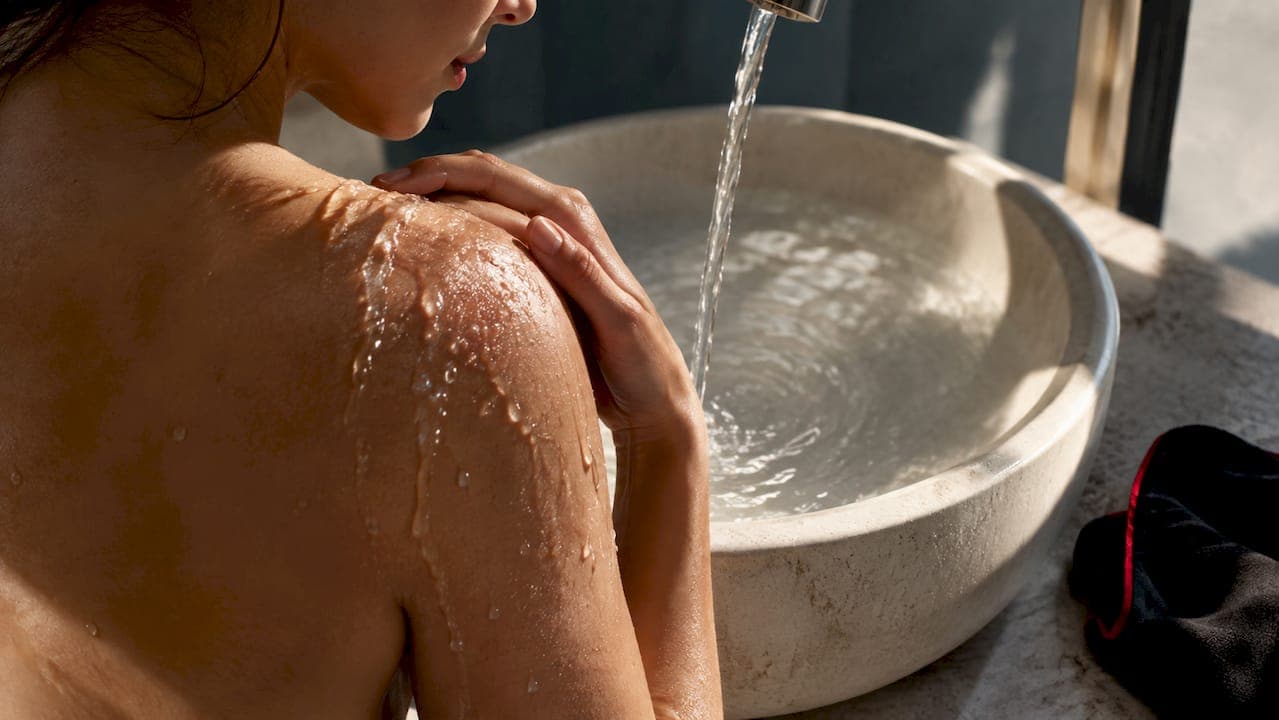
Yes, microbiome-friendly body care can help protect your skin barrier, but only when the formula avoids harsh surfactants and includes ingredients that support your skin's bacterial ecosystem. The quickest fix is swapping your regular wash for a gentle, pH-balanced cleanser paired with a barrier-focused moisturiser, such as After Hours Body Butter. Reviews of the microbiome's role in skin health back this approach, though results depend on consistency, not marketing claims.
TL;DR:
- Most microbiome-friendly body care products should avoid harsh surfactants and contain ingredients like prebiotics, postbiotics, or botanicals that support microbial diversity.
- Formulations with gentle, pH-balanced cleansers, emollients, and ceramide precursors effectively preserve the skin's bacterial ecosystem and repair the barrier.
- Products marketed as "probiotic" often lack evidence of live cultures, so focusing on ingredient transparency and supporting ingredients like prebiotics and postbiotics is more reliable.
- A simple routine of gentle cleansing, moisturizing while damp, and limiting exfoliation can improve skin barrier health within two to four weeks.
- The trend is scientifically supported, but marketing claims can be exaggerated; prioritizing barrier-nourishing ingredients and routine consistency yields the best results.
Table of Contents
- What does 'microbiome friendly' mean for body products?
- Which ingredients actually support your skin's bacteria?
- How do you choose microbiome-friendly body products?
- What's a simple microbiome-supportive body routine?
- Does After Hours Body Butter follow microbiome-friendly practice?
- Is the microbiome-friendly trend overhyped or genuinely useful?
- Try a body butter built around barrier nutrients
- Primary sources and further reading
- Sources
- FAQ
What does 'microbiome friendly' mean for body products?
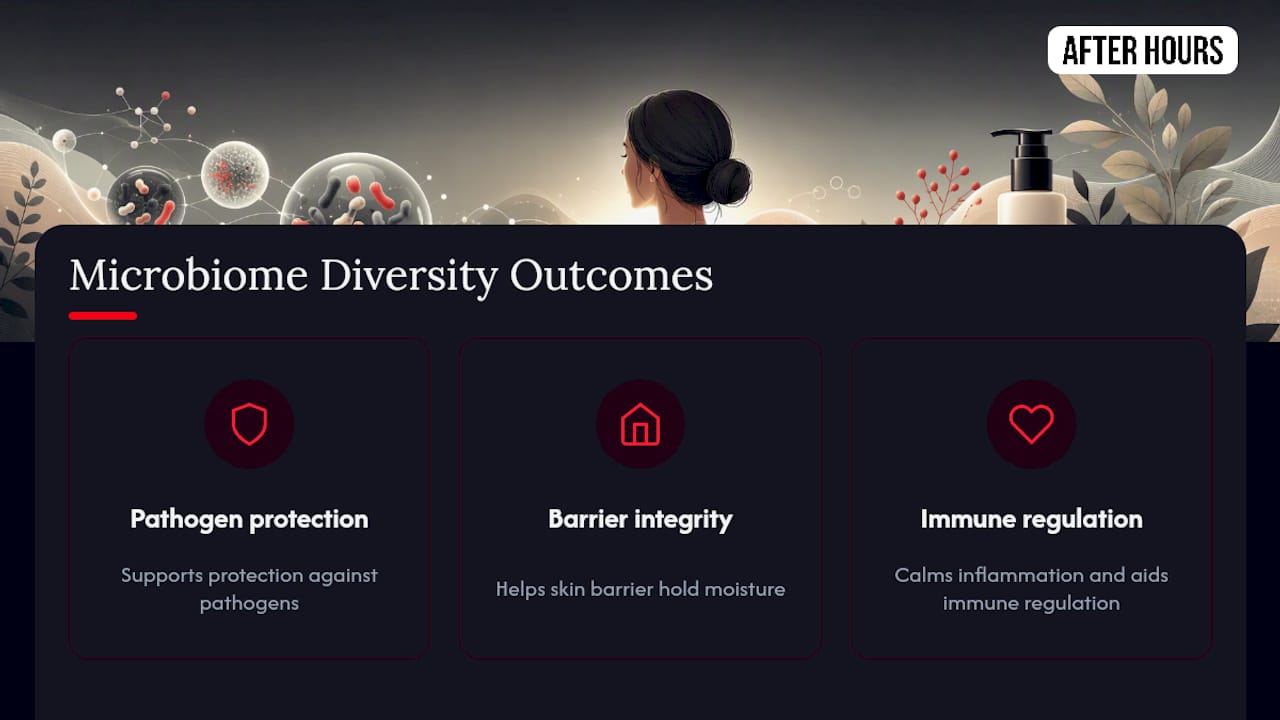
Your skin hosts trillions of bacteria, fungi, and other microbes that make up its microbiome, and they do real work: fending off pathogens, calming inflammation, and helping the skin barrier hold moisture. Dysbiosis is what happens when that balance tips, usually from over-cleansing, harsh antiseptics, or stripping surfactants, and it shows up as dryness, sensitivity, or flare-ups of conditions like eczema.
Microbiome-friendly body care is designed to avoid causing that imbalance in the first place, according to research from the London Dermatology Centre. That means products formulated to maintain microbial diversity rather than wipe it out, which supports pathogen protection, barrier integrity, and immune regulation.
Here's where the marketing gets ahead of the science: not every product stamped "probiotic" or "biome-safe" has evidence behind it. The mechanistic case for microbiome-supportive ingredients is strong and growing, but strain-specific and formulation-specific claims still need scrutiny before you take them at face value.
Which ingredients actually support your skin's bacteria?
Formulators lean on four broad ingredient categories to work with the skin microbiome rather than against it.
- Prebiotics like inulin-type fructans and other oligosaccharides feed beneficial commensal bacteria, lowering local skin pH and making it harder for pathogenic species to form biofilms, based on findings on skin microbiome mechanisms.
- Topical probiotics contain live bacterial strains, but they're notoriously hard to stabilise in a jar or bottle. Shelf life and preservation systems limit how many products can actually deliver a living, functional strain to your skin.
- Postbiotics sidestep that problem entirely. These are the beneficial byproducts, cell-free supernatants, or lysates that bacteria produce, and they can supply antimicrobial and immune-signalling benefits without needing to keep organisms alive in the tub.
- Microbiome-compatible botanicals, including oat beta-glucans, green tea polyphenols, and fermented plant oils, tend to be gentler on skin flora than synthetic actives while still delivering antioxidant and soothing effects.
Clinical work on microbiome-supplemented emollients shows genuine improvement in conditions like atopic dermatitis, though outcomes vary by strain and formulation, per reviews on emerging therapeutic strategies. That variability is exactly why prebiotics and postbiotics are often the more practical bet for body care: fewer stability headaches, more consistent performance on the shelf and on your skin.
How do you choose microbiome-friendly body products?
Labels are noisy. Here's a checklist that cuts through it:
- Check the surfactant list. Gentle cleansers use mild, non-stripping surfactants rather than sulphates that blast away oils and bacteria indiscriminately.
- Look for pH balance. Skin sits around pH 4.5 to 5.5; a formula that respects this range helps beneficial bacteria stay put.
- Scan for synthetic fragrance load. Heavy fragrance is a common irritant and a frequent trigger for sensitised skin.
- Find emollients and ceramide precursors. These rebuild the lipid matrix in your skin's outer layer, which indirectly supports commensal bacteria by restoring the chemical environment they thrive in, according to findings on skin barrier function.
- Note any pre or postbiotic ingredients, and treat vague “microbiome-friendly” claims with a healthy dose of scepticism if there's no ingredient transparency behind them.
Be wary of broad-spectrum antiseptics, harsh sulphate surfactants, and buzzwords with no ingredient list to back them. A practical guide to strengthening your moisture barrier covers this in more depth if you want to go deeper on cleanser and moisturiser selection.
Pro Tip: If a product's marketing leads with "probiotic" but the ingredient list shows no living cultures or postbiotic extracts, that's a red flag worth questioning before you buy.
What's a simple microbiome-supportive body routine?
You don't need a ten-step regimen. Consistency with the basics matters more than complexity.
- Cleanse gently, once daily. Use a non-stripping wash, ideally in a lukewarm shower rather than scalding water, which dries skin out further.
- Moisturise within a few minutes, while skin is still damp. This locks in water and gives emollients a chance to work with your skin's own lipids rather than against dry, flaking skin.
- Add targeted spot care where needed. Patches of extra dryness or breakout-prone areas can take a slightly richer product without overloading the rest of your body.
- Exfoliate gently, once or twice a week at most. Daily scrubbing disrupts the skin barrier and, by extension, the bacteria living on it.
- Introduce new active ingredients slowly, one at a time, so you can spot irritation before it compounds.
Expect barrier-related improvements, less tightness, better hydration, and calmer texture within a few weeks of consistent care. That timeline lines up with clinical observations on microbiome-supplemented emollients. If inflammation or irritation persists beyond that window, it's worth seeing a dermatologist rather than layering on more products. A body care routine for sensitive skin walks through this in practical terms, and if you're specifically working on barrier repair, this guide on repairing your barrier in 2 to 4 weeks is worth a read.
Does After Hours Body Butter follow microbiome-friendly practice?
The body butter is formulated vegan and chemical-free, with a focus on fat-soluble vitamins and nutrients that nourish rather than strip the skin. That approach lines up closely with what the checklist above calls for: emollient-rich, barrier-supporting formulations instead of harsh actives that disrupt skin flora.
Customer testimonials cite visible reductions in acne and irritation, which fits the broader pattern dermatologists describe: gentle, nutrient-dense care tends to outperform aggressive antimicrobial approaches for sensitive or reactive skin. If you're rebuilding a compromised barrier, the moisturiser checklist for acne-prone skin breaks down which features matter most.
Is the microbiome-friendly trend overhyped or genuinely useful?
Here's my honest read: most of the "microbiome-friendly" labelling on shelves right now is doing more marketing than dermatology. But underneath the noise, the underlying science holds up. Restoring microbial diversity rather than sterilising skin is a real, evidence-backed shift in how dermatology thinks about barrier health, not just a wellness trend.
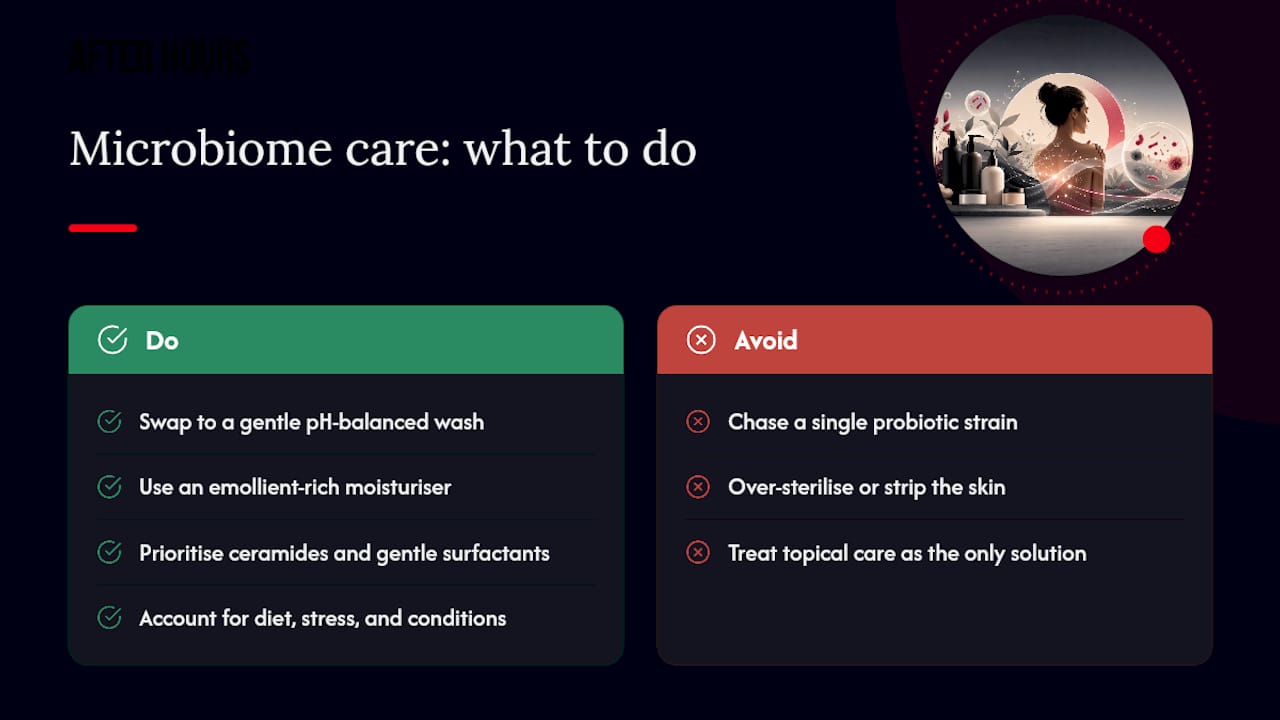
Where I'd push back on conventional advice: people fixate on finding a probiotic strain and ignore the boring stuff, ceramides, pH, gentle surfactants, that does more of the actual work. If you prioritise one action, make it swapping to a gentle, pH-balanced wash paired with an emollient-rich moisturiser. Diet, stress, and existing skin conditions all matter too, so treat topical care as one lever, not the whole machine.
— Darnell
Try a body butter built around barrier nutrients
If you've read this far, you already know what to look for: gentle formulation, no harsh strippers, and ingredients that feed rather than fight your skin. The body butter is built on exactly that principle: vegan, chemical free, and formulated with fat-soluble vitamins aimed at sensitive and acne-prone skin.
It's not a miracle cure, and no single product replaces a full routine or professional advice for persistent conditions. But as a barrier-focused moisturiser to pair with a gentle wash, it's a straightforward option worth trying. Readers dealing with postpartum skin changes might also find the postpartum self-care guide useful for adapting routines during that transition. To see the full range and pick a formula suited to your skin, visit the After Hours Body Butter landing page and start with whichever product matches your specific concern.
Primary sources and further reading
- Skin microbiome in health and disease: mechanisms and emerging therapeutic strategies — PMC
- The skin microbiome and bioactive compounds — MDPI Molecules
- Skin barrier function and the microbiome — PMC
- Discovery: skin microbiome — London Dermatology Centre
This article is general information, not a substitute for advice from a qualified doctor. Consult a qualified healthcare professional about your own circumstances before acting on anything here.
Sources
- Discovery: skin microbiome — London Dermatology Centre
- Skin microbiome in health and disease: mechanisms and emerging therapeutic strategies — PMC
- Skin barrier function and the microbiome — PMC
FAQ
How can I rebuild my skin microbiome?
Switch to a gentle, non-stripping cleanser, moisturise while skin is still damp, and limit exfoliation to once or twice weekly. Most people notice barrier improvements within two to four weeks of consistent care.
What does microbiome friendly mean?
It means a product is formulated to maintain microbial diversity on your skin rather than disrupt it, avoiding harsh surfactants and antiseptics that can trigger dysbiosis. The goal is supporting barrier integrity and pathogen protection, not sterilising your skin.
Which body wash is microbiome friendly?
Look for washes with mild surfactants, balanced pH, minimal synthetic fragrance, and ideally prebiotic or postbiotic ingredients listed transparently. Avoid anything marketed as "antibacterial" or "deep cleansing" without ingredient specifics, since those often strip beneficial bacteria along with the harmful ones.
How does gut health affect skin?
The gut-skin axis means diet and gut bacteria can influence skin inflammation and barrier function, so oral and topical approaches work best together rather than as substitutes for each other. Dietary fibre and, where appropriate, targeted oral probiotics show the strongest evidence for supporting this connection.
Can a body butter like After Hours Body Butter support my skin microbiome?
Yes, formulations built around fat-soluble vitamins and emollients without harsh chemicals align with what dermatologists recommend for barrier support, which indirectly favours a healthy microbial environment. It works best as part of a routine that also includes a gentle cleanser.