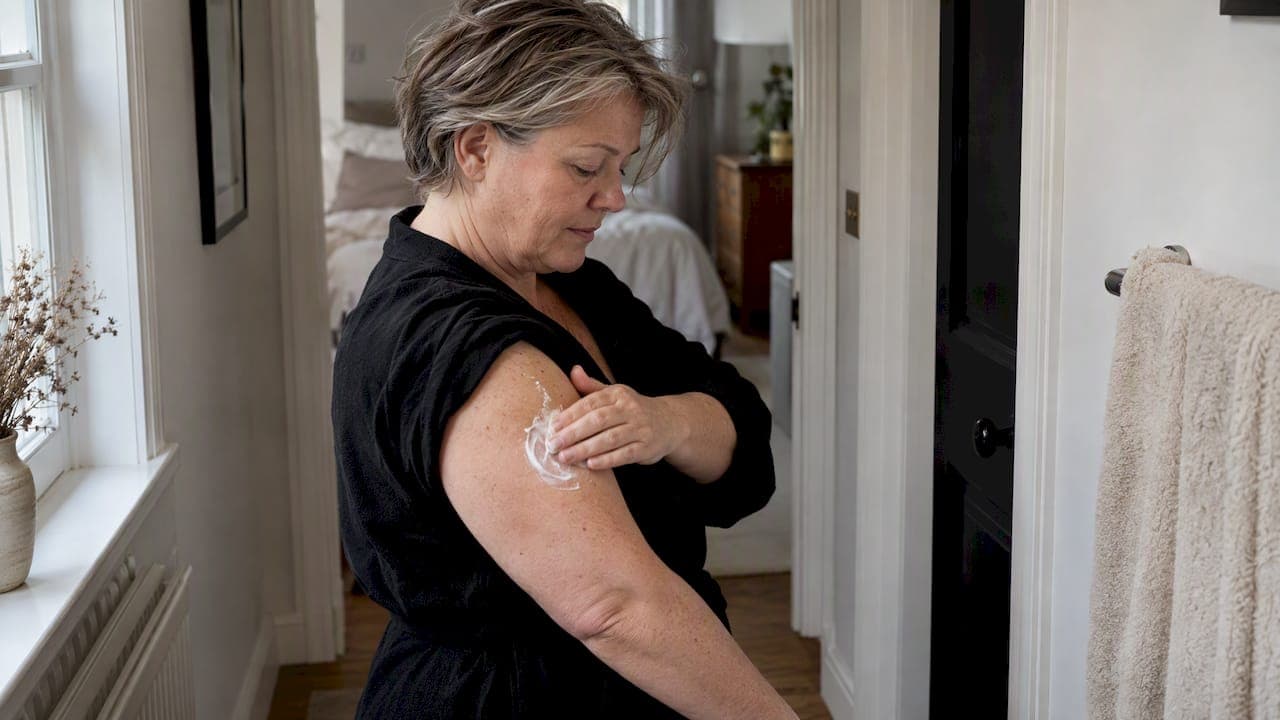
For menopause body dryness, use simple, fragrance-free emollients and nutrient-rich topical moisturisers, applied several times a day. Look for vegan, chemical-free formulas that suit sensitive skin, such as After Hours Body Butter. This guide covers external body dryness and itching, not vaginal or genital symptoms, which need separate care.
TL;DR:
- Menopause reduces ceramides and collagen in the skin, increasing transepidermal water loss and leading to dryness and thinning.
- Emollients form an artificial barrier that retains moisture and decreases water loss, making them more effective than just increasing product use.
- Fragrance-free, simple formulas with barrier-supporting ingredients, humectants, plant oils, and vitamins are recommended for sensitive menopausal skin.
- Applying moisturizer immediately after bathing and reapplying multiple times daily maximizes hydration retention for persistent dryness.
- Signs such as spreading rash, infection, or unresponsive dryness require consulting a healthcare professional rather than only intensifying skincare routines.
Table of Contents
- Why menopause dries and thins your body skin
- Choosing a vegan, natural moisturiser for sensitive skin
- Building a daily routine that reduces dryness and itch
- When to see a GP about your skin
- Diet and lifestyle changes that support skin hydration
- How menopause affects different skin types differently
- Telling menopause dryness apart from other skin conditions
- What years of caring for sensitive skin has taught us
- After Hours Body Butter for menopausal dry skin
- Sources
- FAQ
Why menopause dries and thins your body skin
Oestrogen decline changes your skin at a structural level. A peer-reviewed study found that falling oestrogen shortens and reduces ceramides in the outer skin layer. Ceramides hold moisture in place. Fewer of them means more water escapes through the skin, a process called transepidermal water loss.
The same decline affects collagen and the molecules that bind water in skin tissue. Skin gets thinner, rougher and less able to hold hydration on its own. This is why body lotion alone sometimes stops working during menopause. It is not about using more product. It is about the skin's barrier function changing underneath.
Given this, emollient-based skincare is the correct response, not a workaround. The British Association of Dermatologists recommends emollients as first-line maintenance for dry, sensitive skin. They form an artificial barrier over the skin. This barrier does two things:
- Traps existing moisture in the skin rather than adding a temporary layer on top
- Reduces water loss through the skin's surface over time, not just after each application
Understanding this cause matters because it changes what you look for in a product. You want ingredients that support the skin's own barrier, not fragrance or added extras. Our guide to strengthening your skin barrier goes into more detail on how this works day to day.
Choosing a vegan, natural moisturiser for sensitive skin
Not every "natural" product suits menopausal skin. Sensitive, thinning skin reacts more easily to fragrance, alcohol and strong actives, so ingredient choice matters more than marketing claims.
Start with the basics. Fragrance-free, simple formulas are what the British Association of Dermatologists recommends for dry, itchy skin, noting that expensive products offer no proven advantage over simpler ones. Look for these on the label:
- Ceramide-supporting ingredients or barrier lipids, which replace what menopause depletes
- Humectants such as glycerin or hyaluronic acid, which pull water into the skin
- Plant oils and butters like shea butter, cocoa butter or sunflower seed oil, which soften and seal
- Fat-soluble vitamins such as vitamin E, which support the skin alongside these oils
Avoid added fragrance, menthol, strong acids such as AHAs, and unnecessary preservatives. These are common irritants for skin that is already compromised. "Hypoallergenic" means a product is formulated to reduce the chance of allergic reaction. "Fragrance-free" means no fragrance compounds at all, which is different from "unscented", where fragrance may be used to mask other ingredient smells. "Vegan" means no animal-derived ingredients, which is separate from either of those claims and worth checking if it matters to you.
Packaging matters too. A pump is more hygienic for daily use. A tub gives you a richer texture, better suited to concentrated dry patches, but needs a clean spatula each time. Lighter textures work better under clothing during the day, while a richer, thicker layer suits night-time use when skin can absorb it undisturbed.
Pro Tip: Patch-test a new product on the inside of your forearm for two days before applying it more widely, especially if your skin has become more reactive than it used to be.
Building a daily routine that reduces dryness and itch
A good product only works if you use it correctly and often enough. Timing and frequency matter as much as ingredients.
- Apply moisturiser while skin is still damp after bathing or showering, which the British Association of Dermatologists notes helps lock in moisture more effectively than applying to dry skin.
- Reapply through the day rather than once. Leeds Teaching Hospitals NHS Trust guidance suggests multiple applications a day for persistent dry, itchy skin, more than most people assume is necessary.
- Scoop from tubs with a clean spatula rather than fingers, and wash emollient-soaked clothing and bedding often, since soaked fabric can be a fire risk near open flames.
- For sudden, intense itching, a moisturiser kept in the fridge or a cool flannel can bring quick relief.
- Wear cotton gloves overnight after a heavy layer of body butter on hands or forearms to help the product absorb without rubbing off on bedding.
Layer by need through the day. A lighter formula under clothing in daytime, a richer body butter at night, and this approach to combining body butter and lotion can extend how long your skin stays comfortable between applications. Our guide to chemical-free dry skin remedies has more on building this into a routine that fits your day.
When to see a GP about your skin
Moisturisers manage dryness, they do not treat every cause of it. Some signs mean it is time to speak to a GP or dermatologist rather than adjusting your routine further.
- A rash that spreads, changes shape or does not improve with regular moisturising
- Signs of infection, such as weeping, heat, swelling or increasing pain in one area
- Itching so severe it disrupts sleep or daily activity despite consistent emollient use
- Dryness that appears alongside other new symptoms you have not had before
Topical emollients cannot treat an underlying medical condition that needs prescription treatment, and this guide covers external body skin only. Vaginal or genitourinary dryness is a separate issue that needs its own assessment. The NHS lists dry, itchy skin among common menopause symptoms and points to topical moisturisers as a self-care option, alongside noting that a GP can discuss hormone replacement therapy or other options suited to your situation.
Diet and lifestyle changes that support skin hydration
Topical care works better alongside a few lifestyle habits. None of these replace moisturiser, but they reduce how hard your skin has to work.
Drink water consistently through the day rather than in large amounts occasionally. Skin hydration depends on overall fluid balance, not a single habit. Include sources of healthy fats in your diet, such as oily fish, nuts and seeds, which supply the fatty acids skin needs to maintain its barrier.
Reduce alcohol and cut back on smoking where you can, since both draw moisture from the body and skin over time. Keep your home environment in mind too: central heating and air conditioning both dry the air, so a humidifier in the bedroom can make a noticeable difference overnight.
Sleep also plays a part. Skin repairs itself overnight, so consistent, adequate sleep supports the same barrier function that moisturisers are working to protect. None of these changes act quickly on their own, but combined with a proper topical routine, they reduce how often you notice dryness and itching between applications.

How menopause affects different skin types differently
Menopause does not affect all skin the same way, and recognising your starting point helps you adjust your routine rather than following one generic approach.
Naturally dry skin tends to feel the effects earliest and most severely, since it had less reserve moisture and fewer barrier lipids to begin with. Oily or combination skin often still develops dry patches during menopause, even while other areas produce as much oil as before, which can be confusing if you have always thought of your skin as oily. This is a direct result of ceramide loss rather than a change in oil production.
Sensitive skin becomes more reactive during menopause, since a weaker barrier means irritants penetrate more easily and cause visible reactions that did not happen before. Skin that was previously resilient may suddenly react to products used for years without issue. This is one reason a fragrance-free, simple formula matters more now than it might have a decade earlier, regardless of your skin type before menopause began.

Telling menopause dryness apart from other skin conditions
Menopause dryness typically appears as an even, generalised dryness and roughness across large areas of the body, often with mild to moderate itching that responds to regular emollient use. It tends to develop gradually alongside other menopause symptoms rather than appearing suddenly on its own.
Eczema and other inflammatory skin conditions usually show more defined patches, often red, scaly or weeping, and can appear in specific areas such as the inside of elbows or behind knees. Psoriasis presents as thicker, well-defined plaques, often with a silvery scale, which is distinct from the fine flaking of simple dryness.
If dryness responds well to consistent moisturising within a couple of weeks, it is more likely to be menopause-related. If a patch is red, well-defined, weeping, or not improving despite regular emollient use, that points towards a separate skin condition that needs its own diagnosis, and a GP or dermatologist is the right next step for confirmation.
What years of caring for sensitive skin has taught us
Menopausal skin does not need harsher products, it needs more consistent, simpler ones. Customers tell us their skin feels less tight and more comfortable within a couple of weeks of daily use, with visible improvement in texture and moisture retention over time. That pattern lines up with the wider clinical guidance on emollients: regular use of a simple, fragrance-free formula tends to outperform occasional use of something more elaborate. Our barrier care content covers this in more depth for anyone wanting to understand the difference between hydration and moisture.
— Darnell
After Hours Body Butter for menopausal dry skin
After Hours Body Butter offers body butters formulated with fat-soluble vitamins and nutrient-rich plant ingredients, packaged sustainably.
For the routine above, a rich body butter fits best as your night-time layer, or for targeted use on particularly dry areas like shins, elbows and hands. Some users with sensitive skin have reported improvements in irritation, texture and moisture retention. If you want a vegan, chemical-free option to build into your routine, shop the full range of body butters.
This article is general information, not a substitute for advice from a qualified doctor. Consult a qualified healthcare professional about your own circumstances before acting on anything here.
Sources
- Menopause induces changes to the stratum corneum ceramide profile — Scientific Reports (Nature)
- Emollient use in skin conditions — British Association of Dermatologists
- Managing vulval skin conditions — Leeds Teaching Hospitals NHS Trust
- Menopause and perimenopause: symptoms — NHS
FAQ
How often should I moisturise for menopause body dryness?
Apply a fragrance-free emollient 3 to 6 times a day for persistent dryness, according to NHS trust guidance. Applying straight after bathing, while skin is still damp, helps the product lock in more moisture.
Why does menopause cause dry, itchy skin?
Falling oestrogen levels reduce and shorten ceramides in the skin's outer layer, which increases water loss and dryness, according to peer-reviewed research. This also coincides with reduced collagen and water-binding capacity in the skin, making it thinner and rougher.
What ingredients should I avoid for sensitive menopausal skin?
Avoid added fragrance, menthol, strong acids like AHAs and unnecessary preservatives, since these commonly irritate sensitive or compromised skin. Simple, fragrance-free formulas are recommended by the British Association of Dermatologists for dry, itchy skin.
When should I see a GP about menopause skin dryness?
See a GP if a rash spreads, shows signs of infection, or does not improve with regular emollient use over a couple of weeks. This guide covers external body skin only, and vaginal or genitourinary symptoms need separate assessment from a GP.
Does After Hours Body Butter contain hormones or medical ingredients?
No. After Hours Body Butter makes vegan, chemical-free body butters formulated with plant oils and fat-soluble vitamins, not medical or hormonal ingredients. They are designed as a nourishing topical moisturiser rather than a treatment for underlying medical conditions.