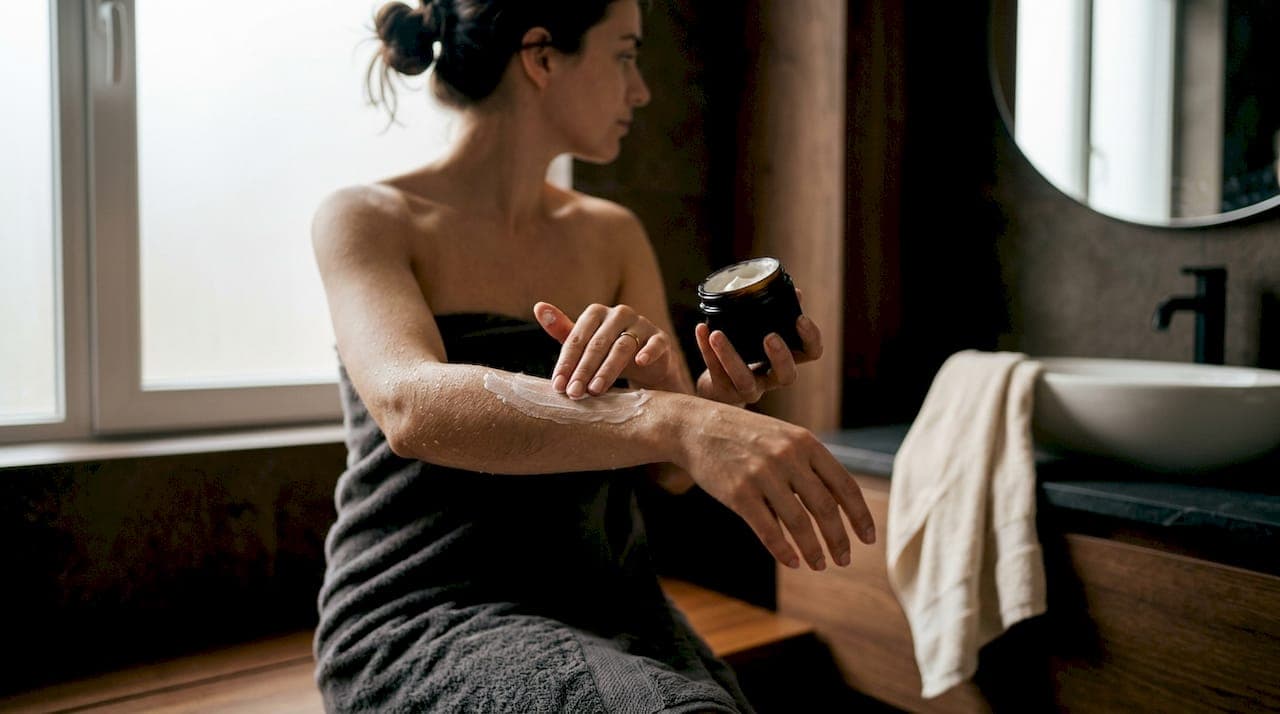
For most people, itchy skin after a shower comes down to two things: hot water stripping the skin's natural oils, and the nerve response that follows when the barrier breaks down. The fix is straightforward in most cases. Cool the water, pat your skin dry rather than rubbing it, and apply an emollient while your skin is still slightly damp.
Three things to try right now:
- Turn the temperature down to lukewarm or cool before you finish your shower
- Pat skin dry with a soft towel — do not rub
- Apply a moisturiser or body butter within three minutes of stepping out, while skin is still damp
Pro Tip: Apply your moisturiser to slightly damp skin, not bone-dry skin. The emollient seals in the water already sitting on the surface, giving you noticeably better hydration than applying to dry skin.
Pause home remedies and contact your GP if: the itch is severe, spreads across your body, comes with a rash, swollen skin, or symptoms like unexplained weight loss, night sweats, or bruising. These can signal an underlying condition that needs clinical assessment.
Table of Contents
- What does post-shower itching actually mean?
- Why does your skin itch after a shower? Common triggers
- How to stop post-shower itching right away
- When does itching after a shower need a GP?
- What treatments are available and how long do they take?
- A simple daily routine to prevent post-shower itch recurring
- How do moisturisers and body butters actually repair your skin?
- Key takeaways
- A note on managing sensitive skin
- After Hours Body Butter: a simple, chemical-free option for dry skin after showering
- Useful sources and further reading
What does post-shower itching actually mean?
Post-shower itching covers three distinct things, and telling them apart helps you treat the right problem.
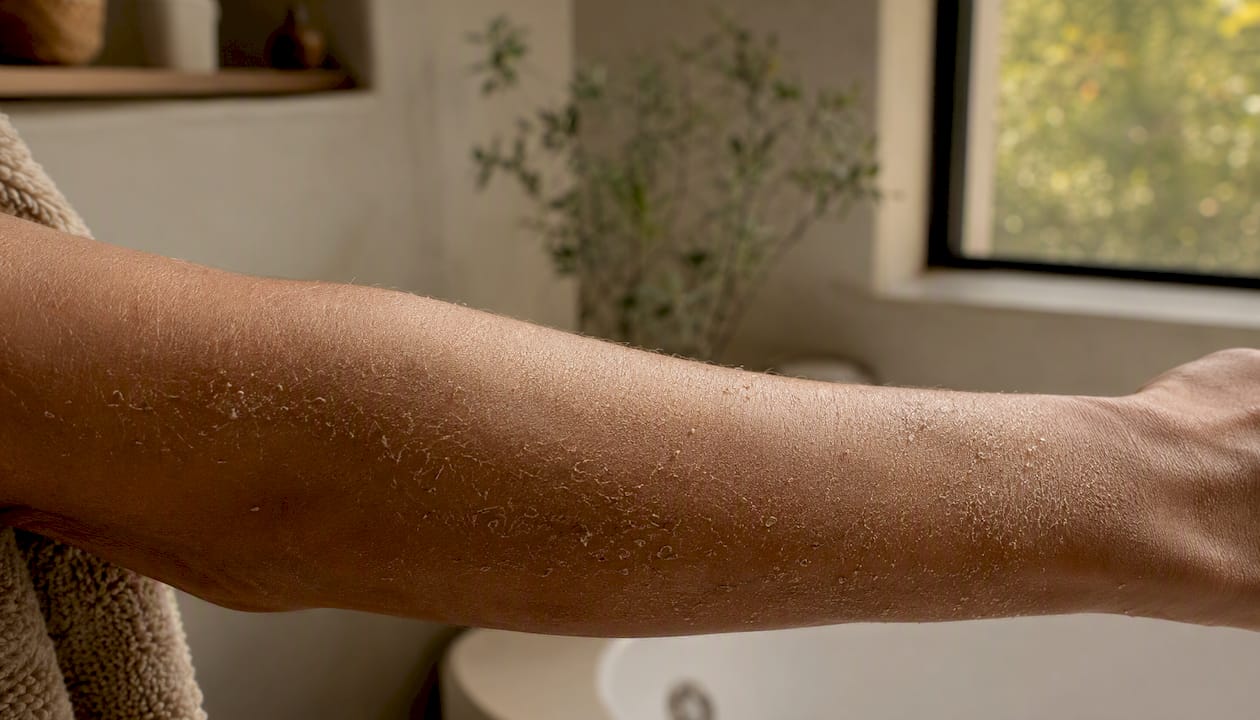
Xerosis (dry skin) is the most common cause. Hot water and soap dissolve the lipid layer that keeps moisture in. Once that layer is gone, skin tightens, flakes, and itches. The itch usually eases within 20–30 minutes of moisturising.
Aquagenic pruritus is different. It produces an intense, sometimes burning itch triggered by water contact, with no visible rash or redness. According to the Cleveland Clinic, this is a recognised condition that warrants clinical review when symptoms are severe or persistent, because it can be linked to underlying blood disorders.
Eczema and contact dermatitis produce both itch and visible changes: redness, raised patches, or weeping skin. These need a different treatment approach from simple dryness.
Quick symptom comparison:
- Dry skin: mild-to-moderate itch, no rash, eases after moisturising, often worse in winter
- Aquagenic pruritus: intense itch within minutes of water contact, no visible rash, can last 30–90 minutes, not relieved by moisturiser alone
- Eczema/contact dermatitis: itch plus visible redness, scaling, or blistering; may flare after specific products
Scenario to consider: a 15-minute hot shower followed by intense, burning itch lasting an hour with no rash visible is a classic aquagenic pruritus pattern. Mild itch that clears up after applying a body butter is almost certainly dry skin. The distinction matters because aquagenic pruritus has documented links to systemic conditions and may need blood tests to rule them out.
Why does your skin itch after a shower? Common triggers
Most post-shower itching has a clear, fixable cause. Here are the triggers clinicians list most often:
- Harsh surfactants and fragrances in soaps and shower gels are a frequent cause of contact dermatitis and post-shower irritation; fragrance is one of the most common contact allergens
Rarer causes are worth knowing about. Aquagenic pruritus is listed by the NIH's Genetic and Rare Diseases Information Center as a recognised rare condition with possible systemic associations, including polycythaemia vera (a blood disorder) and other haematological conditions. Neuropathic itch, where nerve pathways misfire without a skin-level trigger, is another less common cause.
The NHS and UK dermatology guidance both point to hot water and soap as the primary culprits for everyday post-shower itch. If you have ruled those out and the itch persists, a GP visit is the right next step.
How to stop post-shower itching right away
These steps work in order. Start at the top and work down.
- Apply an emollient within three minutes. Healthline's clinical summary recommends moisturising while skin is still slightly damp to lock in surface water. Thicker formulations — ointments and body butters — outperform thin lotions for barrier repair on dry skin.
- Use a fragrance-free, soap-free cleanser next time — Switching products is not an instant fix, but it prevents the cycle repeating.
Timing matters. An emollient applied immediately after patting dry can ease mild itch within minutes. Oral antihistamines (such as cetirizine or loratadine, available over the counter at UK pharmacies) take 30–60 minutes to act and are more useful for persistent or widespread itch than for immediate relief. They are particularly worth trying if your itch feels histamine-driven — itching that comes with mild flushing or a prickling sensation.
Topical steroids (hydrocortisone 1%, available OTC in the UK) are appropriate for short-term use on eczematous flares, not for routine dry skin. Do not use them for more than seven days without GP guidance. Menthol-based products and calamine lotion can provide temporary cooling relief but check the label for added fragrance or alcohol, which can worsen irritation on sensitive skin.
A note on pramoxine: topical pramoxine (a local anaesthetic) is sometimes included in anti-itch formulations and can help with symptomatic relief from dry skin itch. It is not widely available in UK pharmacies under that name, so check with a pharmacist if you want to explore this option.
When does itching after a shower need a GP?
Most post-shower itch clears up with the steps above within one to two weeks. See your GP sooner if you notice any of the following:
- Itch that is severe, constant, or wakes you at night
- Visible skin changes: rash, blistering, thickened or discoloured patches
- Itch that spreads beyond the area exposed to water
- Systemic symptoms: unexplained weight loss, night sweats, fatigue, or fever
- Unexplained bruising or blood in stools
- No improvement after two weeks of consistent home management
The American Academy of Dermatology is clear that persistent or systemic itch can reflect underlying conditions and warrants clinical assessment, including blood tests where indicated.
What your GP will do: expect questions about when the itch started, how long it lasts, which products you use, any medications, and family history of skin conditions. A physical examination will check the distribution and appearance of any skin changes. Blood tests may be ordered to exclude polycythaemia vera, liver disease, thyroid dysfunction, or iron deficiency. If eczema or psoriasis is suspected, a referral to NHS dermatology is possible, though waiting times vary by region.
On NHS referral timelines: a routine dermatology referral through your GP typically takes several weeks to a few months depending on your local trust. If symptoms are severe or a blood disorder is suspected, your GP can request an urgent or two-week-wait referral. In the meantime, keep a short symptom diary — timing, duration, products used — to help the clinician narrow down the cause quickly.
What treatments are available and how long do they take?
| Treatment | What it does | Typical time to improvement | UK availability |
|---|---|---|---|
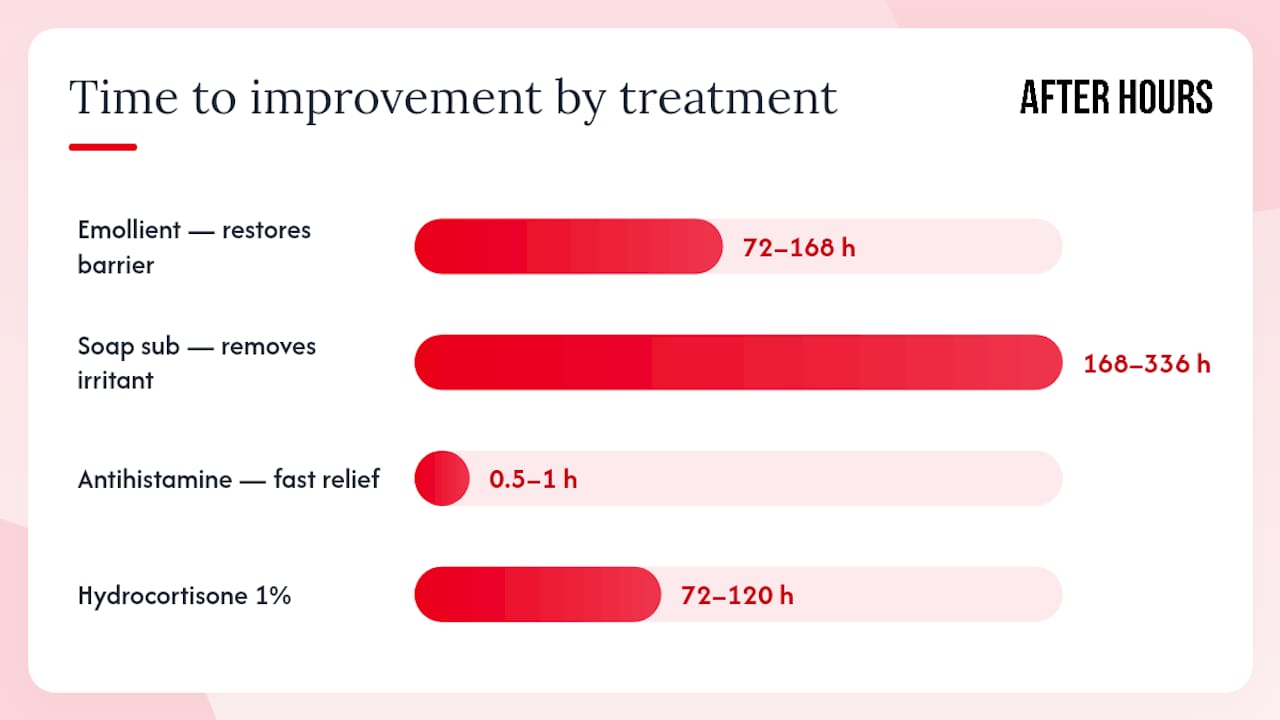
| Emollient (body butter, ointment, cream) | Restores lipid barrier, reduces nerve exposure | 3–7 days of consistent use | OTC; pharmacies and online |
| Fragrance-free soap substitute | Removes irritant trigger | 1–2 weeks after switching | OTC; pharmacies and supermarkets |
| Oral antihistamine (cetirizine, loratadine) | Reduces histamine-driven itch | 30–60 minutes per dose | OTC; widely available |
| Hydrocortisone 1% cream | Reduces eczematous inflammation | 3–5 days for mild flares | OTC; short-term use only |
| Prescribed topical steroid | Stronger anti-inflammatory for moderate-severe eczema | 1–2 weeks | GP prescription |
| Dermatology referral | Specialist diagnosis and treatment plan | Weeks to months via NHS | GP referral |
Cost guidance for UK readers: OTC emollients range from budget pharmacy-own-brand options to premium natural formulations. Oral antihistamines are inexpensive and widely available. A standard GP prescription charge in England is currently £9.90 per item (2026); people in Scotland, Wales, and Northern Ireland receive prescriptions free of charge. If your GP suspects a systemic cause, blood tests are carried out through the NHS at no direct cost to you.
Prescription or dermatology referral becomes likely when OTC measures fail after four to six weeks, when eczema is moderate to severe, or when a systemic cause is suspected.
A simple daily routine to prevent post-shower itch recurring
Prevention is mostly about habit. These steps address the most common triggers:
- Keep shower water lukewarm, not hot
- Limit shower time to five to ten minutes
- Use a soap-free, fragrance-free body wash
- Pat skin dry with a soft towel — never rub
- Apply an emollient or body butter immediately, while skin is still slightly damp
- Use a humidifier in your bedroom during winter months if indoor air is dry
What to look for on a product label:
- "Soap-free" or "syndet bar"
- "Fragrance-free" (not just "unscented" — unscented products can still contain masking fragrances)
- "pH-balanced"
- "Emollient" or "occlusive" in the description
What to avoid:
- Fragrance (listed as "parfum" or "fragrance" in the ingredients)
- Sodium lauryl sulphate (SLS) — a strong surfactant that disrupts the barrier
- Alcohol (denat.) high in the ingredients list
- Dyes and colourants
Pro Tip: In winter, try switching to a bath oil or oil-based cleanser instead of a gel or foam wash. Gel formulas are designed to foam, which requires surfactants; oil-based cleansers clean without stripping. A chemical-free dry skin routine can make a noticeable difference within a week.
How do moisturisers and body butters actually repair your skin?
Hot water and surfactants remove the ceramides, fatty acids, and cholesterol that form the skin's lipid barrier. Without that barrier, water evaporates from the skin surface (transepidermal water loss) and nerve endings become more reactive — which is why the itch often starts minutes after stepping out of the shower, not during it.
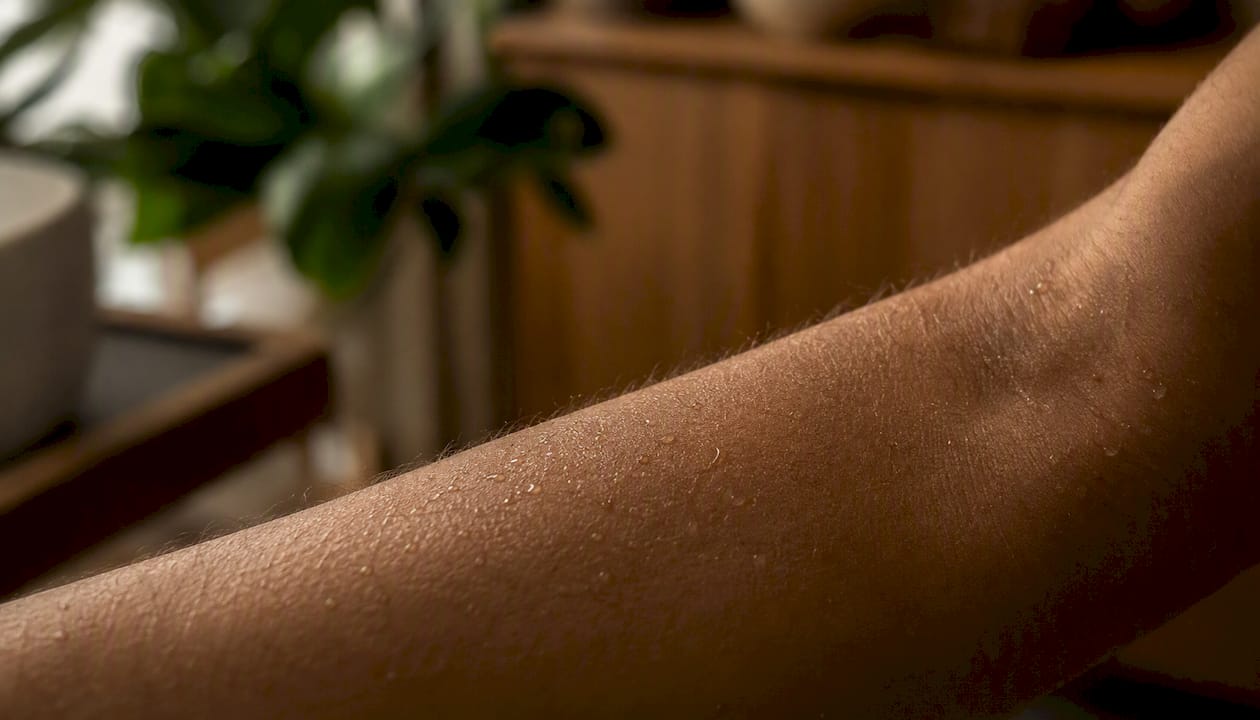
Emollients work by replacing or mimicking those lipids. Occlusives (like shea butter, cocoa butter, and beeswax) sit on the surface and physically slow water loss. Humectants (like glycerin and hyaluronic acid) draw water into the outer skin layers. A body butter that combines both gives you deeper, longer-lasting hydration than a lightweight synthetic lotion, particularly for dry or sensitive skin.
How and when to apply:
- Apply within three minutes of patting dry, while skin is still slightly damp
- Use enough to cover the area in a thin, even layer — you do not need to massage it in heavily
- For very dry areas (shins, elbows), a second application after the first has absorbed can help
- For acne-prone skin, choose a non-comedogenic formulation and avoid heavy application on the chest and back
Body butter versus lighter emollient:
- Body butter suits dry, normal, or mature skin and provides longer-lasting barrier repair
- A lighter lotion or gel-cream may be preferable for oily or acne-prone skin types
- Both are appropriate for post-shower use; the key variable is how dry your skin is
Publisher disclosure: Afterhoursbodybutter publishes this article and sells a vegan, chemical-free body butter formulated for dry and sensitive skin. Where a fat-rich emollient is appropriate, After Hours Body Butter is a suitable option. For moderate-to-severe eczema or a clinically diagnosed skin condition, a medical emollient prescribed by your GP or dermatologist remains the first-line recommendation.
Key takeaways
Most post-shower itching is caused by barrier disruption from hot water and harsh cleansers, and it responds well to cooler showers, gentle products, and immediate moisturising with a suitable emollient.
| Point | Details |
|---|---|
| Cool water and short showers | Lukewarm water for five to ten minutes removes far fewer skin oils than a long, hot shower. |
| Moisturise while damp | Applying an emollient within three minutes of patting dry seals in surface water and reduces itch. |
| Check your product labels | Avoid fragrance (listed as "parfum"), SLS, and alcohol high in the ingredients list. |
| See your GP if red flags appear | Persistent severe itch, systemic symptoms, or no improvement after two weeks warrant clinical review. |
| Afterhoursbodybutter body butter | A vegan, chemical-free, fat-rich emollient suitable for dry and sensitive skin, applied immediately after showering. |
A note on managing sensitive skin
Post-shower itching is one of those problems that looks simple on the surface but can have several layers to it. The straightforward cases — hot showers, harsh soap, dry winter air — respond quickly to the routine changes described here. What I find gets overlooked is the product-switching trap: people replace one fragranced product with another "natural" one that still contains essential oils or botanical extracts, which are common irritants in their own right. "Natural" does not automatically mean non-irritating. The safest starting point is always the shortest ingredient list you can find, with no fragrance of any kind.
The other thing worth saying plainly: aquagenic pruritus is rare, but it is not vanishingly rare, and it is frequently misdiagnosed as dry skin for months before anyone orders a blood test. If your itch is intense, starts within minutes of water contact, and does not ease with moisturiser, push for a clinical review rather than cycling through more products.
After Hours Body Butter: a simple, chemical-free option for dry skin after showering
Dry, itchy skin after a shower needs a moisturiser that actually rebuilds the barrier rather than sitting lightly on top. After Hours Body Butter is formulated with fat-rich, natural ingredients and no synthetic fragrances, SLS, or harsh chemicals — exactly the profile that dermatology guidance recommends for sensitive and dry skin.
It is vegan, cruelty-free, and made in the UK. Apply it within three minutes of patting dry for best results. Free UK delivery is available on orders over £30, and you can pay in instalments with Klarna. If you want a body care routine built around sensitive skin, the brand's blog covers the full approach. Visit afterhoursbodybutter.co.uk to shop now.
Afterhoursbodybutter publishes this article. Product recommendations reflect the brand's own range.
Useful sources and further reading
These are the primary references used in this article. UK readers should treat NHS guidance as the first port of call for clinical questions.
- Aquagenic Pruritus: Causes, Diagnosis & Treatment
- Itching after a shower: Causes and remedies
- Itching After a Shower: Why It Happens and How to Treat It
- AQUAGENIC PRURITUS: BENEATH WATER “LIES” - PMC
- Itchy skin - treatments, causes and prevention | healthdirect
- Itchy skin - American Academy of Dermatology (AAD)
- Aquagenic pruritus — Genetic and Rare Diseases Information Center (GARD)
This article provides general information only, not medical advice. Confirm any treatment decisions with your GP or a qualified clinician, and check current NHS guidance for the most up-to-date recommendations.