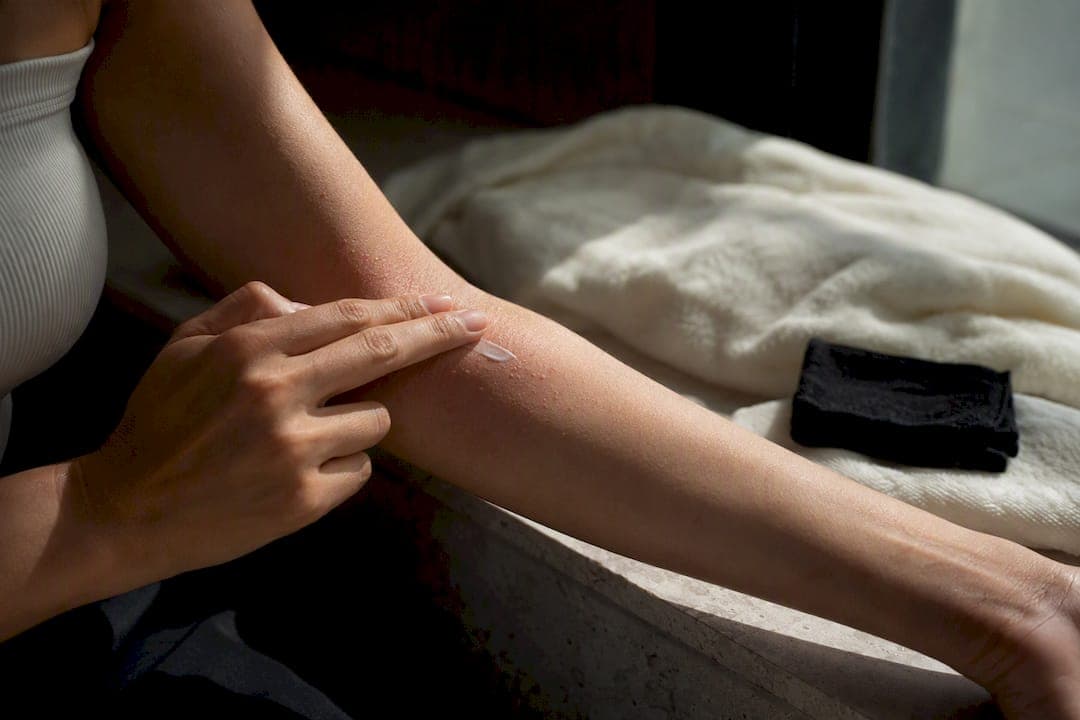
Choose a fragrance-free, nutrient-rich vegan body butter over any aqueous cream or scented lotion. Apply it to slightly damp skin straight after washing, patch test first, and reapply several times daily. That single rule, fragrance-free over "unscented", solves most of the irritation problems sensitive and acne-prone skin runs into with everyday moisturisers.
TL;DR:
- Fragrance-free labelling is essential to prevent irritation; avoid products labeled only as "unscented" since they may contain masking fragrances.
- Products with sodium lauryl sulphate should be avoided, especially in aqueous cream and lotions, as they strip the skin’s lipid barrier and can worsen irritation.
- Applying body butter to slightly damp skin immediately after washing, with gentle patting and directional application, optimizes moisture retention and reduces folliculitis risk.
- Patch testing new moisturizers on the inner forearm for 48 to 72 hours helps identify potential reactions before wider application, especially for sensitive or irritated skin.
- Nutrient-rich, botanical-based body butters with minimal preservatives and short ingredients lists are preferable for skin recovery and barrier support, especially when trying to reduce irritation.
Table of Contents
- How to choose a vegan body butter for heat-rash-type irritation
- Ingredients to prefer and ingredients to avoid
- How to apply a body butter safely on irritated skin
- Safety notes: patch testing, fire risk, and acne trade-offs
- What actually moves the needle when your skin won't settle
- After Hours Body Butter as a fragrance-free, nutrient-rich option
- Sources
- FAQ
How to choose a vegan body butter for heat-rash-type irritation
Fragrance-free and unscented are not the same thing. Fragrance-free means no perfume compounds were added at all. Unscented often means a masking fragrance was added to cancel out the smell of raw ingredients, and that masking fragrance can still trigger a reaction. The National Eczema Society recommends fragrance-free labelling specifically for this reason, and it's the first thing worth checking on any jar before it goes near irritated skin.
The second check is the ingredients list itself. Aqueous cream, once a default recommendation, contains sodium lauryl sulphate (SLS), a detergent that strips lipids from the skin barrier rather than replacing them. The NHS advises against using aqueous cream as a leave-on moisturiser for exactly this reason. The same logic applies to any lotion listing SLS or sodium laureth sulphate near the top of its ingredients.
Texture matters too. A rich body butter sits between a light lotion and a heavy ointment, giving decent occlusion (locking moisture in) without the greasiness that clogs pores on acne-prone areas. Ointments trap moisture best but sit heaviest on the skin, and heavier occlusion tends to work against you on the chest, back, or jawline if breakouts are already a concern.
When comparing products, look for:
- Fragrance-free labelling, not just "unscented"
- Botanical oils and butters (shea, sunflower seed, sweet almond) rather than mineral oil fillers
- A short ingredients list with minimal preservatives
- Small or sample-size jars for first-time trials
- Clear country-of-origin and packaging information from the brand
Pro Tip: Buy the smallest jar available for your first purchase. A 30ml trial size costs less than a full-size body butter and tells you everything you need to know before committing to a larger jar.
Ingredients to prefer and ingredients to avoid
Reading a label takes ten seconds once you know what you're scanning for. Skin that's already reactive doesn't need a long list of actives, it needs a short list of things that actually help.
Look for:
- Shea butter, a fatty-acid-rich emollient that softens and seals moisture
- Sterol-rich seed oil fractions (sunflower, canola), which a small clinical trial found reduced SLS-induced irritation and lowered transepidermal water loss
- Glycerin, a humectant that draws water into the skin's surface layer
- Fat-soluble vitamin sources such as vitamin E oils, which support the skin's lipid layer
- A short, recognisable ingredients list overall
Avoid:
- Sodium lauryl sulphate (SLS), a common irritant in aqueous-based products
- "Parfum" or fragrance blends, including those hidden inside "unscented" claims
- Long lists of preservatives or actives that a cosmetic moisturiser doesn't need
- Urea or keratolytic ingredients, which are formulated to soften thickened skin and can sting on skin that's already inflamed rather than thickened
One ingredient class deserves its own mention: paraffin and other heavy mineral oils. These sit in many high-occlusion ointments and creams, and residue soaked into clothing or bedding increases fire risk, which is why regular laundering matters more than people expect. If a product you're using contains paraffin, wash sheets and nightwear more often than usual and keep well clear of open flames or lit hobs.
A partner explainer on why creams sting breaks down several of these irritant mechanisms in more detail if you want to go deeper on the chemistry.
How to apply a body butter safely on irritated skin
Getting the technique right matters as much as picking the right jar. Follow these steps in order:
- Patch test first. Apply a small amount to your inner forearm and wait 48 to 72 hours. Redness, itching, or bumps mean the product isn't right for you, even if the ingredients list looked clean on paper.
- Apply to slightly damp skin. The NHS recommends moisturising straight after a bath or shower, while skin still holds a little water, since this traps moisture rather than adding it to already-dry skin.
- Pat, don't rub. Rubbing generates friction that can aggravate already-sensitive skin. Smooth the butter on with flat palms instead.
- Apply in the direction of hair growth. This reduces the chance of pushing product into hair follicles, which lowers folliculitis risk on areas like the chest or thighs.
- Reapply 3 to 4 times daily, particularly after washing, and use a lighter hand on acne-prone patches to avoid overloading the pores.
- Stop and seek advice if things worsen. Spreading blisters, increasing pain, or signs of infection are outside what any cosmetic moisturiser should be asked to manage.
Pro Tip: Keep a small pot in your bag or desk drawer for a midday top-up. Skin that dries out by 3pm rarely recovers overnight without that extra reapplication.
Our guide to applying body butter walks through this technique with more detail on quantity per application.
Safety notes: patch testing, fire risk, and acne trade-offs
Two safety habits protect both your skin and your home. First, only trial a new product when skin is calm. Introducing something new during a flare-up makes it almost impossible to tell whether the product caused a new reaction or simply coincided with one already in progress, a distinction the National Eczema Society flags as a common source of confusion.
Second, treat heavy, paraffin-based products with the same laundering discipline you'd apply to any flammable residue: wash bedding and clothing regularly and keep away from naked flames.
There's a genuine trade-off between comfort and breakout risk. Ointments contain fewer preservatives and tend to sting less on broken or excoriated skin, but their thickness makes folliculitis and acne flares more likely when used on hairy or already-inflamed areas. If a rich cream starts stinging, that's often a preservative reacting with compromised skin rather than a sign to apply more. Switching to a lighter, lower-preservative formulation, or asking a pharmacist for guidance, tends to solve it faster than persisting.

What actually moves the needle when your skin won't settle
Darnell's writing on simplifying body care routines for sensitive skin keeps coming back to the same point: fewer ingredients, applied consistently, beat a rotating cabinet of "active" products every time. Fat-soluble vitamins and nutrient-rich oils work because they slot into the skin's own lipid layer rather than sitting on top of it, supporting the barrier repair process that research on moisturisers and skin barrier function describes across physical and microbial layers alike.
Customer reports on nutrient-dense body butters tend to cluster around two themes: less visible irritation within a couple of weeks, and a noticeable change in skin texture. These are user experiences, not clinical outcomes, and they vary person to person. What holds up regardless is the NHS observation that there's no single "right" moisturiser for everyone, so a small, patch-tested trial beats guessing from a review score.
— Darnell
After Hours Body Butter as a fragrance-free, nutrient-rich option
Everything on the checklist above, fragrance-free formulation, nutrient-rich botanical oils, minimal preservatives, applies to how some vegan body butter ranges are built. Some vegan body butter products are made without silicones, sulfates, or harsh fillers, and may include fat-soluble vitamins formulated to support moisture retention rather than mask irritation with fragrance.
If you're trialling a new body butter for the first time, treat it the way this guide recommends treating any new product: patch test on your forearm, wait 48 to 72 hours, then apply a small amount to slightly damp skin on one area of your body rather than all over. Our acne-prone skin checklist covers how to apply selectively if breakouts are a concern. When you're ready to try one, browse the Body Butters range and start with a single jar before committing to a full routine.
Sources
- Emollients — NHS
- Emollients | National Eczema Society
- Moisturisers versus barrier repair therapy — Skin Pharmacology and Physiology (review)
- Effect of topical lipids on SLS-irritated skin — PubMed (1996)
FAQ
Can you use a body butter on facial skin too?
Most body butters are formulated for thicker body skin and can feel heavy on the face, especially on acne-prone areas. If you want to try one on facial skin, patch test on your jawline first and use a much smaller amount than you would on your body.
How long should you trial a new moisturizer for heat rash relief?
Give a fragrance-free body butter around 2 weeks of consistent use before judging results, since skin texture changes gradually rather than overnight. If irritation worsens within the first few applications, stop and check for a reaction rather than pushing through.
How long does a patch test need before you apply a product more widely?
Apply a small amount to your inner forearm and wait 48 to 72 hours before using it elsewhere. Redness, itching, or swelling during that window means the product isn't suited to your skin.
Is a soothing cream for heat rash safe to use on acne-prone skin?
A lighter, fragrance-free body butter is generally more suitable than a heavy ointment for acne-prone skin, since thick occlusive layers can increase folliculitis risk on hair-bearing or inflamed areas. Apply sparingly to breakout-prone patches and monitor for changes over the first couple of weeks.
What is After Hours Body Butter's pricing?
Current pricing for After Hours Body Butter products is listed on the website, as it varies by product and jar size.