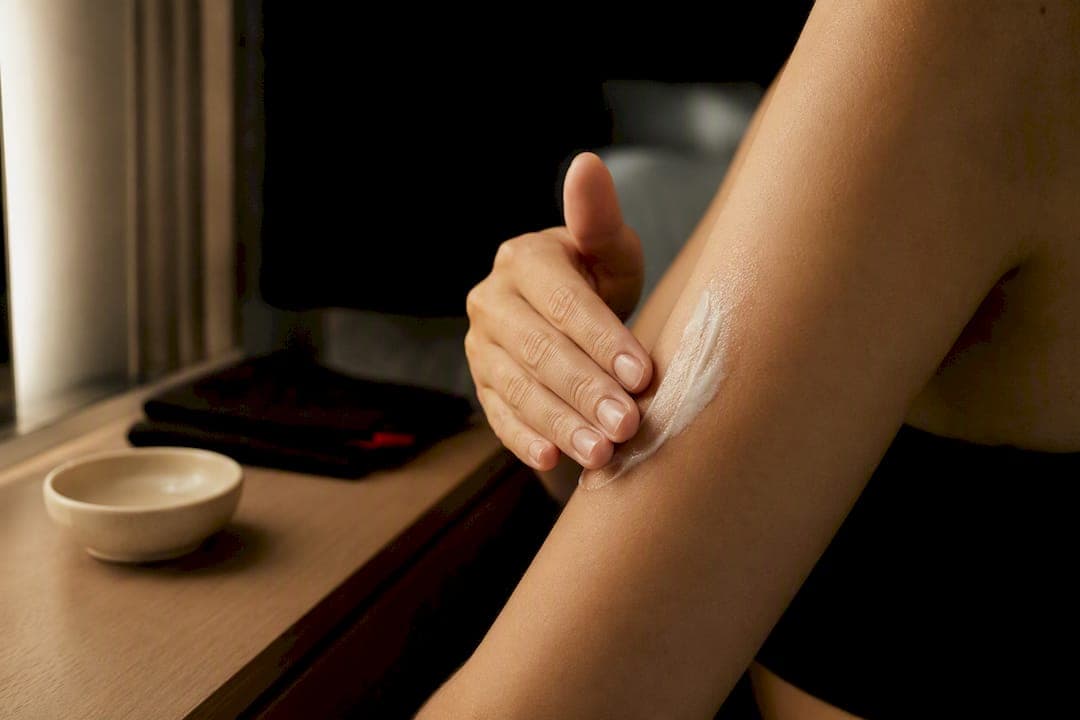
Body butter produces a visible before-and-after within minutes, softening texture and adding sheen because its lipid content plugs moisture into the skin's surface. That effect can hold for 6 to 12 hours, longer than most water-based lotions manage. Deeper changes, like fewer dry patches, need two to four weeks of consistent use. What it cannot do is erase scars or established stretch marks. One option is a body butter designed for daily use. Keep reading for the mechanism, the routine, and the timeline.
TL;DR:
- Body butter provides a visible instant shine and softness because it traps existing surface moisture, lasting up to 12 hours depending on application timing.
- Consistent use over two to four weeks can improve skin texture and reduce dryness, especially on rough patches like elbows and heels.
- Applying body butter to damp skin within three minutes of showering maximizes its occlusive barrier and absorption, while dry skin application weakens results.
- It does not reduce deep scars or stretch marks, which require dermatological treatments such as laser therapy or retinoids for visible improvement.
- For best results, layer with humectants for very dry skin, avoid overapplication, and tailor use based on climate, skin type, and specific skin concerns.
Table of Contents
- What is body butter and how does it work on skin?
- Before and after: what results are realistic, and when?
- How do you apply body butter for the best results?
- Body butter or lotion: which should you use?
- Is body butter safe for sensitive or acne-prone skin?
- Does the brand evidence hold up?
- How should you track your own before-and-after?
- Where After Hours Body Butter fits into your routine
- Sources
- FAQ
What is body butter and how does it work on skin?
Body butter is an anhydrous, lipid-rich emollient, meaning it contains little or no water, unlike lotions and creams that are emulsions of water and oil. That distinction explains almost everything about how each product behaves on your skin.
Lotions absorb fast because water evaporates quickly, leaving a thin oil residue behind. Body butter sits on the surface longer, forming an occlusive layer that slows transepidermal water loss, or TEWL, the process by which moisture escapes through the skin's outer layer into the air. Clinical evidence on occlusive emollients shows lipid-rich formulas can maintain that protective barrier for 6 to 12 hours, compared with roughly 2 to 4 hours for typical water-based lotions.
Here is why timing matters so much:
- Applying body butter to damp skin traps existing surface water underneath the lipid layer.
- Applying it to dry skin gives the occlusive nothing to seal in, so results are noticeably weaker.
- Body butter is thicker and heavier than lotion, which makes it better suited to concentrated dry patches like elbows and heels than to all-over daily use in hot weather.
Understanding this mechanism is what separates people who see real before-and-after change from people who apply the product and wonder why nothing improved.
Before and after: what results are realistic, and when?
The honest timeline runs in three stages, and skipping straight to stage three is where most disappointment comes from.
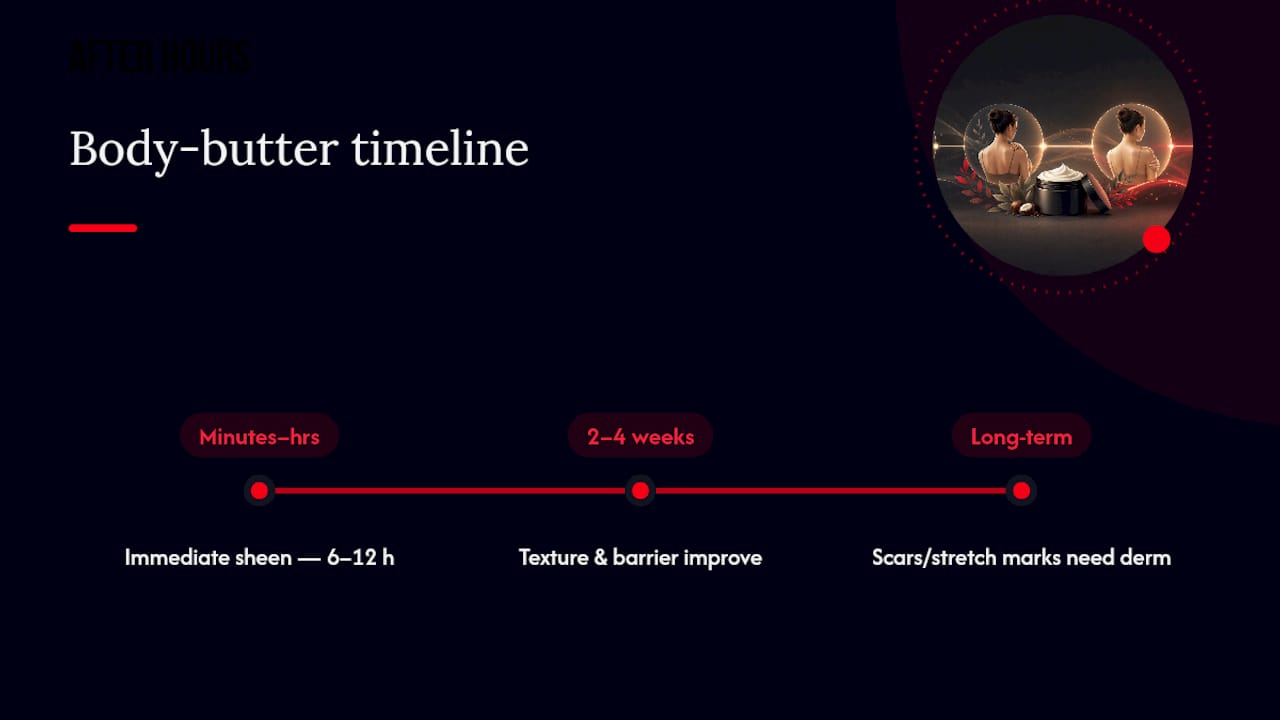
Minutes to hours. Skin looks softer and has visible sheen almost immediately after application. This is the occlusive layer doing its job, holding existing moisture against the skin rather than adding anything new. That sheen and softness can persist for 6 to 12 hours, which is why a nightly routine tends to leave skin still comfortable by morning.
Two to four weeks. This is where texture genuinely changes. Consistent daily or nightly application over this window has been linked to measurable improvements in barrier function and reduced dryness scores in clinical work on occlusive emollients. One consumer test of a vitamin C body butter reported visible improvements to dryness and rough texture within that same 2 to 4 week window, though that is a user report rather than a controlled trial. For genuinely rough patches like heels or elbows, the mechanism is gradual softening of the hardened outer skin layer through fatty acids, not an overnight fix.
What it will not do. Body butter will not remove deep acne scarring or established stretch marks. A large randomised trial comparing cocoa butter against a placebo found no significant difference in preventing stretch marks, despite how often that claim gets marketed. Topical moisturising can improve comfort and elasticity, but structural skin damage, whether from scarring or stretching, generally needs a dermatological treatment such as laser therapy or prescription retinoids to see meaningful visual change. If a mark has been there for months or years and feels raised, indented, or discoloured, that is a conversation for a dermatologist, not a jar of butter.
How do you apply body butter for the best results?
Most disappointing before-and-afters trace back to one thing: timing. Apply body butter outside a three-minute window after showering and you lose a meaningful share of the benefit, because there is less surface water left to trap.
- Shower or bathe as normal, then pat skin with a towel rather than rubbing it dry. Leave it slightly damp.
- Warm a small amount between your palms for a few seconds. Body butter softens with heat, which makes it spread far more evenly.
- Press and sweep the butter into skin, working from ankles and knees upward if you're doing a full-body application, and lingering on drier spots like elbows and heels.
- Give it 60 to 90 seconds to absorb before pulling on clothes. Rushing this step is how butter ends up on your clothes instead of your skin.
- Repeat nightly for at least two to four weeks before judging whether it's working. This is a cumulative product, not an instant one.
For skin that is very dry or flaking, layer a lightweight humectant, something containing glycerin or hyaluronic acid, underneath the butter. Humectants draw moisture in while the butter seals it there, and pairing the two outperforms using either alone. A common routine is a light lotion in the morning for fast absorption before getting dressed, then body butter at night when there's no rush and skin can fully absorb it while you sleep.
Pro Tip: If your body butter feels like it's sitting on top of your skin rather than sinking in, you've probably applied too much or applied it to skin that's fully dry. Cut the amount by half and try again straight after your next shower.
Three mistakes account for most poor results. Using too much product leaves a greasy film and wastes butter without improving outcomes, since a small amount worked in properly outperforms a thick layer left to sit. Applying to bone-dry skin, hours after showering, gives the occlusive nothing to trap, which is the single most common reason people say body butter "doesn't work" for them. And heavily fragranced butters on reactive or acne-prone skin can trigger irritation that looks like the product failing when it's actually a formulation mismatch. Our guide to applying body butter correctly covers technique in more depth if you want a deeper walkthrough.
Body butter or lotion: which should you use?
The choice comes down to water content, lipid load, and how fast you need the product to absorb.
- Lotion is an emulsion with high water content, absorbs within seconds, and suits humid climates or daytime use under clothing.
- Body butter is anhydrous and lipid-dense, absorbs more slowly, and performs better on concentrated dry patches like elbows, knees, and heels.
- Pore-clogging risk is higher with heavier butters on acne-prone areas, particularly the back and chest, so ingredient choice matters more than format alone.
- Reapplication frequency differs too: lotions often need reapplying two or three times a day, while a single well-timed butter application can last through the night.
A sensible rule of thumb: reach for lotion in summer or on days you need fast absorption, and switch to body butter through winter or on stubborn dry patches year-round. Plenty of people run both, alternating by season or using lotion by day and butter at night. Our piece on why natural butters outperform lotions breaks down the chemistry behind that seasonal switch in more detail.
Is body butter safe for sensitive or acne-prone skin?
Patch-test any new body butter before applying it broadly, particularly if you have sensitive or reactive skin. Apply a small amount to your inner forearm and wait 48 to 72 hours, watching for redness, small bumps, or a burning sensation.
- Acne-prone areas, especially the back and chest, do better with non-comedogenic, lighter formulas rather than the heaviest butters.
- If a patch test causes breakouts, switch to a targeted lotion for that area rather than abandoning body butter entirely.
- Never mix facial actives like retinoids into a body butter yourself. Clinical safety guidance warns that uncontrolled concentrations of potent actives can cause dermatitis or over-exfoliation, so stick to products formulated specifically for body use.
- If irritation persists beyond a week of use, stop and consult a pharmacist or GP rather than pushing through it.
Does the brand evidence hold up?
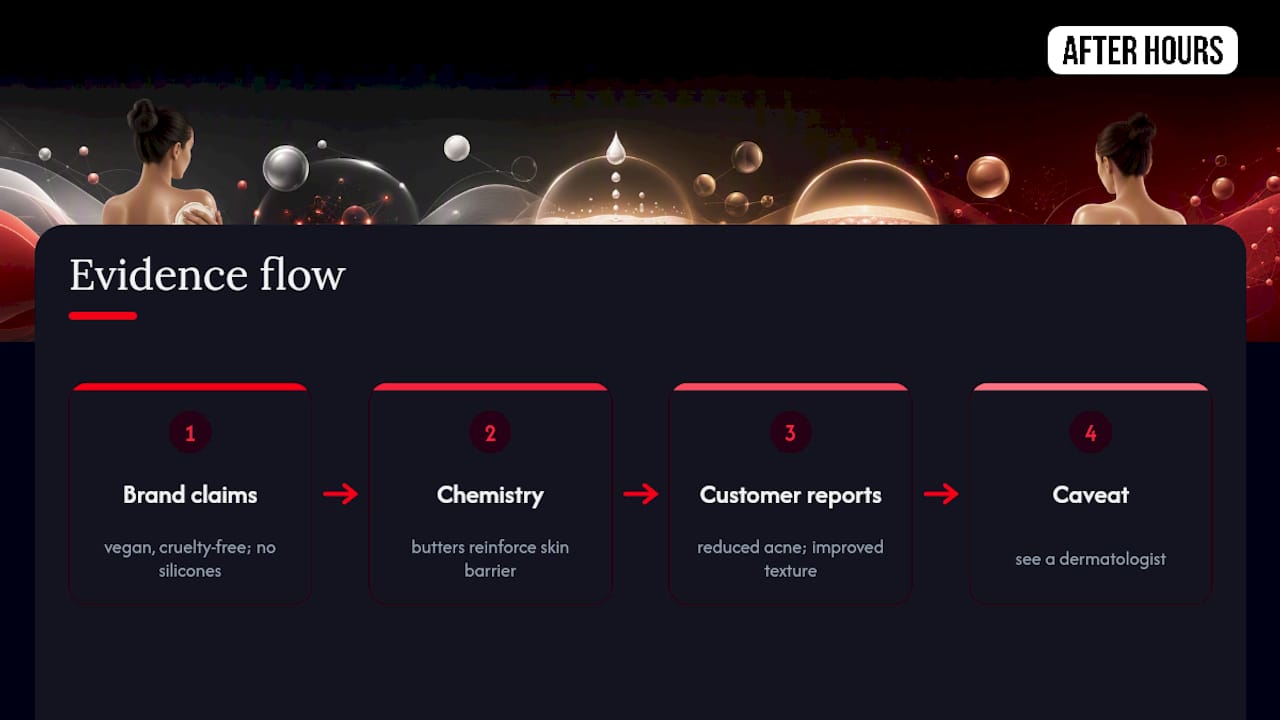
The brand positions itself around vegan, cruelty-free formulations built without silicones, sulfates, or harsh fillers, with an emphasis on fat-soluble vitamins that feed the skin barrier rather than just coating it. That framing lines up with what the underlying chemistry suggests: butters supply raw lipid material to reinforce skin rather than simply masking dryness for a few hours.
Customer testimonials describe visible reductions in acne and irritation alongside improved texture and moisture retention, particularly among buyers with sensitive skin who had struggled with heavier, fragranced products elsewhere.
None of this replaces a dermatologist's judgement for a persistent skin condition. But for the day-to-day goal of a smoother, better-hydrated before-and-after, it's a coherent product logic, and one worth testing on your own skin using the routine above rather than taking on faith.
How should you track your own before-and-after?
Take photos in the same spot, same lighting, and roughly the same time of day, ideally straight after your evening shower before you apply anything. Do this once at the start, then again at the two-week and four-week marks rather than daily, since skin changes gradually and daily photos rarely show anything new.
Track texture, flaking, and comfort rather than chasing a dramatic transformation. A meaningful change looks like fewer rough patches and less tightness after washing, not a different skin tone or the disappearance of a scar. If dryness, redness, or flaking persists past four weeks of consistent nightly use, that's a signal to see a pharmacist or GP rather than switching products repeatedly. Our barrier-strengthening guide sets out what a realistic barrier-repair timeline looks like in more detail.
Where After Hours Body Butter fits into your routine
If you want a vegan, cruelty-free option built specifically to support the barrier described above, some products formulate without silicones, sulfates, or harsh fillers, focusing on fat-soluble vitamins that nourish rather than simply sit on the surface.
That matters most if you have sensitive skin or you've been caught out before by heavily fragranced butters that trigger breakouts on the back or chest. Some formulations are designed with specific skin concerns, acne and dryness among them, in mind rather than treated as an afterthought. Products may be made and packaged sustainably in the UK, which is worth knowing if that factors into your buying decisions.
If you're ready to put the three-minute post-shower routine into practice, browse the full range of body butters and pick a jar suited to the dry patches or sensitivity you're actually dealing with. Current pack options and pricing are listed on the product pages.
Sources
- Occlusive emollients and barrier function (PMC 5908267)
- Body butter vs lotion: differences and use-cases (Medical News Today)
FAQ
Does body butter actually work?
Yes, for surface hydration and texture. Its lipid content reduces water loss through the skin for 6 to 12 hours per application, and consistent use over two to four weeks tends to improve overall dryness and texture.
What is the correct way to use body butter?
Apply it within three minutes of towel-drying after a shower, while skin is still slightly damp, then give it 60 to 90 seconds to absorb before dressing. Applying to fully dry skin significantly reduces its effectiveness.
How often should you use body butter?
Nightly is the most common recommendation, since it gives the product hours of undisturbed absorption time while you sleep. Some people also use a lighter layer in the morning, particularly on chronically dry areas like elbows and heels.
What are the downsides of using body butter?
It can feel heavy or greasy in warm weather, absorbs more slowly than lotion, and heavier or fragranced formulas can trigger breakouts on acne-prone skin. It also will not remove established scars or stretch marks, which require medical treatment rather than a moisturiser.