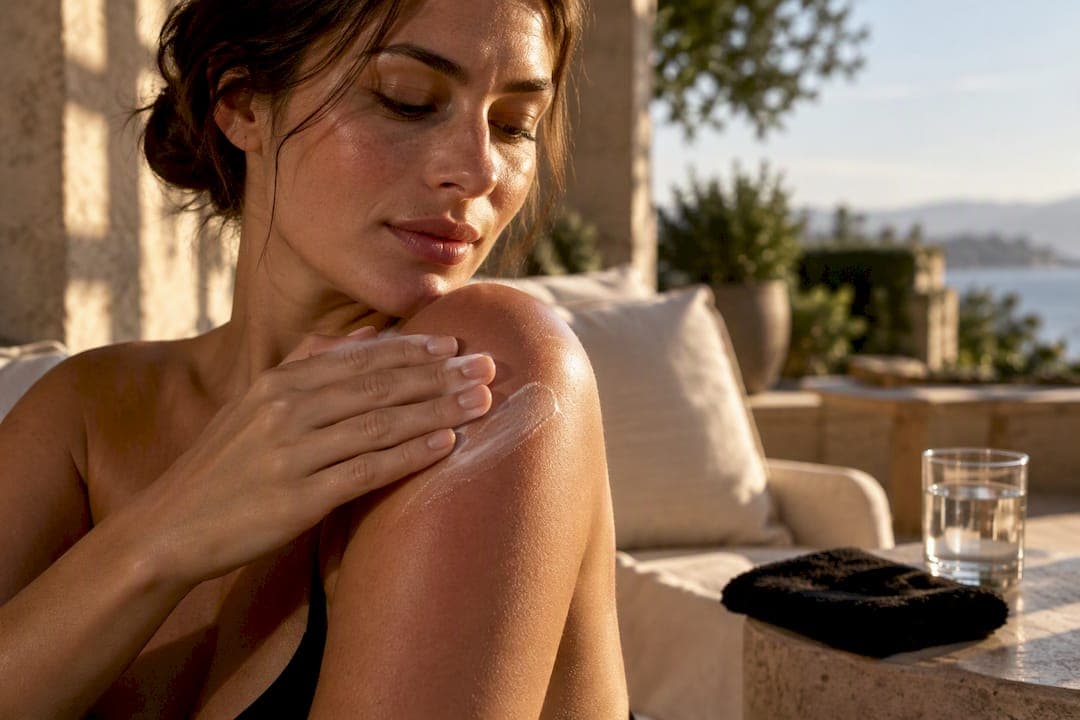
Cool sun-exposed skin first. Use tepid water for 10 to 20 minutes. Then apply an unperfumed after sun product or aloe vera gel once skin feels calmer. Choose fragrance-free, light emollients over heavy or scented creams. Contact NHS 111 or a GP for severe blistering, high fever, affected infants, or signs of heatstroke.
TL;DR:
- Applying an unperfumed, fragrance-free moisturizer with high aloe vera concentration (around 90%) can significantly reduce sunburn pain and itching.
- Use cooling water for 10 to 20 minutes before gently patting the skin dry and applying moisturizer while skin is still damp to lock in moisture effectively.
- Avoid perfumed lotions, alcohol-based products, or household remedies like butter or vinegar, as they can worsen skin damage or trap heat.
- Reapply lightweight moisturizers two to four times daily, especially after bathing, and avoid applying to open blisters or broken skin.
- Protect healing skin from further sun exposure by staying in the shade, wearing breathable clothing, and only using sunscreen on unbroken skin once the redness has subsided.
Table of Contents
- What after sun moisturisers do for damaged skin
- Ingredients to look for and ingredients to avoid
- How to apply an after sun routine step by step
- When to see a doctor and what recovery looks like
- Darnell's perspective on sensitive and acne-prone skin
- Managing pain and inflammation while skin heals
- Choosing the right product for your skin type
- Protecting healing skin from further sun exposure
- What the after sun advice usually gets wrong
- Using After Hours Body Butter once skin has cooled
- Sources
- FAQ
What after sun moisturisers do for damaged skin
Cooling removes trapped heat from the skin's surface. Moisturising comes next. It helps hold water in the outer skin layer, known as the stratum corneum, supporting the skin's natural repair process.
Sunburnt skin loses moisture faster than healthy skin. A good moisturiser slows that loss and eases the tight, itchy feeling that follows sun exposure. Different ingredients play different roles:
- Humectants such as glycerin and hyaluronic acid pull water into the skin's surface.
- Emollients fill gaps between skin cells, softening rough or flaking patches.
- Light occlusives sit on top of the skin, slowing water loss without feeling heavy.
NHS guidance recommends applying an unperfumed after sun product or plain moisturiser once the skin has cooled, rather than reaching for anything scented or complex. Damaged skin has a weaker barrier, so fragrance and harsh additives are more likely to sting or trigger irritation. Simple gels and light lotions tend to sit better than thick, heavily perfumed creams during this stage.
Ingredients to look for and ingredients to avoid
Not every moisturiser in the bathroom cabinet belongs on sunburnt skin. Some ingredients help. Others make things worse.
Look for:
- Aloe vera, ideally close to a 90% concentration, which clinical and consumer research links to reduced sunburn pain and itching.
- Glycerin and hyaluronic acid for drawing moisture into the skin.
- Colloidal oatmeal, often used to calm irritated or itchy patches.
- Fragrance-free labelling, which lowers the risk of stinging or allergic reaction.
- Simple emollients with short ingredient lists.
A high aloe vera concentration, typically recommended to be close to 90%, is linked to a stronger soothing effect on sunburnt skin. That's a useful benchmark when comparing gels on a shelf, though aloe vera research treats it as one part of a broader after sun routine, not a standalone fix.
Avoid:
- Perfumed lotions and anything containing alcohol denat., which can dry out already stressed skin.
- Strong exfoliants such as AHAs or BHAs on freshly burnt areas.
- Household remedies like butter or vinegar, which NHS guidance warns against because they trap heat or strip natural oils.
One more point worth flagging: some emollients contain paraffin. Primary care formulary guidance notes paraffin-based products carry a fire risk, particularly around naked flames or smoking. Lighter, non-paraffin formulas are often the more practical choice for everyday use, and worth checking on the label if that's a concern.
How to apply an after sun routine step by step
Getting the order right matters as much as the product itself.
- Cool the skin with tepid water for 10 to 20 minutes, as NHS advice sets out. Skip ice; it can cause its own damage to already sensitive skin.
- Pat the skin dry gently rather than rubbing.
- Apply your chosen moisturiser while skin is still slightly damp. This helps lock in moisture more effectively, a point emollient best-practice guidance backs up for skin care generally.
- Reapply 2 to 4 times a day, and again after bathing or showering.
- For blistered skin, leave blisters alone. Use a non-adhesive dressing and speak to a pharmacist or GP rather than applying moisturiser directly to open skin.
Pro Tip: Keep your after sun gel in the fridge. The extra coolness on application can ease discomfort without needing ice on the skin itself.
When to see a doctor and what recovery looks like
Most sunburn is manageable at home. But some signs mean it's time to get help rather than reach for another layer of cream.
Contact NHS 111 or a GP if you notice:
- Blistering covering an area larger than the palm of a hand.
- Sunburn on the face, hands or genitals.
- A high temperature, vomiting, or confusion.
- Sunburn in a baby or young infant.
- Cessation of sweating alongside other signs of heatstroke.
For everything short of that, NHS guidance suggests most sunburn improves within about 7 days. Moisturising during that time helps with tightness and itch, and it's worth resisting the urge to pick at peeling skin, which raises the risk of infection. A pharmacist may suggest a short course of hydrocortisone cream or a suitable dressing if itching or peeling becomes difficult to manage.
Darnell's perspective on sensitive and acne-prone skin
Sensitive and acne-prone skin needs a lighter touch. Fragrance-free, nutrient-rich formulas tend to cause fewer flare-ups than heavily scented creams, which is why fragrance-free options are worth prioritising once skin has cooled.
Patch test any new product on a small area first, ideally the inner arm, and wait 24 hours before applying it more widely. On acne-prone skin, apply body butter sparingly and avoid rubbing it into already congested areas.
Customers with sensitive skin often report calmer, less irritated skin texture after switching to fragrance-free, plant-based moisturisers, though results vary by skin type and routine.
— Darnell
Managing pain and inflammation while skin heals
Moisturising eases tightness and itch, but it doesn't address pain on its own. A cool compress, a clean cloth soaked in cool water, applied for short periods, can take the edge off sore patches without the risks that come with ice directly on skin.

Over-the-counter pain relief such as paracetamol or ibuprofen is a common part of the NHS home care plan for sunburn, alongside cooling and moisturising. Ibuprofen's anti-inflammatory action can help with swelling as well as pain, though it's not suitable for everyone, so check the label or ask a pharmacist if you're unsure.
Antihistamines sometimes help when itching is severe enough to disturb sleep. None of these steps replace moisturising. They work alongside it: cool the skin, take appropriate pain relief if needed, then moisturise to support the skin barrier as it heals. Combining approaches tends to work better than relying on any single step.
Choosing the right product for your skin type
Sensitive skin does best with fragrance-free, minimal-ingredient formulas. Anything with added scent, dye or a long ingredient list raises the odds of stinging or a reaction on already compromised skin.
Dry skin benefits from richer, more occlusive formulas that hold moisture in for longer, applied generously and reapplied through the day. Oily or acne-prone skin usually does better with a lighter lotion or gel rather than a heavy butter, and application should avoid areas prone to breakouts.
Whatever your skin type, patch testing remains worthwhile before applying a new product across sunburnt skin. A small test area on the inner arm, left for a day, shows whether a formula is likely to irritate before it's used more broadly. This matters more after sun exposure, since damaged skin reacts more readily than skin that hasn't been burnt.

Protecting healing skin from further sun exposure
Skin that's recently been burnt is more vulnerable, not less. It needs cover, not more direct sun, while it recovers.
Loose, breathable clothing over the affected area helps, along with staying in the shade during peak sun hours. Sunscreen has a place too, though it should go on unbroken skin rather than blistered or broken areas, and only once the worst of the burn has settled. Reapplying sunscreen through the day matters more than the SPF number on the bottle.
Staying hydrated supports the skin's recovery from the inside, a point NHS guidance includes as part of its home care advice. Skip further sun exposure until the redness and tenderness have properly settled, even if the urge to top up a tan is strong.
What the after sun advice usually gets wrong
Most after sun advice treats moisturiser as the whole answer. It isn't. Cooling comes first, and skipping it in favour of a thick cream is one of the more common mistakes people make with sunburn.
The bigger gap is in product choice. Heavily marketed after sun ranges often lean on fragrance and rich textures that feel indulgent but do little for a compromised skin barrier, and can sting on broken skin. A plain aloe vera gel or a fragrance-free, nutrient-rich formula usually does more for comfort than a product built around scent.
If there's one thing worth prioritising, it's patch testing. Skin that's already stressed by sun exposure reacts unpredictably, and a product that suits normal skin can irritate sunburnt skin. Test first, apply sparingly, and judge a product by how the skin responds over the following day rather than by how luxurious it feels going on.
— Darnell
Using After Hours Body Butter once skin has cooled
Once sunburnt skin has cooled and calmed, a fragrance-free, nutrient-rich body butter can support ongoing hydration through the days that follow. A body butter made without added fragrance, silicones, sulfates or harsh fillers can suit skin that's still recovering.
A few practical points for use:
- Patch test on a small area first, especially if skin is still sensitive from sun exposure.
- Apply sparingly to slightly damp skin rather than in a thick layer.
- Reapply as needed through the day, alongside cooling and rest from further sun.
- Avoid applying to open blisters or broken skin; wait until skin is intact.
Browse the full Body Butters range to find a fragrance-free option suited to sun-stressed skin.
This article is general information, not a substitute for advice from a qualified doctor. Consult a qualified healthcare professional about your own circumstances before acting on anything here.
Sources
- Sunburn - NHS
- Aloe vera evidence summary (peer-reviewed article) — PMC
- Primary care formulary — emollient guidance
FAQ
What is the best moisturiser for after sun?
An unperfumed after sun product or a plain, fragrance-free moisturiser applied once skin has cooled is the safest starting point, according to NHS guidance. Aloe vera gel, ideally close to a 90% concentration, is a reasonable addition given its link to reduced pain and itching.
Can you use after sun as moisturiser?
Yes, an after sun product doubles as a light moisturiser once the initial cooling step is done, and reapplying it through the day helps manage tightness and itch. Choose an unperfumed formula, since NHS advice specifically recommends this over scented alternatives on damaged skin.
What is the best aftersun lotion?
There's no single product that suits every skin type, but the most useful lotions share two traits: no added fragrance and a meaningful aloe vera content. NHS guidance points to unperfumed formulas as the safer general choice, particularly for sensitive skin.
What is the best cream to use after being in the sun?
A light, fragrance-free cream or gel applied after cooling the skin with tepid water for 10 to 20 minutes works best, following the NHS home care approach. Richer body butters can follow later once skin has calmed, applied sparingly and never on open blisters.